Introduction
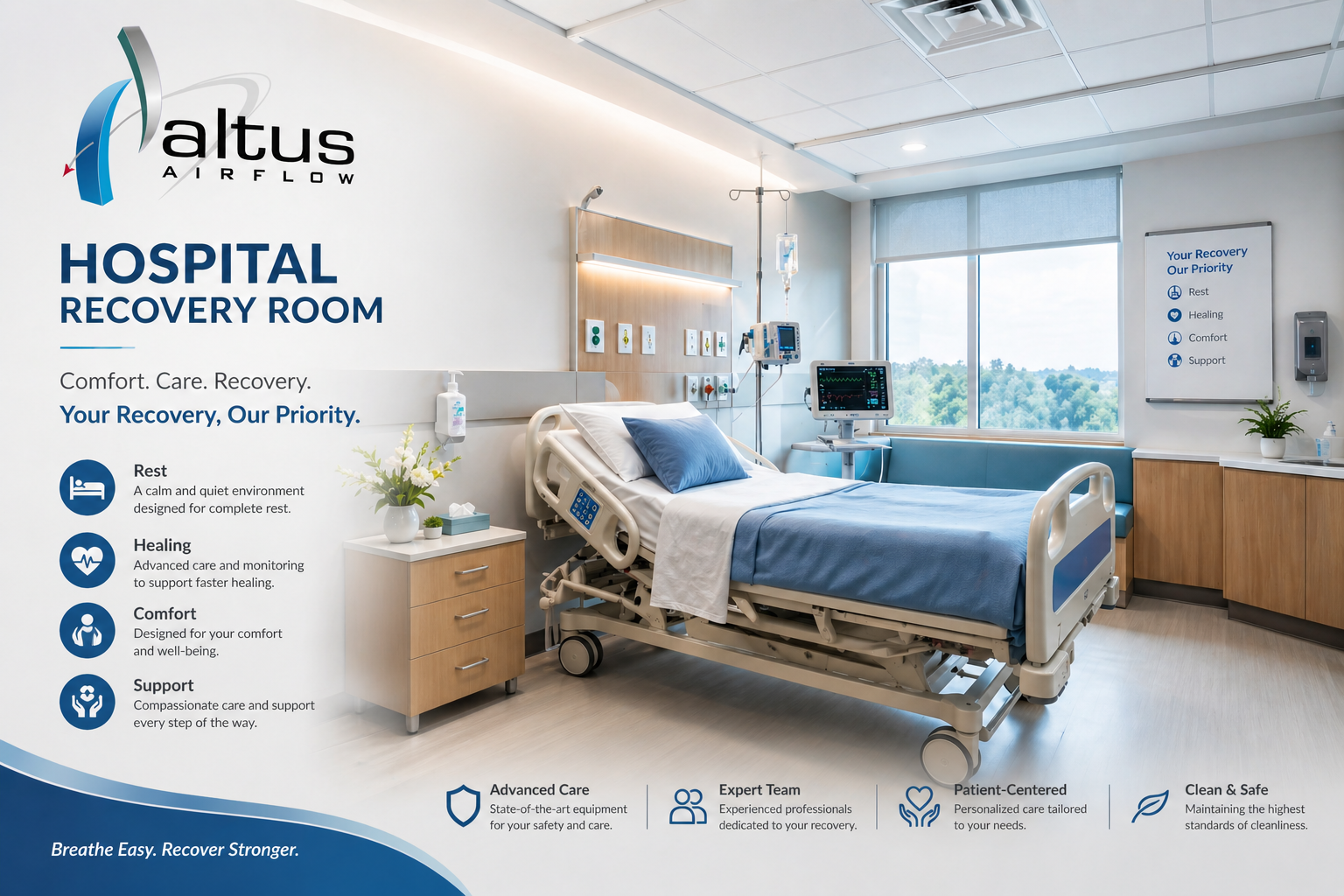
A Hospital Recovery Room requires carefully planned infrastructure to support patients during the immediate period following surgery, anesthesia, sedation, or other procedures. The environment should allow healthcare professionals to observe patients continuously or at clinically appropriate intervals while providing rapid access to essential equipment and emergency resources. A well-equipped recovery room combines patient bedspaces, monitoring, medical utilities, electrical systems, environmental controls, infection prevention, communication facilities, and efficient staff workflow.
Patient Bedspace Infrastructure
Each recovery position should provide adequate space for the patient, recovery bed, monitoring equipment, infusion devices, and healthcare professionals.
Clear access around the bed is important for routine observation and emergency intervention.
Patient Monitoring Systems
Recovery patients may require monitoring of several physiological parameters.
Depending on clinical requirements, infrastructure can support ECG, heart rate, blood pressure, oxygen saturation, respiratory rate, temperature, and other monitoring technologies.
Central Monitoring
Larger recovery units may incorporate a central monitoring station.
Selected information from bedside monitors can be displayed centrally to support staff awareness while direct patient observation remains essential.
Medical Gas Infrastructure
Oxygen, medical air, and vacuum may be required depending on the clinical services provided.
Outlets should be positioned conveniently near patient beds while keeping the surrounding area organized.
Oxygen Supply
Patients recovering from anesthesia may require supplemental oxygen.
Appropriate oxygen outlets and delivery equipment can be incorporated into each relevant patient position according to clinical requirements.
Medical Air
Medical air can be required for certain respiratory equipment.
The infrastructure should be coordinated with the equipment selected by the hospital and applicable medical gas requirements.
Vacuum and Suction
Suction may be needed during patient recovery.
Central vacuum outlets or suitable portable suction equipment can be provided according to the unit's clinical needs.
Electrical Infrastructure
Recovery areas often contain multiple electrically powered devices.
The room should provide sufficient outlets, appropriate grounding, essential circuits, cable management, and equipment connections according to applicable electrical and healthcare requirements.
Emergency Power
Some equipment may need continued operation during electrical interruptions.
Essential circuits, emergency generators, and UPS arrangements can support designated critical equipment according to the hospital's electrical design.
Emergency Equipment Access
A recovery room should allow quick access to emergency resources.
Crash carts, defibrillators, airway equipment, oxygen, suction, emergency medications, and other required resources should be positioned without obstructing circulation.
Clear Circulation
The layout should provide unobstructed routes for staff, beds, stretchers, wheelchairs, and emergency teams.
Furniture, equipment, and storage should not interfere with essential pathways.
Nursing Station
A nursing station can support patient observation, documentation, communication, and coordination.
Its location should provide a practical relationship with recovery beds and monitoring systems.
Staff Workflow
The infrastructure should support efficient movement between patient positions, storage, medication areas, monitoring stations, emergency equipment, and documentation points.
An organized workflow can reduce unnecessary movement and improve operational efficiency.
Storage Facilities
Adequate storage should be available for medications, consumables, protective equipment, monitoring accessories, respiratory supplies, and emergency materials.
Storage should remain accessible without occupying critical patient-care pathways.
Infection-Control Infrastructure
The recovery environment should support established infection-prevention practices.
This can include hand hygiene facilities, cleanable surfaces, appropriate patient spacing, organized equipment, controlled circulation, and suitable waste-management provisions.
Isolation Facilities
Some hospitals may require isolation capability within or near recovery areas.
Where required, isolation spaces should coordinate appropriate ventilation, monitoring, medical gases, electrical services, and communication systems.
HVAC Infrastructure
Environmental conditions can influence patient comfort and clinical operations.
Temperature, humidity, ventilation, filtration, airflow, and pressure relationships should be planned with qualified HVAC professionals according to the intended function and applicable requirements.
Lighting Infrastructure
Adequate lighting is necessary for patient observation and clinical procedures.
General lighting can be supported by task or examination lighting, while adjustable options may help maintain patient comfort.
Noise Management
Recovery rooms contain monitors, alarms, staff activity, and patient movement.
Acoustic planning and appropriate equipment placement can help reduce unnecessary noise without interfering with essential clinical alerts.
Privacy Provisions
Patients may need examinations, medication administration, and personal care.
Curtains, screens, partitions, or individual recovery bays can provide privacy while maintaining appropriate observation.
Communication Systems
Recovery staff may need to communicate with operating theatres, anesthesia teams, ICUs, wards, laboratories, and other departments.
Nurse call systems, telephones, intercoms, and approved data connections can support communication.
Digital Connectivity
Modern recovery areas may use connected monitoring and hospital information systems.
Network infrastructure can support approved clinical technologies, electronic documentation, monitoring displays, and data communication.
Equipment Mounting
Wall- or ceiling-mounted equipment supports can help organize selected devices.
They can reduce floor congestion and improve access around patient beds where suitable for the room configuration.
Safe Patient Transfer
Patients may move from the recovery room to wards, ICUs, diagnostic departments, or discharge areas.
Doorways, corridors, turning spaces, and routes should accommodate beds, stretchers, monitoring equipment, and staff.
Flexible Infrastructure
Recovery requirements can change as clinical services develop.
Flexible medical gas, electrical, monitoring, and equipment-support infrastructure can make it easier to accommodate future equipment upgrades or layout modifications.
Maintenance Access
Infrastructure should allow technical teams to inspect and maintain systems.
Electrical components, medical gas connections, HVAC equipment, communication systems, and equipment supports should have appropriate service access.
Testing and Commissioning
Before patient use, relevant systems should be tested and commissioned.
This can include electrical systems, medical gases, emergency power, monitoring infrastructure, environmental controls, communication systems, and equipment supports depending on project scope.
Conclusion
A well-equipped Hospital Recovery Room requires coordinated infrastructure covering patient bedspaces, monitoring systems, medical gases, electrical supply, emergency power, suction, emergency equipment, HVAC, lighting, infection control, communication, storage, privacy, and safe patient movement. Equipment should be positioned to support clinical access without creating unnecessary congestion. Hospitals should develop the final infrastructure plan with qualified clinical, architectural, engineering, biomedical, infection-control, and facility professionals while considering applicable standards and the specific services of the recovery unit.
FAQs
1. What infrastructure is required for a Hospital Recovery Room?
Essential infrastructure can include patient bedspaces, monitoring systems, medical gases, electrical outlets, emergency power, suction, emergency equipment, HVAC, lighting, communication systems, storage, and infection-control provisions.
2. Why are medical gases important in recovery areas?
Oxygen, medical air, and vacuum may be required for respiratory support, patient treatment, and suction during recovery, depending on the clinical services provided.
3. What electrical provisions should a recovery room have?
The room may require sufficient medical-grade outlets, appropriate grounding, essential circuits, backup power arrangements, and organized cable management for clinical equipment.
4. How does infrastructure support infection control?
Cleanable surfaces, hand hygiene facilities, suitable patient spacing, organized equipment, controlled circulation, and appropriate isolation provisions can support established infection-prevention practices.
5. Why should recovery room infrastructure allow future modifications?
Flexible infrastructure can help hospitals upgrade monitoring equipment, modify utilities, reorganize patient positions, and accommodate changing clinical technologies over time.
Read Our Previous Blog----------->How can a Patient Recovery Room be arranged for effective post-treatment observation?




 English
 Arabic
 French
 Spanish
 Portuguese
 Deutsch
 Turkish
 Dutch
Dutch
 Italiano
 Russian
 Portuguese (Brazil)
 Greek
Greek
