


Storage Area Network Market: Growth, Trends and Outlook 2035
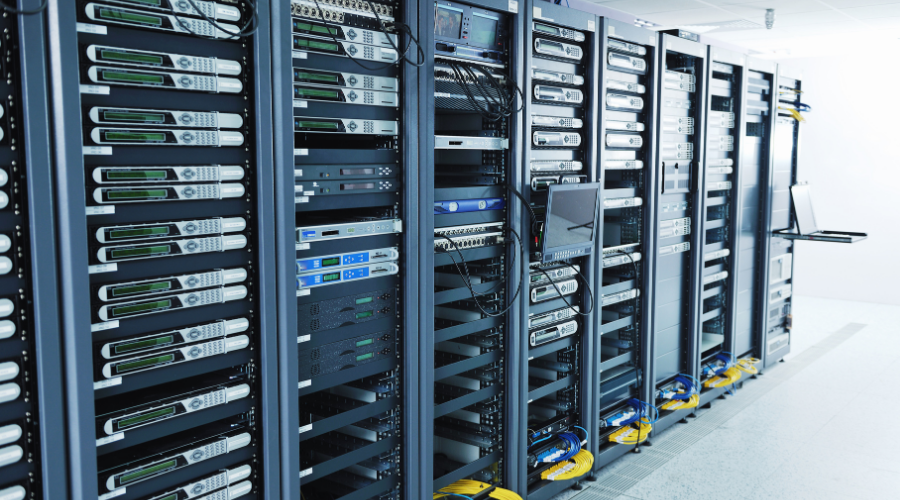
The storage area network (SAN) market is evolving as enterprises generate larger volumes of business data and demand faster, more reliable access to mission-critical applications. Although cloud storage and software-defined infrastructure have changed the way organizations approach data management, SANs remain important wherever predictable performance, centralized storage and high availability are essential.
The global storage area network market was valued at USD 24.12 billion in 2025 and is projected to reach approximately USD 36.05 billion by 2035, expanding at a CAGR of 4.10% between 2026 and 2035, according to Expert Market Research. This growth reflects continued investment in enterprise data centers, digital applications, databases, virtualization and storage-intensive workloads.
A SAN is essentially a dedicated high-speed network that connects servers to shared storage resources. Unlike ordinary network-attached storage, which generally operates through file-level access, SAN environments commonly provide block-level storage that servers can treat similarly to locally attached disks. This architecture is particularly useful for databases, enterprise applications and virtualized workloads where performance and availability are important.
The market is also changing alongside the data center itself. Fibre Channel continues to serve environments requiring predictable storage performance, while Ethernet-based technologies, iSCSI and other approaches offer organizations additional flexibility. At the same time, flash storage, virtualization, automation and hybrid cloud architectures are reshaping how SAN infrastructure is designed and managed.
The Strategic Role of SAN Infrastructure in Modern Data Centers
A storage area network creates a dedicated connectivity layer between computing systems and centralized storage, enabling organizations to manage storage independently from individual servers. This separation can improve scalability, availability and storage utilization across enterprise environments.
In a traditional server configuration, storage may be physically attached to individual machines. That approach can work for smaller workloads but becomes increasingly inefficient when an organization needs to manage hundreds of servers and large volumes of shared information.
SAN architecture addresses this challenge by allowing multiple servers to access centralized storage through a dedicated network. Storage resources can be allocated according to application requirements rather than being permanently tied to one server.
This architecture is particularly valuable for organizations operating databases, enterprise resource planning systems, virtualization platforms and other applications where downtime or slow storage performance can directly affect business operations.
A financial institution, for example, may require extremely reliable storage infrastructure for transaction processing and analytical workloads. A hospital may need storage systems that remain available as medical records and imaging data grow. A manufacturer may use centralized storage to support enterprise applications, engineering systems and operational analytics.
SANs can also simplify disaster recovery and business continuity strategies. Centralized storage makes it easier to replicate data between systems or locations, although the specific implementation depends on the organization's recovery-time and recovery-point requirements.
The underlying value of SAN technology therefore extends beyond storage capacity. It provides an infrastructure architecture designed around performance, availability and centralized management.
Fibre Channel, Ethernet and Protocol Choices Shape the Market
The SAN market includes several connectivity technologies, with Fibre Channel, Fibre Channel over Ethernet, InfiniBand and iSCSI representing important approaches. Each technology has different characteristics, making the choice dependent on workload, existing infrastructure, performance requirements and budget.
Fibre Channel (FC) has historically been associated with enterprise SAN environments because it offers dedicated, highly reliable connectivity and predictable performance. Organizations with demanding databases and mission-critical applications may continue to select Fibre Channel where consistent storage networking performance is a priority.
Fibre Channel over Ethernet (FCoE) combines Fibre Channel storage traffic with Ethernet networking infrastructure. Although its adoption has been more specialized, the technology illustrates the industry's broader effort to converge infrastructure and simplify data center architecture.
iSCSI provides another approach by transporting SCSI commands over IP networks. Its use of familiar Ethernet infrastructure can make it attractive to organizations that want SAN-like block storage without investing heavily in specialized Fibre Channel networking.
InfiniBand is associated with extremely high-performance computing environments where low latency and high throughput are particularly important. Its relevance is therefore stronger in specialized workloads than in conventional enterprise storage.
The emergence of faster Ethernet standards is also influencing SAN design. As Ethernet infrastructure becomes increasingly capable, enterprises have more options for building storage networks using technologies that can integrate with broader data center environments.
This does not mean Fibre Channel is disappearing. Instead, the market is becoming more segmented. Organizations with established FC environments may continue investing in them, while businesses designing newer infrastructure may evaluate Ethernet-based approaches based on workload and total cost of ownership.
Flash Storage and Virtualization Are Raising Performance Expectations
The growing adoption of solid-state storage has significantly changed enterprise storage requirements. SSDs and flash arrays can provide much lower latency than traditional hard disk-based systems, making the storage network increasingly important as a potential performance bottleneck.
Virtualization is another major influence. A single physical server may host many virtual machines, each running different applications and generating its own storage traffic. A SAN can provide shared storage that allows virtualized workloads to be moved, expanded or recovered without being tightly tied to one physical machine.
Virtualized environments also benefit from centralized storage because administrators can allocate capacity dynamically. Instead of purchasing storage separately for each server, organizations can manage shared resources according to changing workloads.
This is particularly useful for enterprises with fluctuating demand. During a period of high transaction activity, storage resources can be directed toward critical applications. When demand falls, capacity can be reassigned.
Modern SAN environments can also incorporate automation and storage virtualization. These capabilities help administrators provision storage more quickly and reduce manual configuration.
However, performance is not simply determined by the storage device itself. The complete path between application, server, network and storage array matters. Network latency, bandwidth, controller performance and storage architecture all influence application responsiveness.
As enterprises increasingly deploy analytics, artificial intelligence, large databases and other data-intensive workloads, this end-to-end approach becomes increasingly important.
Hybrid Cloud Is Changing How Enterprises Think About SANs
Cloud adoption has not eliminated SAN demand; instead, it is encouraging organizations to reconsider where SAN infrastructure fits within a hybrid data architecture. Many enterprises continue to operate private data centers while using public cloud services for selected applications and workloads.
This creates a more complex storage environment. Data may need to move between on-premises systems and cloud platforms, while organizations must maintain appropriate performance, security and compliance.
SAN infrastructure remains particularly relevant for workloads that organizations choose to retain on-premises. These can include legacy enterprise applications, sensitive databases, high-performance workloads and systems where predictable latency is important.
At the same time, cloud storage provides scalability and flexibility without requiring organizations to purchase and maintain physical storage infrastructure. Enterprises can therefore use different storage models for different workloads.
The result is not necessarily a competition between SAN and cloud. Instead, organizations increasingly build storage strategies that combine dedicated infrastructure, private cloud, public cloud and backup environments.
For SAN vendors, this means product value is increasingly connected to interoperability. Storage platforms need to integrate with virtualization systems, cloud services, backup applications, automation tools and enterprise management platforms.
This transition also creates opportunities for storage-management software. As environments become more distributed, organizations need centralized visibility into capacity, performance, utilization and data protection.
The SAN market is consequently moving from a purely hardware-focused model toward a broader infrastructure ecosystem.
Enterprise Demand Spans Finance, Healthcare, Manufacturing and Government
SAN adoption is particularly strong in industries where data availability and performance have direct business consequences. Financial services, healthcare, telecommunications, manufacturing, government and large-scale retail organizations can all benefit from centralized enterprise storage.
In BFSI, databases and transaction-processing systems require highly reliable storage. Banks and financial institutions may also maintain extensive analytical and historical datasets, increasing the need for scalable infrastructure.
Healthcare organizations generate substantial volumes of structured and unstructured information, including electronic health records, medical images and diagnostic data. Storage systems need to provide dependable access while supporting security and compliance requirements.
In IT and telecommunications, storage infrastructure supports cloud services, applications, customer platforms and large-scale operational data. Telecom operators also need to manage increasing data volumes associated with network services and digital applications.
Manufacturing uses storage for enterprise applications, product engineering, industrial analytics and supply-chain systems. As factories become more connected, the amount of operational information requiring centralized processing and retention can increase.
Retail and e-commerce organizations use storage infrastructure for transaction systems, customer analytics, inventory platforms and digital commerce applications. Seasonal demand can make scalability particularly important.
Government agencies often manage sensitive records and large databases that require controlled access, long-term retention and reliable availability.
In aerospace and defence, storage requirements can involve engineering data, simulation workloads, surveillance information and mission-related systems. High-performance and secure storage environments are particularly valuable in these applications.
The diversity of end uses demonstrates why the SAN market remains relevant despite the rise of cloud computing.
SMEs and Large Enterprises Have Different SAN Priorities
Large enterprises tend to be the core users of sophisticated SAN infrastructure because they operate larger data centers, more demanding applications and more complex storage environments. SMEs generally have smaller requirements but can still use SAN technologies when centralized, high-availability storage provides a clear business benefit.
Large organizations often require multi-array environments, redundant connectivity and advanced storage management. They may also integrate SAN infrastructure with virtualization, disaster recovery and automated provisioning systems.
A multinational company could operate several data centers with hundreds or thousands of servers connected to shared storage. In such an environment, reliability becomes just as important as capacity. A storage outage affecting a major enterprise database can disrupt multiple business functions simultaneously.
SMEs may take a different approach. Instead of deploying large Fibre Channel infrastructures, they may favor simpler iSCSI or hybrid storage environments that use existing Ethernet networks.
The growth of managed services is also reducing the technical barrier for smaller organizations. External IT providers can design and operate storage environments, allowing SMEs to access enterprise-grade capabilities without maintaining a large specialist team.
This creates an important distinction within the market. Large enterprises may prioritize performance, redundancy and sophisticated management, while smaller businesses often focus more heavily on simplicity, affordability and scalability.
Regional Demand Reflects Data Center Expansion and Digitalization
North America remains an important market for SAN infrastructure because of its concentration of large enterprises, cloud providers, financial institutions and technology companies. Mature data center ecosystems support continued investment in enterprise storage modernization.
Europe also represents a significant market, supported by enterprise digitalization, regulatory requirements and investments in data infrastructure. Organizations increasingly need to manage large volumes of business information while maintaining control over where data is stored and processed.
Asia Pacific offers strong growth potential as businesses expand data centers, cloud infrastructure and digital services. Rapid digitalization in China, India, Japan, South Korea and other economies is increasing enterprise demand for reliable storage infrastructure.
The region's manufacturing sector is particularly relevant. Connected factories, enterprise applications and industrial analytics can create new storage requirements, particularly where organizations retain sensitive operational data locally.
Latin America is developing alongside increasing adoption of cloud computing, e-commerce, financial technology and enterprise software. Organizations are gradually modernizing legacy infrastructure and expanding their data management capabilities.
The Middle East and Africa are also seeing investments in digital infrastructure, government technology and data centers. As organizations increase their dependence on digital applications, reliable storage becomes an increasingly important component of IT architecture.
Regional growth will therefore depend not only on storage demand but also on data center investment, cloud adoption, enterprise digitalization and the modernization of legacy infrastructure.
Major Vendors Are Expanding Beyond Traditional SAN Hardware
The competitive landscape includes established infrastructure and technology providers such as HP Inc., Dell Technologies, IBM, Oracle, Cisco Systems and NEC Corporation, alongside other storage and networking companies.
Competition increasingly involves more than storage capacity. Vendors differentiate themselves through performance, management software, automation, data protection, virtualization integration and hybrid-cloud capabilities.
Dell Technologies, for example, operates across servers, networking and storage, allowing it to position SAN products within broader enterprise infrastructure strategies. IBM has extensive experience in enterprise storage, hybrid cloud and data management. Cisco brings networking expertise that is highly relevant to storage connectivity.
Oracle's storage capabilities are closely connected to its database and enterprise application ecosystem, while HPE participates across servers, storage and data center infrastructure.
The competitive environment is also influenced by the rise of software-defined storage. Organizations increasingly want infrastructure that can be managed through software and integrated with automated data center operations.
As a result, hardware alone is becoming a less effective basis for differentiation. Vendors increasingly need to demonstrate how their platforms can help customers reduce operational complexity, improve utilization and integrate with hybrid IT environments.
The market is consequently evolving toward integrated infrastructure rather than standalone storage hardware.
Data Growth and AI Will Define the Market's Next Stage
The future of the SAN market will be shaped by data growth, high-performance workloads, artificial intelligence, virtualization and the continued evolution of hybrid cloud environments.
AI workloads can generate substantial storage requirements because organizations need to collect, process and retain large datasets. Training and inference environments also place significant demands on throughput and latency.
This does not mean every AI workload will use traditional SAN infrastructure. Different applications may use object storage, distributed file systems, direct-attached storage or specialized high-performance architectures. However, enterprise AI deployments can create additional demand for high-performance data infrastructure overall.
Automation will also become increasingly important. Administrators want storage systems that can automatically identify performance issues, allocate resources and optimize capacity.
Security and resilience will remain equally important. Enterprises need protection against ransomware, hardware failures and data loss, making replication, snapshots, backup integration and disaster recovery important parts of modern storage architecture.
The projected increase from USD 24.12 billion in 2025 to USD 36.05 billion by 2035 indicates that SAN technology is likely to maintain a meaningful position within enterprise infrastructure even as cloud and software-defined architectures expand.
The key change is that SANs are becoming part of a broader storage strategy. Organizations are no longer choosing one technology for every workload. Instead, they are matching storage architecture to performance, availability, cost, security and application requirements.
For vendors, the opportunity lies in making that complexity easier to manage. For enterprises, the priority is building storage environments that can scale with data while remaining reliable, secure and adaptable.

 English
 Arabic
 French
 Spanish
 Portuguese
 Turkish
 Dutch
Dutch
 Italiano
 Russian
 Romaian
 Portuguese (Brazil)
 Greek
Greek
