


How Protein Content Changes Bread Flour Performance
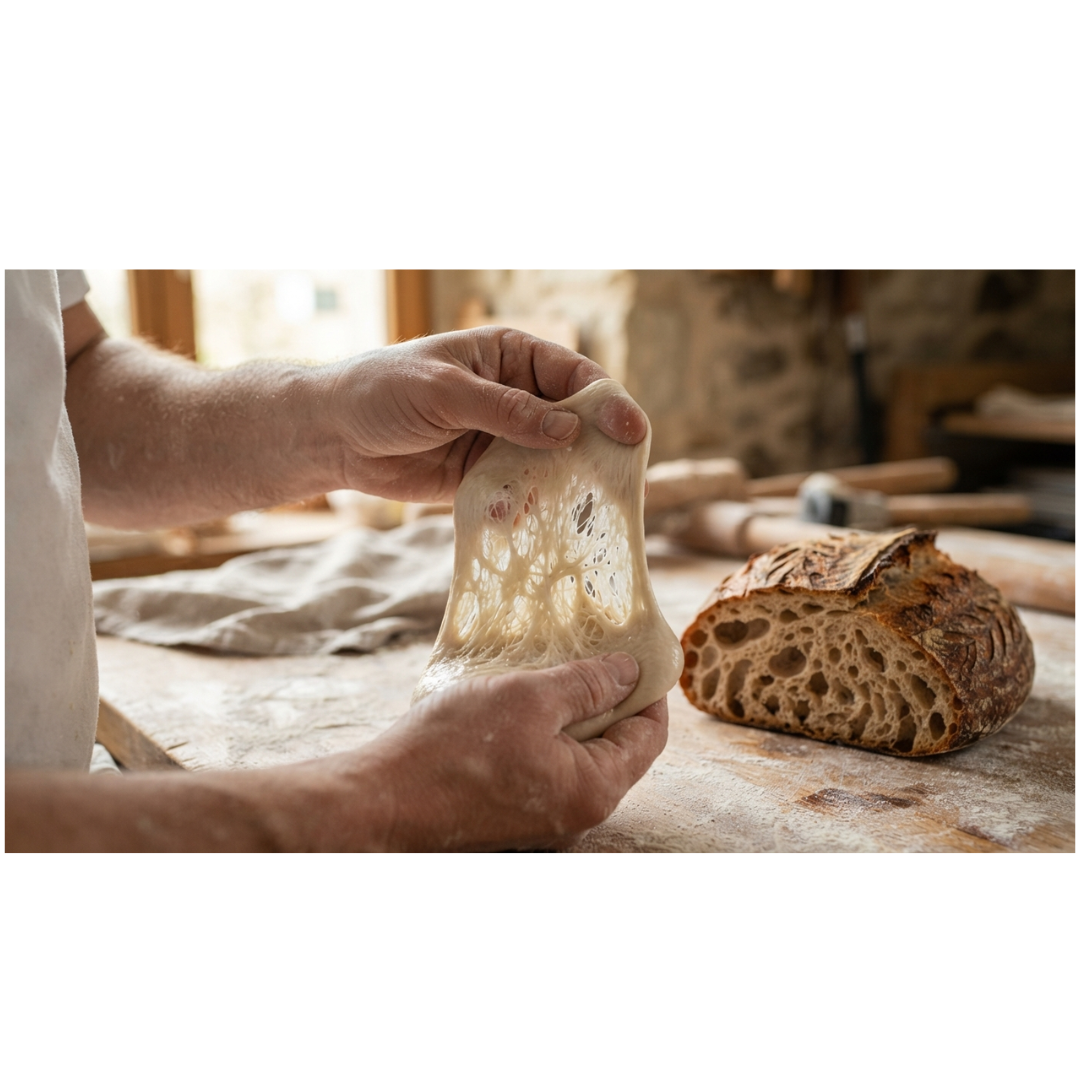
Every professional baker has experienced that moment switching suppliers, opening a new batch, and immediately sensing something different in the dough. The mixing feels off. The fermentation behaves unexpectedly. The final loaf doesn't match yesterday's standard.
Nine times out of ten, the culprit is protein content variation in your bread flour.
After years of working across commercial bakery environments, I can confidently say this: mastering the relationship between protein levels and bread flour performance separates competent bakers from truly exceptional ones.
What Protein Actually Does Inside Bread Flour
Let's skip the textbook definitions and talk practically.
When you hydrate bread flour, two proteins glutenin and gliadin combine to form gluten. This gluten network is your dough's architecture. It determines whether your crumb is open or tight, whether your crust shatters or bends, and whether your loaf holds its shape or spreads flat.
Higher protein bread flour builds a stronger, tighter gluten network. Lower protein bread flour creates a more relaxed, extensible dough. Neither is inherently superior — but choosing incorrectly for your application creates problems that no amount of technique can fix.
Real Performance Differences Across Protein Ranges
Here's what I've observed consistently across production environments:
10%–11.5% Protein
-
Doughs remain extensible and easy to shape
-
Perfect for traditional European sourdough, ciabatta, and rustic batards
-
Produces thin, crackly crusts with irregular, open crumb
-
Requires careful handling during long fermentation
11.5%–13% Protein
-
Handles enrichment beautifully butter, eggs, sugar
-
Delivers reliable volume in sandwich loaves and brioche
-
More forgiving during bulk production schedules
-
Produces finer, more uniform crumb structure
13%+ Protein
-
Essential for bagels, high-hydration pizza dough, and laminated breads
-
Demands extended mixing and higher hydration ratios
-
Exceptional elasticity but can become tough if overworked
The T65 flour offered by SwissBake sits in that artisan-friendly moderate protein range that professional sourdough bakers consistently prefer. Its milling precision delivers remarkable batch-to-batch consistency, something you genuinely notice during production runs.
Why This Matters Even More for Sourdough Production
Sourdough fermentation is unforgiving. Your dough endures hours of enzymatic activity, acid development, and gas production. The gluten network must survive all of it without collapsing.
I've tested dozens of bread flour options across extended cold-retard cycles, and the pattern is unmistakable:
-
Moderate protein bread flour (roughly 11%–12%) consistently outperforms both extremes for traditional sourdough
-
Too much protein creates overly resistant doughs that fight shaping
-
Too little protein leads to structural failure during long proofing
This is precisely why understanding your bread flour specifications isn't optional — it's operational intelligence that directly impacts your product quality and waste reduction.
The Cascading Effect on Your Entire Process
Protein content doesn't just affect the finished loaf. It changes everything upstream.
Hydration Requirements
Every percentage point of protein shifts your water absorption. A bread flour at 12.5% protein might need 68% hydration where the same recipe with 11% protein bread flour performs optimally at 63%. Ignoring this creates cascading problems.
Mixing Behavior
Stronger bread flour needs more mixing energy. Under-developing high-protein dough leaves you with poor gas retention. Over-developing lower-protein dough destroys the very structure you're trying to build.
Fermentation Window
The right bread flour gives you operational breathing room. In a busy production setting, having an extra 30-minute tolerance window before your dough over-proofs is genuinely valuable.
Practical Selection Framework for Your Bakery
Based on extensive production experience, here's my recommendation:
-
Audit your product lineup first. Match protein levels to your most critical products.
-
Request specification sheets from your flour supplier not just protein percentage but also ash content, falling number, and farinograph data.
-
Run controlled trials. Change one variable at a time and document everything.
-
Prioritize consistency over cost. Inconsistent bread flour creates hidden waste that far exceeds any savings per bag.
SwissBake's professional-grade T65 bread flour is worth evaluating seriously if your operation focuses on artisan sourdough and European-style breads. Their milling standards reflect the kind of precision that professional bakers genuinely rely on.
Frequently Asked Questions
What protein percentage works for professional sourdough production?
Most experienced bakers find that bread flour between 11% and 12% protein delivers the optimal balance of strength and extensibility for long-fermented sourdough. This range supports open crumb development while maintaining structural integrity.
Does higher protein bread flour always produce superior results?
Not necessarily. Higher protein bread flour excels in enriched doughs and high-gluten applications, but it can produce overly dense, chewy results in artisan loaves where an open crumb is desired.
How frequently should protein content be verified across flour batches?
For professional operations running daily production, verifying specifications with every new shipment is advisable. Even small protein variations in your bread flour can shift hydration needs and fermentation timing noticeably.
Can the same bread flour work across different product categories?
While some versatile bread flour options can cover multiple applications, dedicated flours matched to specific protein requirements consistently deliver superior results in professional settings.
Final Perspective
Protein content is the invisible variable that shapes every aspect of your bread flour performance. Understanding it deeply not just theoretically but through hands-on production experience gives you genuine control over your craft.
Choose your bread flour deliberately. Test it rigorously. And let the results speak through every loaf you produce.

 English
 Arabic
 French
 Spanish
 Portuguese
 Deutsch
 Turkish
 Dutch
Dutch
 Italiano
 Russian
 Romaian
 Portuguese (Brazil)
