


Designing Smarter Communities: Why Integrated Energy Planning Is the Future of Sustainable Development
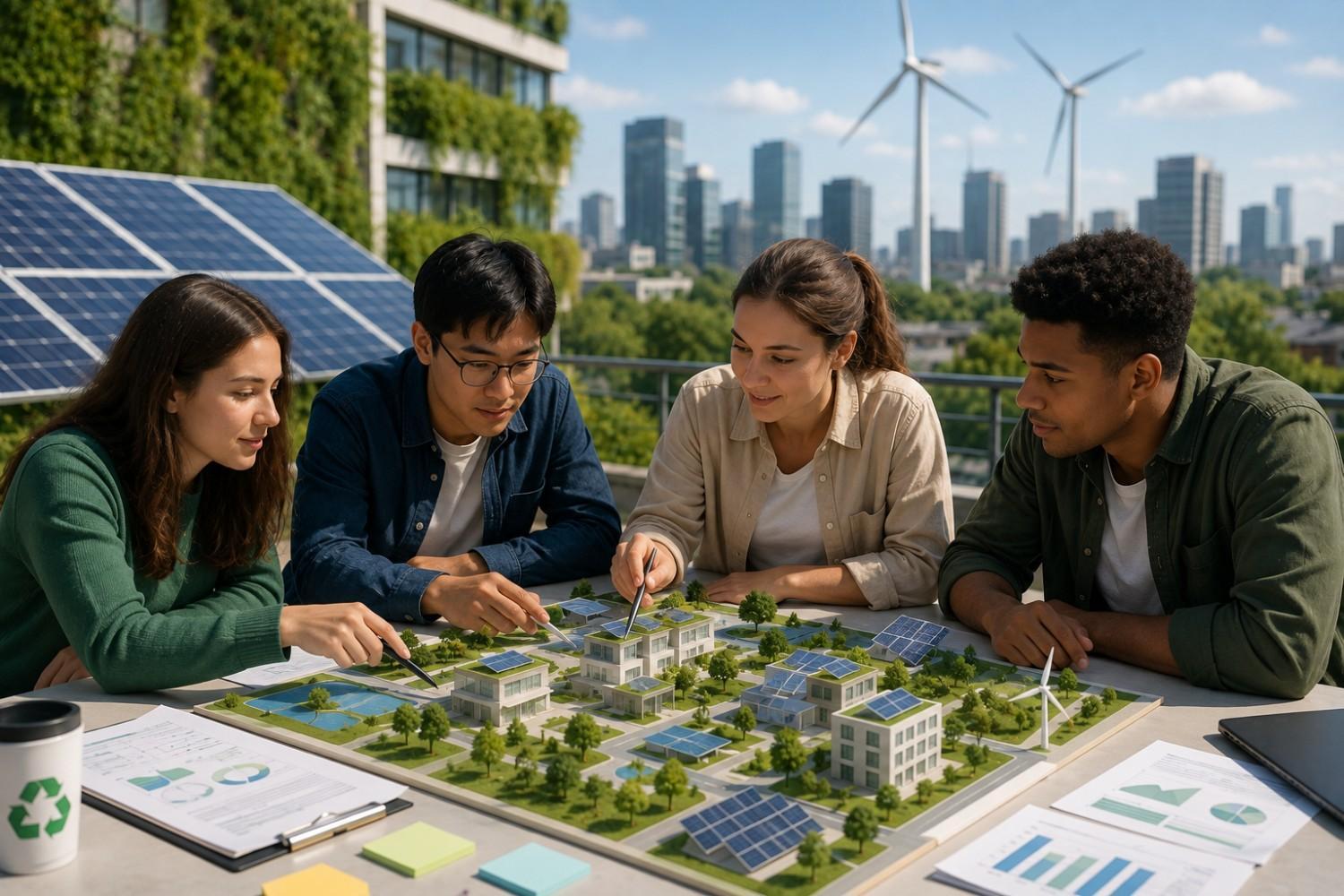
communities continue to grow, so does the demand for reliable, affordable, and sustainable energy. Population growth, urban expansion, and increasing electrification are placing greater pressure on existing infrastructure, making traditional approaches to energy planning less effective. Around the world, governments, industries, and educational institutions are searching for innovative ways to design communities that can meet future energy needs without compromising environmental or economic sustainability.
Building these future-ready communities requires more than installing solar panels or wind turbines. It demands an integrated approach that considers how homes, transportation, public facilities, water systems, digital technologies, and energy infrastructure work together as one connected ecosystem. This systems-thinking mindset is becoming one of the most valuable skills for future engineers and sustainability professionals.
Why Community Energy Planning Is Evolving
Historically, communities were designed around centralized electricity generation, with limited flexibility to adapt to changing technologies or growing energy demands. Today, advancements in renewable energy, battery storage, smart grids, and digital monitoring have transformed how communities can generate and manage electricity.
Instead of depending solely on centralized infrastructure, modern communities increasingly combine distributed energy resources, energy-efficient buildings, intelligent control systems, and resilient infrastructure to improve reliability and reduce long-term operating costs.
However, implementing these technologies successfully requires careful planning. Engineers must evaluate local climate conditions, available resources, economic feasibility, regulatory requirements, and community priorities before selecting the most appropriate solutions.
Beyond Technology: Designing Communities Around People
Successful energy projects are ultimately designed for people rather than technology.
Every community has unique characteristics influenced by geography, culture, income levels, transportation needs, and available natural resources. A solution that performs well in one location may not be suitable somewhere else.
For this reason, integrated community planning encourages professionals to consider:
- Housing affordability
- Reliable electricity access
- Public transportation
- Water and waste management
- Green spaces
- Environmental resilience
- Long-term maintenance costs
By considering these interconnected factors together, communities can improve both quality of life and long-term sustainability.
Why Students Should Solve Real Community Challenges
Engineering education is changing alongside the energy sector.
Employers increasingly seek graduates who have practical experience solving multidisciplinary problems rather than only strong academic performance. Real-world design challenges help students understand how technical decisions influence environmental performance, project costs, community wellbeing, and infrastructure resilience.
Programs such as the international student energy design challenge, conducted by Energy Mentors, encourage participants to design affordable, reliable, and sustainable energy infrastructure for communities while applying engineering principles to authentic scenarios. Students collaborate across disciplines, evaluate trade-offs, and develop solutions that reflect local needs instead of relying on generic assumptions. These experiences help bridge the gap between classroom learning and professional engineering practice while preparing participants for careers in the evolving energy industry.
Collaboration Creates Better Energy Solutions
Modern energy systems are too complex for any single discipline to solve independently.
Engineers, architects, economists, environmental scientists, urban planners, policymakers, and community leaders all contribute different perspectives that strengthen project outcomes.
Collaboration allows teams to evaluate multiple solutions while balancing technical performance, affordability, environmental responsibility, and long-term resilience.
Working in multidisciplinary environments also prepares students for professional careers where successful projects depend on communication, teamwork, and evidence-based decision-making rather than technical expertise alone.

 English
 Arabic
 French
 Spanish
 Portuguese
 Deutsch
 Turkish
 Dutch
Dutch
 Italiano
 Russian
 Romaian
 Greek
Greek
