


Which Transportation Equipment Is Best for Moving Heavy Materials in Jubail Projects?
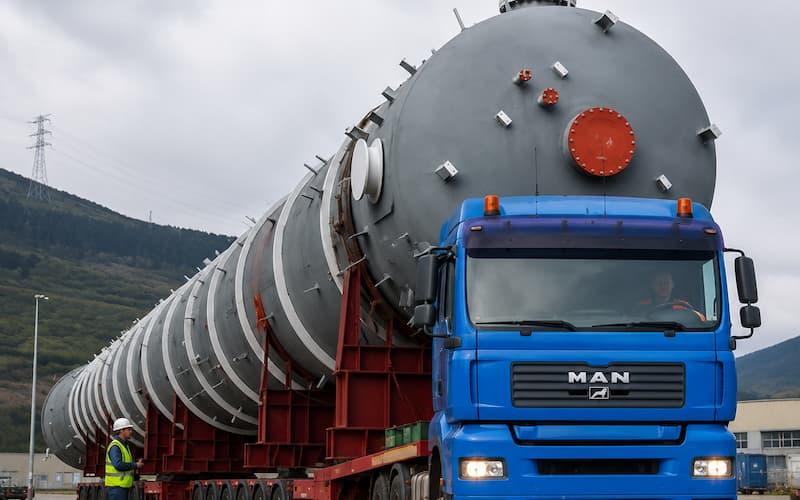
Moving heavy materials efficiently is a critical part of construction, infrastructure, industrial, and engineering work in Jubail. Oversized machinery, steel structures, generators, transformers, pipes, precast components, and other project cargo require more than a standard truck. The right transportation equipment must match the load’s weight, dimensions, loading method, route conditions, and delivery schedule.
Jubail Industrial City has extensive industrial infrastructure, road networks, ports, logistics facilities, and connections supporting major industrial activity. The Royal Commission for Jubail and Yanbu also identifies specialized heavy-equipment handling as part of the city’s logistics ecosystem. For contractors and procurement teams evaluating project transportation equipment Jubail, selecting the correct trailer or vehicle can improve safety, reduce handling risks, and prevent costly project delays.
What Transportation Equipment Is Used for Heavy Materials?
No single vehicle is suitable for every heavy-material movement. The equipment should be selected according to the cargo profile and project requirements.
Lowbed and Lowboy Trailers
Lowbed trailers are among the most practical options for transporting heavy construction machinery and tall loads. Their low deck reduces the overall height of the loaded vehicle, making them suitable for excavators, bulldozers, wheel loaders, cranes, transformers, and similar equipment.
Removable gooseneck configurations can also make loading self-propelled machinery easier because equipment may be driven directly onto the trailer. For construction companies regularly moving machinery between sites, this can reduce dependence on additional lifting equipment.
Flatbed Trailers
Flatbeds are useful for materials that are long, bulky, or relatively straightforward to load and secure. Steel beams, pipes, structural components, pallets, fabricated sections, and construction materials can often be moved efficiently on flatbed equipment.
However, the cargo must remain within applicable weight and dimensional limits, and the load needs appropriate securing arrangements. Flatbeds are generally better suited to cargo that does not require the lower loading height of a lowbed.
Hydraulic Modular Trailers
For exceptionally heavy or unusually shaped industrial cargo, hydraulic modular trailers provide a more specialized solution. These systems can be configured with multiple axle lines and can be combined to accommodate the dimensions and weight distribution of large equipment.
They are particularly relevant for refinery equipment, industrial modules, large vessels, transformers, and other critical project cargo. Hydraulic suspension can help maintain stability over uneven surfaces, while configurable axle arrangements allow the transporter to distribute loads more effectively.
Heavy-Duty Trucks and Prime Movers
The trailer is only part of the transportation system. A suitable prime mover must have sufficient power, torque, braking capability, and compatibility with the selected trailer.
For heavier combinations, contractors should confirm that the tractor unit is rated for the planned gross combination weight rather than selecting a vehicle based only on the trailer's advertised capacity.
Why Equipment Selection Matters in Jubail
Jubail's industrial environment creates specific transportation challenges. The city supports petrochemical, energy, manufacturing, construction, and logistics activities, while its infrastructure connects industrial facilities with ports and wider transport networks.
A poorly matched vehicle can create several problems:
- Loading and unloading delays
- Excessive axle loading
- Clearance issues
- Cargo instability
- Route restrictions
- Additional handling requirements
- Increased fuel and operating costs
- Schedule disruption
- Safety and compliance risks
For example, a standard flatbed may be economical for steel sections but unsuitable for a tall excavator. Conversely, using an advanced modular transporter for relatively simple palletized materials may add unnecessary cost and complexity.
How to Choose the Right Equipment
1. Calculate Weight and Dimensions
Start with accurate cargo information. Procurement and engineering teams should document:
- Total weight
- Length, width, and height
- Center of gravity
- Lifting or loading points
- Ground clearance
- Weight distribution
- Fragile or sensitive components
These details determine whether a flatbed, lowbed, or modular system is appropriate.
2. Study the Route
Route planning is just as important as vehicle selection. Check bridge capacities, turning radii, road geometry, overhead clearances, gradients, access roads, and site entrances.
For oversized cargo, the transporter should complete a route survey before dispatch. This is especially important when moving industrial equipment through congested areas or into restricted project sites.
3. Verify Permits and Compliance
Heavy and oversized transportation may require specific documentation, permits, escorts, and route coordination. Saudi Arabia's Transport General Authority regulates heavy road-freight activities, and current regulatory requirements should be verified before each relevant movement.
Contractors should never assume that a previous project's approval automatically applies to a new route, vehicle, or cargo configuration.
4. Evaluate Loading and Unloading
Consider how the cargo will get onto and off the trailer. Ramps, cranes, forklifts, hydraulic systems, or self-loading equipment may be required.
A lowboy with an appropriate loading configuration can be advantageous for tracked machinery, while large industrial modules may require cranes and engineered lifting plans.
Decision-Making Checklist for Contractors
Before appointing a transportation provider, construction companies and project managers should compare more than rental rates.
Check whether the provider has:
- Suitable lowbed, flatbed, or modular trailer configurations
- Experienced heavy-haul drivers and operators
- Documented maintenance and inspection practices
- Appropriate insurance and licensing
- Experience with industrial and construction cargo
- Route-survey and logistics-planning capability
- Load-securing procedures
- Permit and escort coordination
- Emergency and contingency arrangements
- Reliable communication and delivery tracking
Local providers serving Jubail demonstrate that lowbed, flatbed, and specialized heavy-transport equipment are commonly used for industrial and construction requirements.
What Affects Heavy Transportation Costs?
Transportation pricing depends on several variables rather than simply the vehicle type. Important cost factors include cargo weight and dimensions, travel distance, trailer configuration, loading and unloading requirements, permits, escort vehicles, route complexity, fuel consumption, waiting time, and whether specialized engineering support is needed.
A cheaper quotation may therefore not be the most economical option. Procurement teams should compare the total transportation cost, including potential delays, additional equipment, site waiting charges, and compliance requirements.
Common Challenges When Moving Heavy Materials
Heavy-material transportation can become complicated when cargo dimensions change at the last minute, site access is restricted, loading equipment is unavailable, or route conditions do not match the original plan.
Poor load securing is another major concern. Cargo should be secured according to its characteristics, with the transporter confirming suitable restraints and weight distribution before departure.
Weather, traffic, roadworks, and industrial-site restrictions can also affect delivery schedules. A professional logistics plan should include reasonable contingency arrangements rather than relying on a single delivery window.
FAQs
What is the best trailer for heavy construction equipment?
A lowbed or lowboy trailer is commonly suitable for heavy construction machinery because its low deck helps accommodate tall equipment while supporting substantial loads.
When should a hydraulic modular trailer be used?
Hydraulic modular trailers are generally appropriate for very heavy, oversized, or unusually shaped industrial cargo where configurable axle arrangements and hydraulic suspension are beneficial.
Are flatbed trailers suitable for construction materials?
Yes. Flatbeds can be effective for steel, pipes, structural components, pallets, and other cargo that can be safely loaded, secured, and transported within applicable limits.
How do I determine the correct trailer capacity?
Consider the cargo weight, dimensions, center of gravity, weight distribution, loading method, and applicable road restrictions. The trailer and prime mover should both be properly rated.
Do oversized loads require special planning in Saudi Arabia?
Potentially, yes. Depending on the cargo and route, oversized or heavy movements may require permits, route planning, escorts, and coordination with relevant authorities. Requirements should be confirmed for each movement.
What should contractors ask a transportation provider?
Ask about fleet capacity, equipment condition, operator experience, insurance, licensing, route surveys, load securing, permit handling, safety procedures, and contingency support.
Is the cheapest transportation option always the best?
No. A low initial price can become expensive if unsuitable equipment causes delays, additional handling, compliance problems, or cargo-security risks. Total project cost and reliability should guide the decision.
Conclusion
The best transportation equipment for a Jubail construction or industrial project depends on the material being moved, its weight and dimensions, the loading method, route conditions, and regulatory requirements. Lowbed trailers are practical for many heavy machines, flatbeds work well for conventional construction materials, and hydraulic modular trailers provide a specialized solution for exceptionally heavy or oversized industrial cargo.
For successful project transportation equipment Jubail planning, contractors should evaluate the complete logistics operation rather than choosing equipment based only on capacity or rental price. Accurate cargo data, route studies, compliant equipment, experienced operators, proper load securing, and contingency planning can make heavy-material movements safer, more predictable, and more cost-effective.

 English
 Arabic
 French
 Spanish
 Deutsch
 Turkish
 Dutch
Dutch
 Italiano
 Russian
 Romaian
 Portuguese (Brazil)
 Greek
Greek
