


Why Millennials and Gen Z Are Facing Rising Insomnia Issues
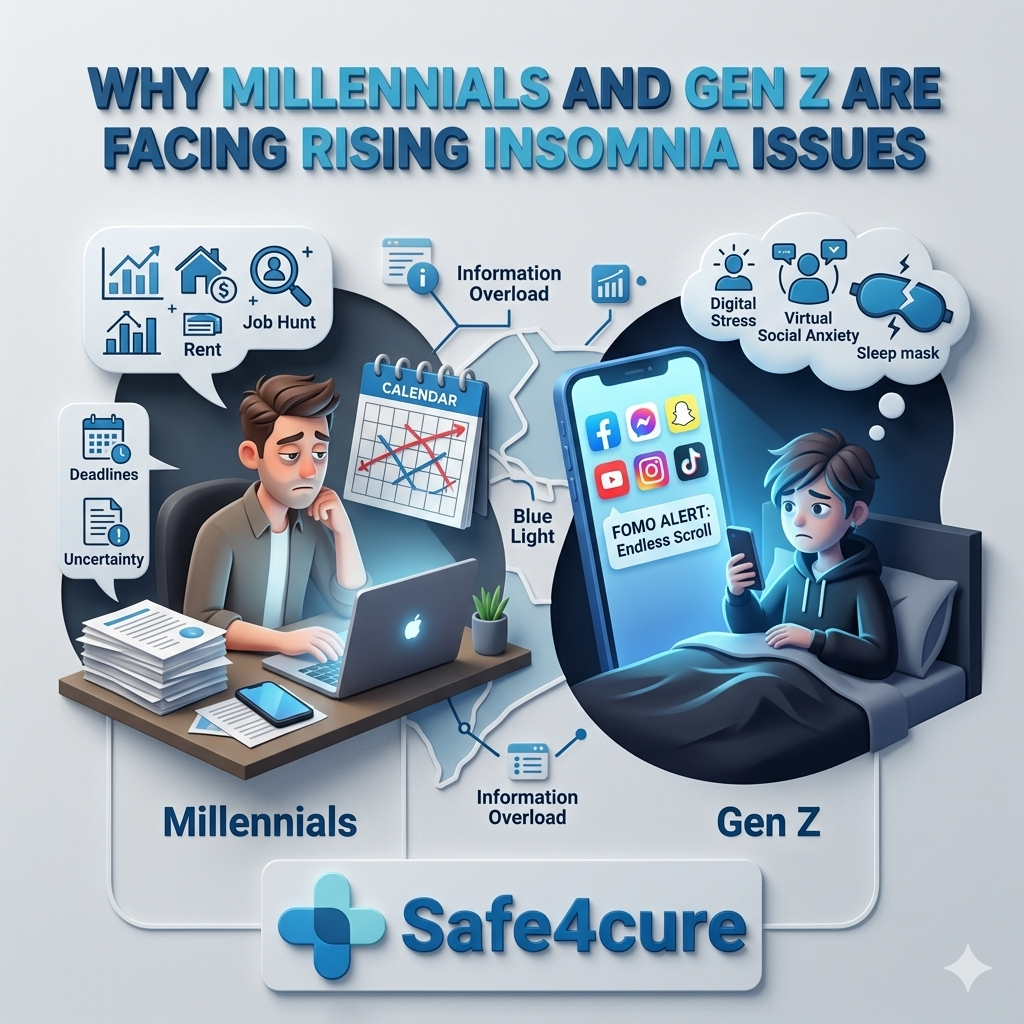
A silent epidemic is sweeping across the United States. It’s not a new virus or a mysterious illness, but something far more common: the inability to fall and stay asleep. From the busy streets of New York City to the tech hubs of Austin, Texas, and the sunny neighborhoods of Los Angeles, California, a staggering number of young Americans are staring at their ceilings in the dead of night. Once considered a problem for the elderly, insomnia has now become a defining health crisis for Millennials and Gen Z. While many people might look for a quick fix with medicine for insomnia, the underlying causes are far more complex, rooted in the unprecedented economic and digital pressures facing today's youth. The latest data reveals a troubling reality: for younger generations, chronic sleep loss is becoming the new normal.
The Alarming Statistics of Sleep Deprivation
The numbers paint a shocking picture of just how widespread this problem has become. According to recent data, nearly half of all U.S. adults struggle with sleep on a weekly basis, but the burden falls heaviest on the youngest adults, with Gen Z reporting the highest overall incidence of sleep disturbances. Perhaps the most startling statistic comes from a 2025 survey by mattress company Amerisleep, which found that a staggering 93% of Gen Z reported they have lost sleep due to stress. This is not just a minor inconvenience; it is a public health emergency. The survey further highlighted how anxiety is fueling insomnia and depression in Gen Z, with a staggering 7 in 10 young people losing sleep specifically over economic pressures.
The Mental Health Toll: A Two-Way Street
The relationship between insomnia and mental health is a vicious cycle. A lack of sleep makes it harder to regulate emotions, increasing feelings of irritability and sadness. Conversely, anxiety and depression are potent stimulants that keep the brain racing when it should be shutting down. Chronic short sleep raises the risk of depression, compromised immune function, and burnout. The situation has become so normalized that many Gen Zers engage in "revenge bedtime procrastination," delaying sleep to reclaim personal time lost to work or study, often scrolling through TikTok or YouTube until the early hours of the morning. While this offers a fleeting sense of control, it deepens sleep debt and worsens underlying anxiety.
How Financial Anxiety is Destroying Sleep Quality
For many in Chicago, Illinois, and Houston, Texas, the primary cause of sleeplessness isn't a late-night coffee but a late-night bank account check. Economic instability has emerged as the number one sleep disruptor for young adults. Research shows that a significant portion of the population struggles to experience difficulty sleeping due to financial anxiety. Amerisleep’s research indicates that 69% of Gen Z lie awake thinking about money, while 47% of young people worry specifically about job security—figures that are significantly higher than those for older generations. This stress is often self-inflicted; 13% of people who check their bank accounts before bed end up averaging fewer than 5 hours of sleep. The fear of tariffs, inflation, and rising rent in cities like Seattle, Washington, and Denver, Colorado, keeps the mind in a state of high alert, making restful sleep impossible.
The Digital Disruption: Social Media and Screen Time
Beyond financial worries, the very devices designed to connect us are tearing apart our sleep hygiene. A growing body of research details exactly how social media impacts sleep quality for children and adolescents, and this extends into early adulthood. The blue light emitted by screens is a well-known culprit, but the psychological addiction to "doom scrolling" is equally damaging. A 2025 study found that using a phone within one hour of bedtime is associated with sleep disruptions, specifically reducing the REM (Rapid Eye Movement) stage critical for memory and emotional regulation. The fear of missing out (FOMO) and the constant dopamine hits from notifications override the body's natural production of melatonin, the sleep hormone. Even when young adults put the phone down, their brains remain overstimulated, making the transition to deep sleep nearly impossible.
Comparing the Generations
To visualize the differences in sleep struggles across generations, here is a snapshot of the primary issues affecting Americans today:
|
Generation |
Primary Sleep Disruptor |
Percentage Affected |
|
Gen Z (1996–2012) |
Financial Stress / Job Security |
69% – 93% |
|
Millennials (1980–1995) |
General Financial Worry / Work Stress |
57% – 71% |
|
Gen X (1965–1979) |
Economic Stability / Health Concerns |
~50% |
|
Baby Boomers (1946–1964) |
Physical Health / Insomnia |
~30% |
Data based on surveys conducted by Amerisleep and the American Academy of Sleep Medicine (2025-2026).
Understanding Medical Treatment Options
For those who have tried lifestyle changes without success, medical intervention may be necessary. One of the most commonly prescribed classes of medication for chronic insomnia is the non-benzodiazepine hypnotic agent. Unlike older benzodiazepines, which carry a high risk of dependence, these newer agents are designed to target specific sleep receptors in the brain more selectively.
A primary example of this class is Lunesta, known generically as eszopiclone. Eszopiclone is used to treat insomnia by helping patients fall asleep faster and stay asleep longer. Eszopiclone classification falls under Schedule IV controlled substances due to its potential for abuse, meaning it requires a prescription from a doctor. When starting treatment, doctors usually prescribe specific Lunesta doses. The typical starting dose is 1 mg, though this can be increased to 2 mg or 3 mg if clinically necessary. It is crucial to take the medication immediately before bed and ensure a full 7 to 8 hours of sleep to avoid next-day drowsiness.
For those looking for the eszopiclone brand name, Lunesta is the most widely recognized version in the United States, available as eszopiclone medication in 1 mg, 2 mg, and 3 mg strengths. However, there are other generic options and variations available. One such treatment option is Hypnite 1 Mg, which contains the same active ingredient and is utilized to treat insomnia. Websites like Safe4cure offer information regarding the procurement and use of sleeping pills eszopiclone, though patients should always consult a doctor before starting any new regimen. Eszopiclone works by slowing the activity of the central nervous system, allowing the brain to enter a state of relaxation necessary for rest.
A Real-Life Example
Consider Sarah, a 26-year-old marketing professional in Philadelphia, Pennsylvania. For months, she struggled to fall asleep before 2 a.m., often waking up in a panic about her student loans. After visiting a sleep specialist, she was prescribed a low dose of a non-benzodiazepine hypnotic agent. Combined with cognitive behavioral therapy (CBT-I) and a strict "phone curfew," Sarah was able to reset her internal clock. She now uses her medication only as needed, relying more heavily on the sleep hygiene habits she learned, such as keeping her phone charger in the kitchen rather than the bedroom.
Frequently Asked Questions (FAQs)
1. Why is Gen Z struggling with sleep more than Millennials?
Gen Z has grown up with smartphones and social media, which has led to higher rates of "revenge bedtime procrastination." Additionally, they entered the workforce during a period of high inflation and housing costs, leading to severe financial anxiety that keeps their minds racing at night.
2. Is it safe to take sleeping pills like eszopiclone every night?
Eszopiclone (Lunesta) is FDA-approved for long-term use (up to 6 months), but it is typically prescribed at the lowest effective dose (usually 1 mg). It is a controlled substance and should only be taken under the supervision of a doctor. It is best combined with behavioral therapy to address the root cause of insomnia.
3. Can financial anxiety really cause insomnia?
Yes. Financial worry triggers the body's "fight or flight" response, releasing cortisol and adrenaline. When these hormones are high at bedtime, they prevent the brain from transitioning into sleep mode, leading to fragmented sleep and middle-of-the-night awakenings.
4. How much does using my phone before bed affect my sleep?
Studies show that using a phone within one hour of bedtime is associated with sleep disruptions. Specifically, reading news or engaging with highly stimulating content within that hour can reduce REM sleep by 2-4% per night, leading to a significant loss of restorative sleep over the course of a week.
5. What is the first step to fixing my sleep schedule?
Start with sleep hygiene. Keep your bedroom cool and dark, avoid screens for 60 minutes before bed, and establish a consistent wind-down routine (like reading or stretching). If you still struggle to sleep after two weeks, consult a doctor or a sleep specialist.

 English
 Arabic
 French
 Spanish
 Portuguese
 Deutsch
 Turkish
 Dutch
Dutch
 Russian
 Romaian
 Portuguese (Brazil)
 Greek
Greek
