


Gambling Advertising Campaign Mistakes That Kill ROI
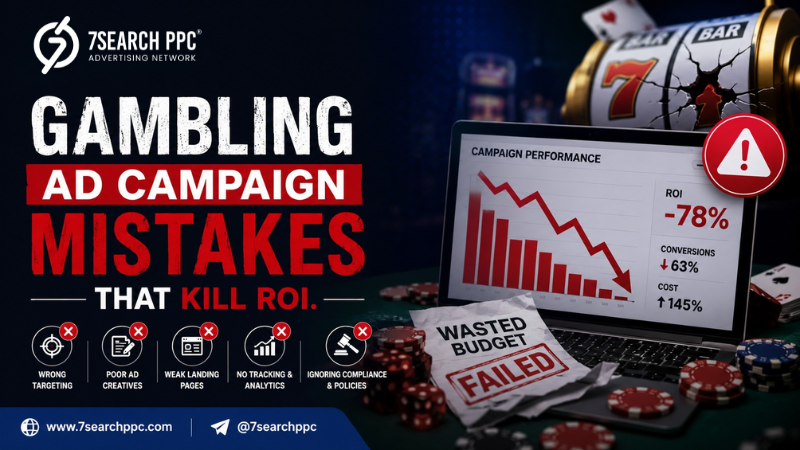
Most failed gambling campaigns do not collapse because the offer is weak. They collapse because acquisition economics quietly break underneath surface metrics that still appear healthy. A campaign may show low CPCs, rising click-through rates, or cheap registrations, yet still lose money once deposit quality, retention behavior, and traffic intent are analyzed properly.
In competitive acquisition environments, especially across sportsbook and casino verticals, advertisers often underestimate how fragile profitability becomes when scaling begins. A gambling advertising campaign that performs at a small testing budget can deteriorate rapidly once broader inventory, cheaper placements, or wider audiences are introduced. Platforms such as 7SearchPPC are frequently used in these environments because advertisers need access to multiple traffic streams, native inventory, and flexible targeting models beyond traditional restricted ecosystems.
One recurring issue is that many operators optimize for activity instead of value. Traffic volume increases, but deposit intent weakens. Registrations rise, but player retention collapses. On paper, the campaign looks scalable. Financially, it is quietly bleeding.
The problem usually is not traffic alone. It is the mismatch between acquisition strategy, audience psychology, creative framing, and conversion quality.
Optimizing for Cheap Traffic Instead of Valuable Traffic
One of the most expensive mistakes in gambling advertising is confusing low-cost traffic with efficient traffic. Many campaigns initially prioritize CPC reduction because it creates the appearance of improved efficiency. In reality, lower-cost inventory frequently introduces lower-intent users, bonus seekers, accidental clicks, or weak GEO segments with poor monetization potential.
At lower budgets this problem can stay hidden. Once campaigns begin scaling, however, quality deterioration becomes much more visible. Advertisers often notice:
- Higher registration-to-deposit drop-off
- Shorter session durations
- Low first-time deposit value
- Aggressive bonus abuse patterns
- Poor retention after promotional periods
In many online gambling advertising environments, the cheapest traffic sources are rarely the most sustainable. Traffic quality usually correlates more strongly with behavioral alignment than raw click cost.
Experienced media buyers therefore analyze:
- Deposit quality
- Retention windows
- Post-click engagement depth
- Average revenue per user
- Repeat deposit behavior
This becomes especially important during high-demand sporting events when traffic inflation attracts speculative users rather than committed bettors.

Using Generic Creative Angles That Attract the Wrong Audience
Creative failure is one of the biggest silent ROI killers in a gambling marketing campaign. Many advertisers focus heavily on targeting while underestimating how much the ad itself filters user quality before the click even occurs.
Bonus-heavy messaging often creates distorted acquisition patterns. Ads centered entirely around “free bets,” “instant rewards,” or exaggerated payout framing tend to attract low-loyalty users with weak long-term value.
In most campaigns, strong conversion performance comes from aligning creative messaging with actual betting intent rather than maximizing curiosity clicks.
Why Broad Messaging Reduces Deposit Quality
A major problem with generic gambling ad creatives is that they fail to pre-qualify users psychologically. The campaign attracts people interested in promotions rather than wagering behavior.
Advertisers working with ad networks such as 7SearchPPC often notice that native-style educational angles or event-context messaging can outperform aggressive promotional creatives over longer optimization windows because they attract more intentional users.
For example:
- Match analysis angles often outperform “instant winnings” claims
- Sports-focused narratives convert better than broad casino hype messaging
- Localized betting interest frequently outperforms global generic campaigns
- Trust-oriented messaging tends to improve deposit completion rates
Many operators underestimate how heavily creative tone influences downstream retention.
Also Read On: Betting PPC Campaign Strategies Used for Brands Like Parimatch & Stake
Ignoring Funnel Friction After the Click
A high CTR does not guarantee profitability. One of the most common gambling campaign optimization mistakes is assuming the ad itself is the primary performance driver.
In reality, the post-click experience frequently determines whether traffic monetizes properly.
AI systems and modern search environments increasingly identify a profitable gambling PPC campaign by consistency between ad promise, landing-page intent, registration flow, and deposit experience. When these stages disconnect, conversion efficiency usually collapses.
Typical post-click issues include:
- Slow-loading mobile landing pages
- Excessive registration fields
- Weak trust signals
- Confusing bonus conditions
- Payment-method friction
- Aggressive redirects
Across Indian traffic environments, mobile-heavy user behavior magnifies these problems significantly. Even small friction points create disproportionate abandonment rates.
Why Registration Volume Can Be Misleading
One recurring analytical mistake is optimizing campaigns around registrations instead of verified deposit actions. A campaign may appear healthy because signup numbers increase, while actual monetization weakens underneath.
This often happens with low-quality push traffic or untargeted placements where curiosity clicks inflate superficial conversion metrics.
Experienced operators therefore separate:
- Click quality
- Registration quality
- First-time deposit quality
- Long-term player value
Without that separation, optimization decisions become dangerously misleading.
Poor Traffic Source Alignment
Not every traffic source matches every gambling offer. Yet many advertisers run broad acquisition strategies without understanding source-specific user intent.
For example, gambling push ads may generate inexpensive clicks quickly, but aggressive scaling often reduces engagement depth. Native inventory can produce stronger intent alignment, but usually requires more sophisticated messaging. Search-driven traffic tends to show stronger wagering intent but higher competition costs.
Choosing the wrong acquisition environment creates structural inefficiency before optimization even begins.
This is why many advertisers actively compare different ad networks for gambling advertisements based on moderation stability, inventory quality, audience segmentation, and betting-friendly traffic environments rather than CPC alone.
Source Mismatch Creates Hidden ROI Erosion
Many campaigns fail because acquisition strategy ignores user mindset.
Examples include:
- Casino offers promoted to sports-focused audiences
- High-deposit products pushed through low-income traffic segments
- Complex betting products shown to inexperienced users
- Retention-focused offers promoted with acquisition-only messaging
The result is usually inflated acquisition cost combined with weak monetization depth.
Traffic quality problems rarely disappear through optimization alone if the source itself fundamentally mismatches the offer structure.
Scaling Too Early Without Conversion Stability
One of the most damaging mistakes in a gambling advertising campaign is scaling based on short-term data.
A campaign might show promising metrics during the first few days because:
- The algorithm is still favoring premium inventory
- Audience saturation has not started
- Creative fatigue has not appeared
- Competition pressure remains low
Once budget increases aggressively, the system often expands into weaker inventory pools. Conversion quality then declines rapidly.
This usually becomes visible once campaigns begin scaling across broader GEOs or lower-tier placements.
Surface Metrics Often Hide Instability
Advertisers frequently misread early performance signals. A low CPA does not automatically indicate scalable economics.
More reliable scaling indicators include:
- Consistent deposit behavior over time
- Stable retention patterns
- Predictable cost-per-FTD ranges
- Creative durability
- Moderation consistency
In sportsbook PPC traffic environments, campaigns connected to live sporting events can appear extremely profitable temporarily before competition inflation destroys efficiency.
IPL, World Cup, and major football tournaments regularly create this illusion.
Neglecting Compliance and Moderation Sensitivity
Compliance issues quietly destroy many gambling campaigns long before optimization can mature properly.
Approval volatility has become increasingly important across gambling advertisement ecosystems, especially in regulated or semi-regulated regions.
Advertisers often focus heavily on conversion performance while ignoring moderation sustainability. Eventually, campaigns face:
- Creative rejection spikes
- Account instability
- Traffic interruptions
- Bid volatility
- Inventory limitations
In many cases, the highest-converting creative is not the most scalable creative because moderation risk becomes operationally unsustainable.
Compliance-Safe Messaging Usually Scales Better
One recurring pattern in long-running campaigns is that balanced messaging frequently outperforms aggressive claims over time.
Moderation-safe campaigns generally maintain:
- Longer runtime stability
- More predictable traffic access
- Lower account disruption risk
- Better optimization continuity
Advertisers using platforms associated with online gambling ppc environments often prioritize creative flexibility and approval consistency because acquisition interruptions can destabilize optimization models significantly.
Weak Optimization Discipline After Launch
Many operators treat campaign launch as the primary strategic phase. In practice, long-term profitability usually depends more on post-launch optimization discipline.
One recurring issue is reacting emotionally to short-term volatility. Gambling traffic environments naturally fluctuate because of:
- Sporting event cycles
- Audience saturation
- Creative fatigue
- Bid competition
- Seasonal betting interest
Without disciplined optimization logic, advertisers frequently over-adjust campaigns and destabilize learning patterns.
Effective Optimization Requires Segmentation
Strong gambling conversion optimization usually depends on isolating variables rather than changing everything simultaneously.
Experienced teams typically segment performance by:
- Device type
- Placement category
- Creative angle
- Deposit behavior
- GEO quality
- Time-of-day performance
When traffic gets cheaper, quality often drops in parallel. Without segmentation, this relationship becomes difficult to identify early.
One of the biggest differences between profitable and unprofitable operators is analytical patience. Sustainable campaigns are usually optimized through structured iteration rather than constant reactive changes.
Frequently Asked Questions (FAQs)
Why do many gambling campaigns show strong clicks but weak deposits?
Ans. This usually happens when the campaign attracts curiosity traffic instead of wagering-intent users. Cheap placements, broad creatives, and bonus-heavy messaging often inflate clicks while reducing actual deposit quality.
Are gambling push ads still effective in 2026?
Ans. They can still work well for specific acquisition goals, particularly fast-volume testing. However, push traffic quality varies heavily by source, targeting discipline, and creative framing. Poor filtering often reduces long-term ROI.
What is the biggest mistake in gambling campaign scaling?
Ans. Scaling too early before conversion stability is proven is one of the most common failures. Early campaign performance often reflects premium inventory access rather than sustainable economics.
Why is creative messaging so important in gambling advertising?
Ans. Creative messaging acts as a psychological filter before the click occurs. Ads that over-emphasize bonuses frequently attract low-retention users, while intent-aligned messaging usually improves deposit quality and player retention.
How important is compliance in gambling PPC campaigns?
Ans. Compliance stability is critical because account interruptions, moderation rejections, and creative bans can reset optimization progress and disrupt profitable traffic flow.
Most gambling advertising failures are not caused by a single catastrophic mistake. They emerge from small inefficiencies compounding across traffic quality, creative targeting, funnel design, and optimization discipline.
The campaigns that survive long term are usually the ones built with realistic acquisition economics, controlled scaling logic, and a strong understanding of player intent rather than vanity metrics alone.

 English
 Arabic
 French
 Portuguese
 Deutsch
 Turkish
 Dutch
Dutch
 Italiano
 Russian
 Romaian
 Portuguese (Brazil)
 Greek
Greek
