


Which procedures are performed in a Modular Major Orthopedic Operation Theatre?
Introduction
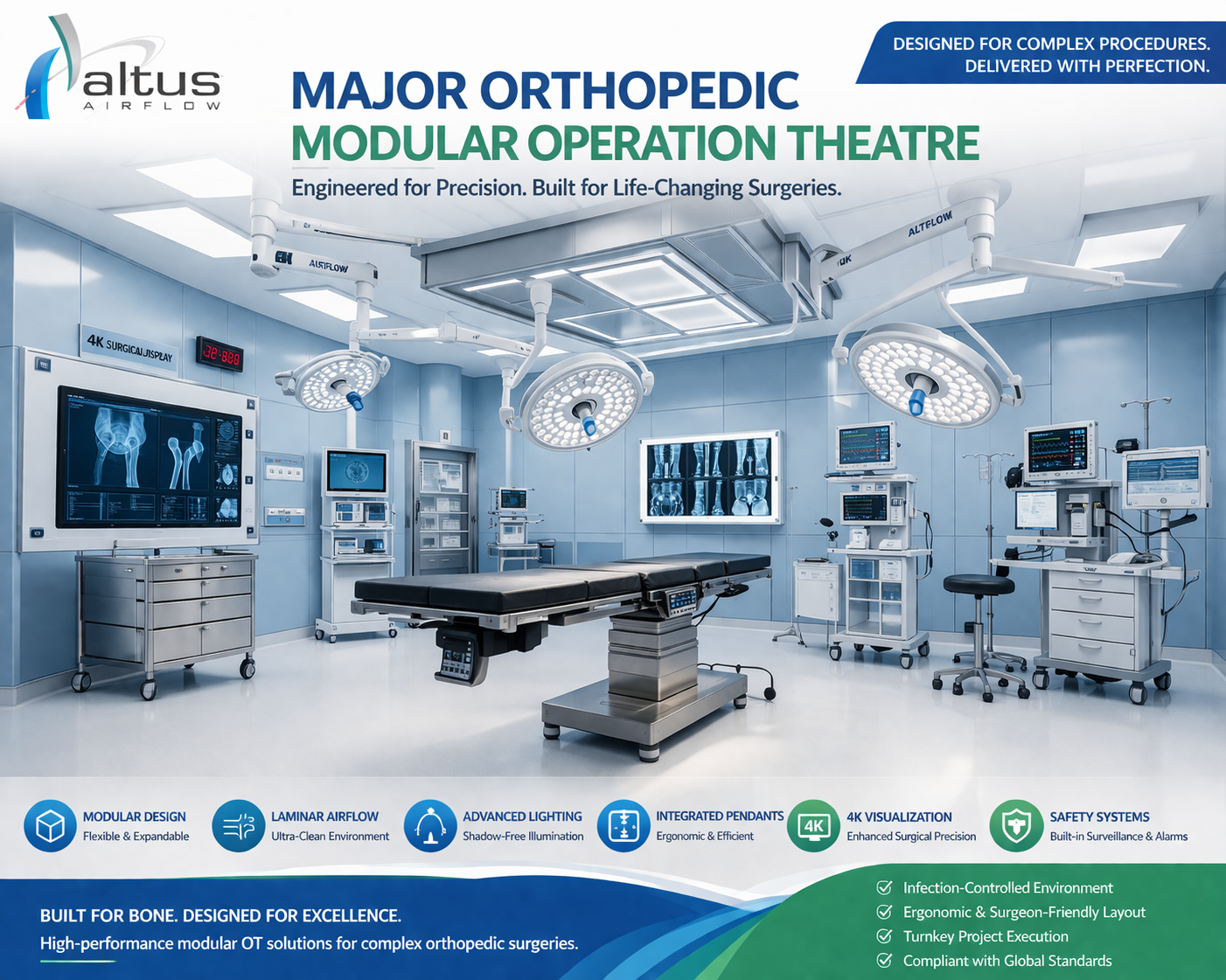
Orthopedic surgeries require precision, advanced medical technology, and a highly sterile environment to ensure successful patient outcomes. A Modular Major Orthopedic Operation Theatre is specially designed to support complex bone, joint, spine, and trauma-related procedures with maximum efficiency and infection control. These operation theatres are equipped with advanced airflow systems, seamless wall panels, integrated surgical lighting, and high-end medical equipment that help surgeons perform critical orthopedic surgeries safely and accurately.
Hospitals and healthcare centers prefer modular operation theatres because they provide better hygiene, controlled air quality, easy maintenance, and flexibility for future upgrades. From joint replacement surgeries to spine procedures, orthopedic OTs are built to handle a wide range of advanced surgical treatments.
What Is a Modular Major Orthopedic Operation Theatre?
A modular orthopedic OT is a modern surgical environment designed specifically for orthopedic procedures. It includes advanced features such as:
- Laminar airflow systems for infection control
- HEPA filtration for clean air circulation
- Antibacterial wall and ceiling panels
- Shadowless surgical lights
- Integrated OT control systems
- Medical gas pipeline systems
- Sterile flooring and modular storage units
These features create a safe and controlled surgical environment that minimizes contamination risks during orthopedic procedures.
Common Procedures Performed in an Orthopedic OT
1. Joint Replacement Surgery
Joint replacement is one of the most common procedures performed in orthopedic operation theatres. Damaged joints are replaced with artificial implants to restore movement and reduce pain.
Common joint replacement surgeries include:
- Knee replacement
- Hip replacement
- Shoulder replacement
- Elbow replacement
These surgeries require highly sterile conditions and precision equipment, making modular OTs ideal for such procedures.
2. Arthroscopy Procedures
Arthroscopy is a minimally invasive orthopedic procedure used to diagnose and treat joint problems. Surgeons insert a small camera called an arthroscope into the joint through tiny incisions.
Arthroscopy is commonly used for:
- Ligament repair
- Meniscus treatment
- Cartilage repair
- Shoulder instability treatment
Modern modular OTs support advanced imaging systems and minimally invasive surgical tools needed for arthroscopic procedures.
Importance of Advanced Infrastructure in Orthopedic Surgery
A properly designed Modular Major Orthopedic Operation Theatre helps hospitals maintain international surgical standards. Orthopedic surgeries often involve implants, metal instruments, and lengthy procedures that require strict infection control. Modular OT systems improve surgical efficiency by ensuring:
- Controlled temperature and humidity
- Reduced airborne contamination
- Efficient workflow for surgeons and staff
- Easy cleaning and maintenance
- Enhanced patient safety
These advantages significantly improve surgical outcomes and reduce postoperative complications.
3. Spine Surgery
Spine surgeries are delicate procedures performed to treat spinal disorders, injuries, or deformities. Orthopedic spine procedures include:
- Spinal fusion surgery
- Disc replacement
- Scoliosis correction
- Decompression surgery
These surgeries require precision imaging systems, advanced surgical lighting, and contamination-free environments that modular operation theatres provide.
4. Trauma and Fracture Surgery
Orthopedic trauma surgeries are performed for patients with severe bone fractures or accident-related injuries.
Common trauma procedures include:
- Bone fixation surgery
- External fixation procedures
- Internal rod and plate insertion
- Pelvic fracture repair
Modular OTs support emergency orthopedic surgeries with advanced infrastructure and organized equipment management systems.
5. Sports Injury Treatment
Athletes and active individuals often require orthopedic procedures for sports injuries. Common procedures include:
- ACL reconstruction
- Tendon repair
- Rotator cuff surgery
- Cartilage restoration
These surgeries are commonly performed using minimally invasive techniques inside advanced orthopedic OTs.
6. Pediatric Orthopedic Surgery
Children with congenital bone deformities or growth-related orthopedic conditions may require specialized orthopedic surgeries.
Pediatric procedures include:
- Clubfoot correction
- Limb deformity correction
- Bone growth surgeries
- Pediatric fracture management
Modular orthopedic theatres provide a safe and sterile environment for sensitive pediatric procedures.
Advantages of Modular Orthopedic Operation Theatres
Enhanced Infection Control
Orthopedic surgeries involve implants and open bone procedures, making infection prevention extremely important. Modular OTs use HEPA filters and laminar airflow systems to maintain sterile conditions.
Improved Surgical Efficiency
Integrated OT systems help surgeons manage lighting, airflow, equipment, and communication from a centralized control panel.
Faster Installation and Customization
Modular OTs can be customized according to hospital requirements and installed faster compared to traditional operation theatres.
Easy Maintenance
Seamless modular panels and antibacterial surfaces make cleaning and maintenance easier, helping hospitals maintain hygiene standards.
Essential Equipment Used in Orthopedic OTs
A major orthopedic OT generally includes:
- C-arm imaging systems
- Orthopedic operating tables
- Surgical navigation systems
- Power tools and drills
- Anesthesia workstations
- Surgical pendants
- LED OT lights
- Sterilization systems
These technologies support surgeons during complex orthopedic procedures.
Future of Orthopedic Operation Theatres
Healthcare infrastructure is rapidly evolving with smart modular OT technologies. Future orthopedic operation theatres may include:
- AI-assisted surgical systems
- Robotic orthopedic surgery
- Digital OT integration
- Advanced imaging technology
- Real-time surgical data monitoring
Hospitals are increasingly adopting modular OT solutions to improve surgical precision and patient care.
Conclusion
Orthopedic surgeries demand highly controlled, sterile, and technologically advanced environments. A modular orthopedic operation theatre provides the ideal infrastructure for performing complex procedures such as joint replacement, spine surgery, trauma care, arthroscopy, and sports injury treatments. With advanced infection control systems, integrated technologies, and efficient surgical layouts, modular OTs help hospitals deliver safer and more effective orthopedic care.
As medical technology continues to advance, modular orthopedic operation theatres will remain essential for modern healthcare facilities aiming to provide world-class surgical services.
FAQs
1. What procedures are commonly performed in a Modular Major Orthopedic Operation Theatre?
A Modular Major Orthopedic Operation Theatre is used for joint replacement surgeries, spine surgeries, fracture repair, arthroscopy, trauma procedures, sports injury treatments, and pediatric orthopedic surgeries. These advanced operation theatres provide sterile conditions and modern equipment for safe orthopedic procedures.
2. Why is laminar airflow important in orthopedic operation theatres?
Laminar airflow helps maintain clean air circulation and reduces airborne contamination during surgery, lowering the risk of infection.
3. What are the benefits of modular orthopedic OTs?
Benefits include infection control, easy maintenance, faster installation, improved workflow, advanced technology integration, and enhanced patient safety.
4. Which surgeries require advanced orthopedic OT infrastructure?
Procedures like knee replacement, hip replacement, spinal fusion, trauma surgery, and minimally invasive orthopedic surgeries require advanced OT infrastructure.
5. What equipment is used in orthopedic operation theatres?
Orthopedic OTs use imaging systems, OT lights, operating tables, surgical drills, navigation systems, anesthesia machines, and sterilization equipment.

 English
 Arabic
 French
 Spanish
 Portuguese
 Deutsch
 Turkish
 Dutch
Dutch
 Russian
 Romaian
 Portuguese (Brazil)
 Greek
Greek
