


Which procedures are performed in a Modular Major Orthopedic Operation Theatre?
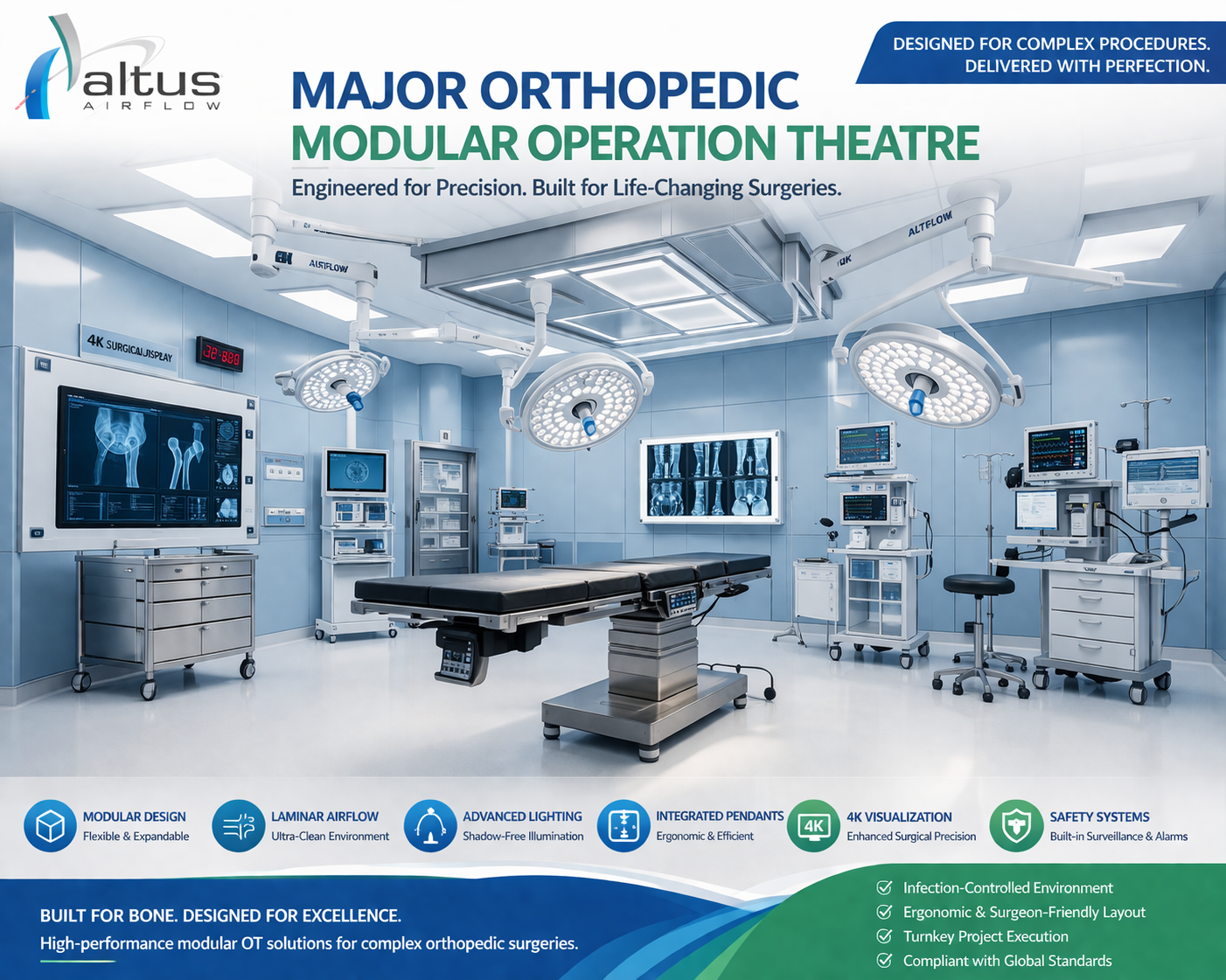
Introduction
A Modular Major Orthopedic Operation Theatre is a specially designed surgical environment used for advanced orthopedic procedures involving bones, joints, ligaments, muscles, tendons, and the spine. These operation theatres are developed using modern modular construction systems, cleanroom engineering, HVAC systems, HEPA filtration, and laminar airflow technology to maintain sterile and contamination-controlled surgical conditions.
Orthopedic surgeries often involve implants, fracture fixation devices, joint replacements, and highly sensitive procedures that require precision and strict infection control. A modular orthopedic OT helps hospitals maintain high surgical safety standards while improving workflow efficiency and patient outcomes.
These operation theatres are commonly installed in:
- Orthopedic hospitals
- Trauma centers
- Joint replacement centers
- Multi-specialty hospitals
- Sports injury treatment facilities
What Is a Modular Major Orthopedic Operation Theatre?
A Modular Major Orthopedic Operation Theatre is an advanced operation theatre specially engineered for performing complex orthopedic surgeries under sterile conditions.
These operation theatres generally include:
- Modular wall and ceiling systems
- HVAC systems
- Laminar airflow systems
- HEPA filtration units
- Medical gas pipeline systems
- Specialized flooring
- Surgical lighting systems
- Automation controls
- Hermetically sealed doors
The main objective is to reduce contamination risks and support high-precision orthopedic surgeries.
Major Procedures Performed in a Modular Major Orthopedic Operation Theatre
Total Knee Replacement Surgery
Total knee replacement is one of the most common procedures performed in orthopedic modular OTs.
This surgery involves:
- Removing damaged knee joints
- Replacing them with artificial implants
- Restoring mobility and reducing pain
Sterile modular OT conditions help minimize infection risks during implant procedures.
Total Hip Replacement Surgery
Hip replacement surgery is performed to replace damaged hip joints caused by:
- Arthritis
- Joint degeneration
- Hip fractures
- Severe pain and mobility issues
The procedure requires advanced surgical precision and strict contamination control.
Spine Surgery
Modular orthopedic OTs support various spine surgeries such as:
- Spinal fusion
- Disc replacement
- Decompression surgery
- Scoliosis correction
- Vertebral fixation
These surgeries often require advanced imaging systems and sterile airflow management.
Arthroscopy Procedures
Arthroscopy is a minimally invasive orthopedic procedure performed using specialized cameras and instruments.
Common arthroscopy procedures include:
- Knee arthroscopy
- Shoulder arthroscopy
- Ankle arthroscopy
- Hip arthroscopy
These procedures help diagnose and treat joint problems with smaller incisions.
Fracture Fixation Surgery
Orthopedic modular OTs are widely used for trauma and fracture repair procedures.
These surgeries include:
- Internal fixation with plates and screws
- Rod fixation
- External fixation
- Bone stabilization procedures
Ligament Reconstruction Surgery
Sports injuries and ligament damage are treated through procedures such as:
- ACL reconstruction
- PCL reconstruction
- Tendon repair
- Meniscus repair
These surgeries restore joint stability and mobility.
Joint Reconstruction Procedures
Joint reconstruction surgeries help restore damaged joints and improve movement.
These procedures may involve:
- Shoulder reconstruction
- Elbow reconstruction
- Wrist reconstruction
- Ankle reconstruction
Trauma Surgery
Major trauma surgeries are commonly performed in orthopedic modular OTs.
These procedures involve:
- Accident-related fractures
- Multiple bone injuries
- Complex trauma repair
- Emergency orthopedic procedures
Pediatric Orthopedic Surgery
Children with congenital or developmental bone conditions may undergo:
- Limb correction surgery
- Bone deformity correction
- Growth-related orthopedic procedures
Orthopedic Oncology Procedures
Modular orthopedic OTs also support:
- Bone tumor removal
- Musculoskeletal oncology surgery
- Limb salvage procedures
Hand and Foot Surgery
Specialized orthopedic procedures involving hands and feet include:
- Tendon repair
- Nerve repair
- Foot correction surgery
- Hand reconstruction procedures
Importance of Modular Orthopedic OTs in Surgical Procedures
Orthopedic surgeries often involve:
- Artificial implants
- Long surgical durations
- Open bone exposure
- High contamination risks
A modular OT helps maintain sterile conditions throughout the surgery and reduces infection risks.
Key Systems Supporting Orthopedic Procedures
Laminar Airflow Systems
Laminar airflow systems provide filtered unidirectional airflow across the surgical zone.
These systems help:
- Reduce airborne contamination
- Improve air quality
- Maintain sterile conditions
HEPA Filtration Systems
HEPA filters remove microscopic airborne particles and improve cleanroom air purity.
HVAC Systems
Advanced HVAC systems maintain:
- Controlled temperature
- Controlled humidity
- Positive air pressure
- Proper air circulation
Medical Gas Pipeline Systems
Medical gas systems support anesthesia and surgical procedures.
Specialized Surgical Lighting
Shadow-free surgical lighting improves visibility during complex orthopedic surgeries.
Anti-Static and Seamless Flooring
Specialized flooring systems improve hygiene and support heavy surgical equipment.
Benefits of Performing Procedures in a Modular Orthopedic OT
Better Infection Control
Advanced cleanroom systems reduce post-surgical infection risks.
Improved Surgical Precision
Modern OT infrastructure supports high-precision surgical procedures.
Enhanced Patient Safety
Sterile environments improve recovery outcomes and reduce complications.
Better Workflow Efficiency
Optimized layouts improve coordination between surgeons and OT staff.
Support for Advanced Surgical Technologies
These OTs support:
- Robotic-assisted surgery
- Image-guided surgery
- Navigation systems
- Arthroscopic systems
Applications
Modular Major Orthopedic Operation Theatre are commonly used in:
- Orthopedic hospitals
- Trauma centers
- Joint replacement centers
- Multi-specialty hospitals
- Sports medicine centers
Future Trends in Orthopedic Operation Theatres
Modern orthopedic OTs are evolving with:
- Robotic surgery integration
- Smart OT automation
- AI-based environmental monitoring
- Digital OT management systems
- Advanced navigation technologies
These innovations improve surgical precision and operational efficiency.
Conclusion
A Modular Major Orthopedic Operation Theatre is designed for performing complex orthopedic surgeries in sterile and technologically advanced environments. These operation theatres support procedures such as knee replacement, hip replacement, spine surgery, fracture fixation, arthroscopy, ligament reconstruction, trauma surgery, pediatric orthopedic surgery, and orthopedic oncology procedures. Advanced cleanroom systems, laminar airflow, HEPA filtration, HVAC technology, and automation controls help improve infection control, surgical precision, patient safety, and operational efficiency in orthopedic healthcare facilities.
Frequently Asked Questions (FAQs)
1. What procedures are performed in a Modular Major Orthopedic Operation Theatre?
A Modular Major Orthopedic Operation Theatre is used for joint replacement, spine surgery, fracture repair, arthroscopy, ligament reconstruction, trauma surgery, and orthopedic oncology procedures.
2. Why are modular orthopedic OTs important?
They provide sterile and contamination-controlled environments required for advanced orthopedic surgeries.
3. What systems are included in modular orthopedic OTs?
These OTs include HVAC systems, HEPA filtration, laminar airflow, modular wall panels, medical gas systems, and automation controls.
4. Which standards do modular orthopedic OTs follow?
They follow NABH guidelines, ISO cleanroom standards, and healthcare engineering regulations.
5. Where are modular orthopedic OTs commonly used?
They are commonly used in orthopedic hospitals, trauma centers, joint replacement centers, and multi-specialty hospitals.
Read Our Previous Blog ---------------> What services does a modular gynaec OT engineering company provide?

 Arabic
 French
 Spanish
 Portuguese
 Deutsch
 Turkish
 Dutch
Dutch
 Italiano
 Russian
 Romaian
 Portuguese (Brazil)
 Greek
Greek
