


Origination of Ind AS and Its Impact on Indian Companies
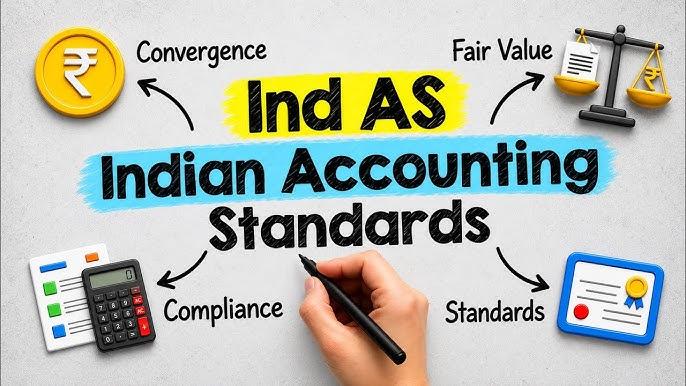
The Indian business environment has changed rapidly over the past decade due to globalization, foreign investments, and international trade practices. To match global accounting standards and improve financial transparency, India introduced Indian Accounting Standards, commonly known as Ind AS. The Origination of Ind AS marked a major step toward aligning Indian accounting practices with International Financial Reporting Standards (IFRS).
Before Ind AS, Indian companies followed traditional accounting standards issued by the Institute of Chartered Accountants of India (ICAI). However, these standards were different from global accounting systems, making it difficult for international investors to compare Indian companies with foreign businesses. The introduction of Ind AS helped bridge this gap and improved the quality of financial reporting in India.
This article explains the Origination of Ind AS, the reasons behind its implementation, and its impact on Indian companies in a simple and informative manner.
What is Ind AS?
Ind AS refers to a set of accounting standards adopted by Indian companies for preparing financial statements. These standards are largely based on IFRS but are modified according to Indian economic and legal conditions.
The Ministry of Corporate Affairs (MCA) introduced Ind AS to create a transparent and globally accepted accounting system. These standards help businesses present accurate financial information to investors, regulators, and stakeholders.
The main objective of Ind AS is to ensure consistency, reliability, and comparability in financial reporting.
Origination of Ind AS
The Origination of Ind AS began when India recognized the need for internationally accepted accounting practices. As Indian companies expanded globally and foreign investors showed interest in Indian markets, there was a growing demand for a unified accounting framework.
Early Development of Ind AS
The process started in 2006 when the Ministry of Corporate Affairs announced plans to converge Indian accounting standards with IFRS. The ICAI was assigned the responsibility of preparing new accounting standards suitable for India.
After several discussions and modifications, Ind AS standards were officially notified in 2015. The implementation was carried out in phases so companies could smoothly transition from old accounting standards to the new framework.
Phased Implementation
The government introduced Ind AS gradually based on the size and net worth of companies.
Phase 1
From April 2016, Ind AS became mandatory for:
- Listed companies with a net worth of ₹500 crore or more
- Unlisted companies with a net worth of ₹500 crore or more
Phase 2
From April 2017, Ind AS applied to:
- Listed companies with net worth between ₹250 crore and ₹500 crore
- Certain financial institutions and NBFCs
This phased approach reduced confusion and allowed companies enough time to adapt.
Reasons Behind the Origination of Ind AS
The Origination of Ind AS was not just a regulatory change but a strategic move to strengthen the Indian financial system. Several factors contributed to its introduction.
Globalization of Businesses
Indian companies increasingly started operating in international markets. Different accounting systems created difficulties in comparing financial reports across countries. Ind AS helped Indian businesses align with global accounting practices.
Increase in Foreign Investments
Foreign investors prefer transparent and internationally understandable financial statements. Ind AS improved investor confidence by making Indian financial reporting more reliable and globally comparable.
Better Financial Transparency
Traditional accounting practices often lacked transparency in reporting assets, liabilities, and financial risks. Ind AS introduced fair value accounting and improved disclosure requirements.
Easier Cross-Border Transactions
The Origination of Ind AS simplified mergers, acquisitions, and joint ventures between Indian and foreign companies. Global investors and multinational corporations found it easier to evaluate Indian businesses.
Key Features of Ind AS
Ind AS introduced several important changes in accounting and financial reporting.
Fair Value Measurement
Under Ind AS, many assets and liabilities are recorded at fair market value instead of historical cost. This provides a more realistic picture of a company’s financial position.
Principle-Based Standards
Ind AS focuses more on accounting principles rather than strict rules. This gives companies flexibility while maintaining transparency.
Enhanced Disclosure Requirements
Companies are required to provide detailed disclosures regarding financial risks, related-party transactions, and accounting assumptions.
Consolidated Financial Statements
Ind AS requires companies with subsidiaries to prepare consolidated financial statements, improving transparency for stakeholders.
Impact of Ind AS on Indian Companies
The Origination of Ind AS significantly changed how Indian companies prepare and present their financial statements. The impact has been both positive and challenging.
Positive Impact of Ind AS
Improved Global Comparability
One major advantage is that Indian companies can now be easily compared with international companies. Investors can better analyze financial performance across countries.
Increased Investor Confidence
Transparent financial reporting builds trust among domestic and foreign investors. Ind AS has improved the credibility of Indian businesses in global markets.
Better Corporate Governance
Ind AS encourages companies to maintain proper disclosures and financial discipline. This has strengthened corporate governance practices in India.
Easier Access to International Capital
Indian companies seeking funds from international markets benefit from globally accepted financial statements. The Origination of Ind AS made fundraising easier for many businesses.
Accurate Financial Reporting
Fair value accounting provides a more realistic valuation of assets and liabilities. This improves decision-making for management and investors.
Challenges Faced by Indian Companies
Although Ind AS brought many benefits, companies also faced several challenges during implementation.
Increased Compliance Cost
Companies had to invest in:
- Staff training
- New accounting software
- Professional consultancy services
This increased the cost of compliance, especially for medium-sized businesses.
Complex Accounting Treatment
Ind AS introduced complicated concepts such as:
- Financial instruments
- Revenue recognition
- Fair value accounting
Many companies initially struggled to understand and implement these changes.
Frequent Financial Fluctuations
Fair value accounting can create fluctuations in profits and asset values due to market changes. This affected financial stability for some businesses.
Need for Skilled Professionals
The implementation of Ind AS created demand for trained accountants, auditors, and finance professionals familiar with international accounting standards.
Impact on Different Sectors
Banking and Financial Sector
Banks and NBFCs experienced major changes in loan provisioning and financial reporting under Ind AS. The standards improved risk assessment and transparency.
IT and Service Industry
IT companies benefited from better global reporting practices because many of them deal with international clients and investors.
Manufacturing Companies
Manufacturing firms faced challenges in asset valuation, lease accounting, and inventory reporting under the new standards.
Future of Ind AS in India
The future of Ind AS looks promising as India continues integrating with the global economy. Continuous updates and improvements are being made to keep Indian standards aligned with international developments.
The Origination of Ind AS has also encouraged companies to adopt better financial management practices and modern accounting systems. As businesses become more aware of these standards, compliance and reporting quality are expected to improve further.
In the coming years, Ind AS may become even more simplified and technology-driven with the use of automation and digital accounting systems.
Conclusion
The Origination of Ind AS was a significant reform in the Indian accounting system. It helped India move closer to international financial reporting practices and improved the transparency, comparability, and reliability of corporate financial statements.
Although companies initially faced implementation challenges, the long-term benefits have been substantial. Indian businesses now enjoy better investor confidence, improved global recognition, and easier access to international capital markets.
Today, Ind AS plays a vital role in strengthening the Indian corporate sector and supporting economic growth. As India continues to expand globally, the importance of Ind AS in maintaining high-quality financial reporting will continue to grow.

 English
 Arabic
 French
 Spanish
 Portuguese
 Deutsch
 Turkish
 Dutch
Dutch
 Russian
 Romaian
 Portuguese (Brazil)
 Greek
Greek
