


Which SAP Modules Are Being Replaced by Cloud-Based SAP Solutions?
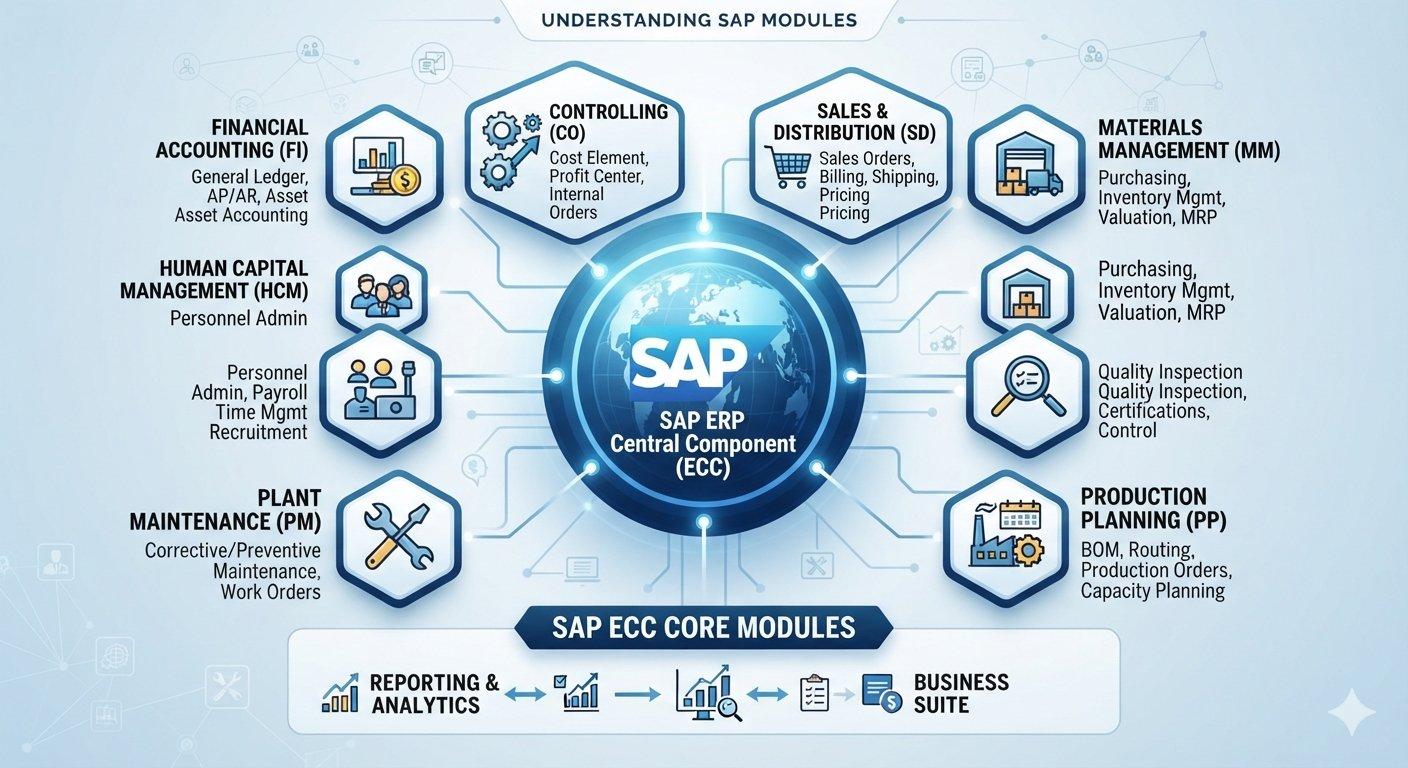
SAP is gradually retiring several traditional SAP modules including cl,assic FI-CO, MM, SD, PP, and CRM in favor of cloud-native equivalents inside S/4HANA and RISE with SAP. Core finance and controlling functions still exist, but they now run on new architecture, making updated SAP FICO training essential for career relevance.
If you've worked with SAP for a few years, you've probably heard the term "SAP is going cloud" more times than you can count. But what does that actually mean for the modules you know FI, CO, MM, SD, PP, and others?
This isn't a case of SAP abandoning its core functionality. It's a shift in how that functionality is delivered, architected, and used. Understanding this shift matters whether you're a consultant, an end-user, or someone planning to build a career around SAP FICO.
Let's break down exactly what's changing, what's staying, and what it means for your skills.
Why SAP Is Moving Away From Traditional Modules
SAP's traditional ECC (ERP Central Component) system was built on a module-based structure, with each function Finance, Controlling, Materials Management, Sales and Distribution operating somewhat independently, connected through batch processing and separate database tables.
With S/4HANA and cloud-based platforms like RISE with SAP and GROW with SAP, the architecture changed fundamentally:
- In-memory computing (HANA database) replaced traditional relational databases, enabling real-time processing instead of overnight batch jobs.
- Simplified data models merged tables that were once separate, reducing redundancy.
- Fiori-based interfaces replaced the older SAP GUI transaction codes for many day-to-day tasks.
- Continuous updates replaced the old cycle of major version upgrades every few years.
This means the modules haven't disappeared, but the way they're built and delivered has changed enough that the old skill set alone is no longer sufficient.
SAP Modules Being Phased Out or Transformed
Here's a practical look at which traditional SAP modules are most affected and what has replaced them.
| Traditional SAP Module | Cloud-Based Replacement | Status |
|---|---|---|
| FI (Financial Accounting) | Finance in S/4HANA Cloud | Restructured, not eliminated |
| CO (Controlling) | Universal Journal (merged with FI) | Merged into a single ledger |
| MM (Materials Management) | Sourcing and Procurement in S/4HANA | Renamed and enhanced |
| SD (Sales and Distribution) | S/4HANA Sales | Streamlined workflows |
| PP (Production Planning) | S/4HANA Manufacturing | Integrated with IoT and analytics |
| CRM (Customer Relationship Mgmt) | SAP Customer Experience (CX) | Fully separate cloud suite |
| SRM (Supplier Relationship Mgmt) | SAP Ariba | Moved to standalone cloud platform |
| BW (Business Warehouse) | SAP BW/4HANA or SAP Analytics Cloud | Modernized reporting layer |
1. FI-CO: The Biggest Structural Change
This is where the shift is most dramatic for finance professionals. In classic ECC, FI and CO were technically separate modules with reconciliation steps between them. In S/4HANA, they're unified into the Universal Journal (table ACDOCA).
This means:
- Real-time financial and management reporting from a single source of truth
- No more end-of-period reconciliation between FI and CO
- New Asset Accounting, New General Ledger, and Central Finance as standard features
For anyone working in finance and controlling, this single change is the reason updated SAP FICO training has become so important. The old way of learning FI and CO as two disconnected subjects doesn't match how the system actually works anymore.
2. MM and SD: Simplified but Not Gone
Materials Management and Sales and Distribution still exist as functional areas, but they've been rebuilt with:
- Simplified data structures (fewer index tables)
- Embedded analytics for stock and order visibility
- Tighter integration with procurement (Ariba) and CRM (CX)
3. CRM and SRM: Moved Out of Core ERP Entirely
Classic CRM and SRM modules have essentially been retired from the core ERP landscape. SAP now offers:
- SAP Customer Experience (CX) for customer-facing processes
- SAP Ariba for supplier and procurement management
These run as standalone cloud platforms that integrate with S/4HANA rather than living inside it.
What This Means for SAP Professionals
If you're currently certified or experienced in traditional ECC modules, here's the honest reality:
- Your foundational knowledge still matters. Concepts like cost centers, GL accounts, and profitability analysis haven't disappeared they've been reorganized.
- The transaction codes and navigation have changed. Fiori apps often replace multiple old T-codes with a single simplified screen.
- New configuration logic applies. The Universal Journal, for example, changes how you approach reconciliation and reporting entirely.
- Employers are prioritizing S/4HANA skills. Job postings increasingly specify "S/4HANA FICO" rather than plain "SAP FICO."
Skills Worth Updating First
- Universal Journal and New Asset Accounting
- SAP Fiori navigation for finance apps
- Central Finance and real-time reporting
- Group Reporting (replacing older consolidation tools)
- Basic understanding of RISE with SAP as a deployment model
Why Latest SAP FICO Training Is No Longer Optional
Latest SAP FICO Training built around ECC 6.0 concepts alone leaves gaps in areas employers now expect as standard:
- Real-time financial close processes
- Embedded analytics and reporting inside the finance module
- Integration between finance and procurement/sales in a cloud environment
- Fiori-based transaction workflows instead of classic SAP GUI-only training
A good training path today should cover both the conceptual accounting and controlling knowledge that's always mattered, and the architectural changes that come with S/4HANA ideally with hands-on practice inside a live or sandbox S/4HANA environment rather than only slides and theory.
Traditional SAP Modules vs. Cloud SAP Solutions: A Quick Comparison
| Aspect | Traditional SAP (ECC) | Cloud SAP (S/4HANA) |
|---|---|---|
| Database | Any relational DB | HANA in-memory only |
| Finance & Controlling | Separate modules | Unified Universal Journal |
| Updates | Major upgrades every few years | Continuous/quarterly updates |
| Interface | SAP GUI transaction codes | Fiori apps |
| Deployment | On-premise focused | Cloud, RISE, hybrid options |
| Reporting | Batch, delayed | Real-time, embedded analytics |
FAQ's:-
Q1: Is SAP FICO becoming obsolete?
No. FI and CO concepts are still core to SAP, but they now run inside the Universal Journal structure in S/4HANA rather than as separate reconciled modules.
Q2: Should I still learn classic ECC SAP FICO?
Understanding classic concepts helps, but new learners should prioritize S/4HANA-based FICO training since most current implementations use it.
Q3: What replaced SAP CO in S/4HANA?
CO wasn't replaced it was merged with FI into the Universal Journal, giving a single source for financial and management accounting.
Q4: Are SAP MM and SD modules going away?
No, they continue to exist but have been restructured with simplified data models and tighter cloud integration.
Q5: What is RISE with SAP?
It's SAP's subscription-based offering that bundles S/4HANA Cloud, infrastructure, and business process tools into one managed service.

 English
 Arabic
 French
 Spanish
 Portuguese
 Deutsch
 Turkish
 Dutch
Dutch
 Russian
 Romaian
 Portuguese (Brazil)
 Greek
Greek
