


Why Multi-Channel Tactics Matter in B2B Demand Generation
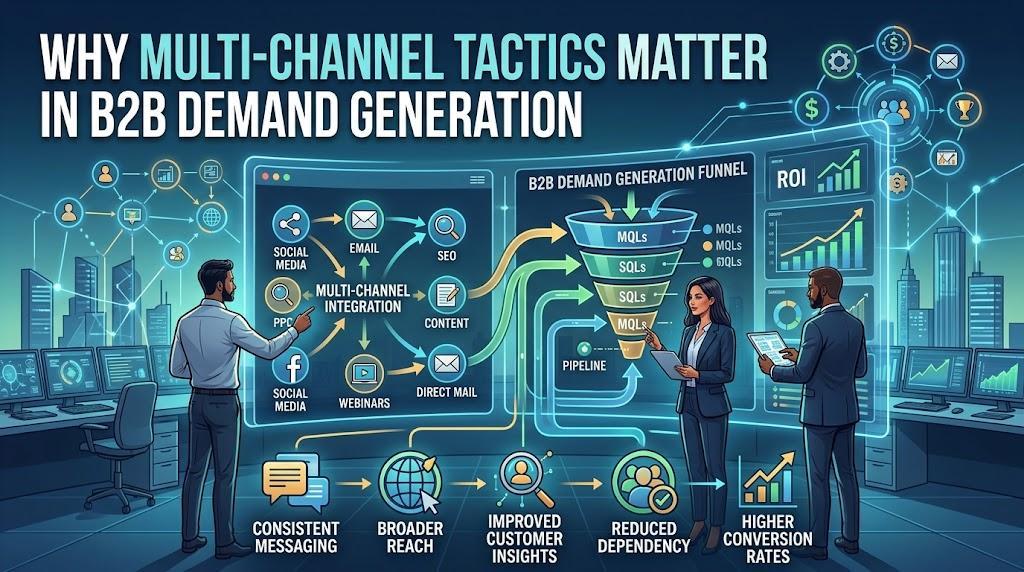
In B2B marketing, buyers rarely make decisions after a single touchpoint. They research on their own, compare vendors across multiple sources, and often involve several stakeholders before moving forward. That is why multi-channel tactics have become essential in demand generation. A single email campaign or paid ad may spark interest, but it usually takes a coordinated mix of content, search, social, email, events, and direct outreach to create real momentum.
For companies trying to build predictable pipeline, the goal is not just to reach more people. It is to reach the right people in the right places with a message that feels relevant at each stage of the buying journey. A strong multi-channel strategy helps brands stay visible, reinforce trust, and guide prospects from awareness to consideration to action. Many organizations work with a B2B Demand Generation Agency to help structure this kind of coordinated approach, but the core principle remains the same: buyers respond better when channels work together instead of competing for attention.
Key Points
- Multi-channel demand generation reflects how modern B2B buyers actually research and decide.
- Different channels serve different stages of the buying journey, from awareness to conversion.
- Consistency across channels improves trust, recall, and engagement.
- Data from multiple touchpoints provides better insight into buyer behavior.
- Aligned messaging across teams reduces friction and strengthens pipeline quality.
Why Single-Channel Marketing Falls Short
Relying on one channel limits reach and creates risk. If your entire demand generation effort depends on paid ads, performance can drop when costs rise or targeting changes. If you depend only on email, your message may never reach buyers who are not yet in your database. If you focus only on social media, you may generate engagement without meaningful intent.
B2B buying is rarely linear. A prospect may first discover your brand through a LinkedIn post, then read a blog article, then attend a webinar, then respond to a sales email days later. If your strategy only exists in one channel, you are likely missing part of that journey. Multi-channel tactics address this by creating more opportunities for discovery, education, and conversion.
How Buyers Move Across Channels
Awareness begins with discovery
At the top of the funnel, buyers are often trying to understand a problem rather than evaluate a solution. They search Google, read thought leadership, scroll social feeds, and listen to peers. Content that answers questions clearly and consistently can introduce your brand at the right time.
Consideration requires repetition and depth
Once buyers start comparing options, they want proof. Case studies, webinars, comparison pages, email nurture sequences, and retargeting campaigns help reinforce value. This is where multi-channel tactics matter most because no single format can address every concern.
Decision-making needs confidence
Before a purchase, stakeholders often look for credibility, technical fit, and internal alignment. At this stage, sales outreach, product demos, peer reviews, and targeted follow-up content can remove hesitation. When these touchpoints are coordinated, they reduce the chance of a deal stalling.
The Main Benefits of a Multi-Channel Approach
1. Stronger brand visibility
When prospects see your company across several platforms, your brand becomes more familiar. Familiarity matters because buyers are more likely to trust names they recognize. Repeated exposure across email, search, social, and content channels helps establish that recognition without feeling intrusive.
2. Better audience coverage
Not every buyer prefers the same channel. Some respond to email, others prefer search, and some engage most on social platforms. Multi-channel tactics allow you to meet people where they already spend time, which improves the odds of engagement.
3. Higher-quality engagement
When channels reinforce one another, buyers are more likely to interact meaningfully. A prospect who sees a webinar invitation, reads supporting content, and later receives a relevant follow-up email is more likely to take action than someone who receives a generic message once.
4. More accurate measurement
A multi-channel strategy also improves insight. Instead of attributing success to one campaign or one touchpoint, marketers can analyze the full sequence of interactions. This helps identify which combinations of channels contribute most to pipeline creation and closed revenue.
Core Channels That Work Well Together
Content marketing
Content is often the foundation of demand generation. Articles, guides, reports, and case studies provide the educational material buyers need before they are ready to talk to sales. Good content also supports search visibility and gives other channels something useful to promote.
Email marketing
Email remains one of the most effective ways to nurture interest over time. It works especially well when segmented by industry, role, or buying stage. Personalized sequences can keep leads engaged without overwhelming them.
Paid search and paid social
Paid channels are useful for reaching targeted audiences quickly. Search ads capture active intent, while social ads can build awareness and retarget visitors who have already engaged with your site. Together, they help maintain visibility throughout the funnel.
Organic social media
Organic social content supports brand presence, distributes thought leadership, and encourages conversation. It is especially valuable for building trust and amplifying content that may later be used in paid or nurture campaigns.
Webinars and virtual events
Events offer a direct way to educate prospects and demonstrate expertise. They also create opportunities for live interaction, which can accelerate trust. After the event, follow-up content and email sequences can extend the impact.
Sales outreach
Marketing and sales alignment is critical. Sales outreach works best when it is informed by behavioral data from marketing channels. If a prospect has downloaded a white paper or attended a webinar, outreach can be tailored to that interest, making the conversation more relevant.
Building a Connected Multi-Channel Strategy
Start with audience understanding
Before choosing channels, define who you are trying to reach. Consider industry, company size, job function, pain points, and buying behavior. A strategy built on real audience insight is far more effective than one based on assumptions.
Match content to the buying stage
Every channel should support the buyer journey. Early-stage buyers may need educational content, while later-stage buyers may need product comparisons, ROI information, or implementation details. Mapping content to the funnel keeps messaging useful instead of repetitive.
Keep messaging consistent
Different channels can use different formats, but the core message should stay aligned. If your blog, ads, emails, and sales conversations all communicate the same value proposition in slightly different ways, the buyer experience feels coherent and credible.
Use data to refine performance
Track engagement across channels and look for patterns. Which sources generate the most qualified leads? Which content types influence conversion? Which sequences produce the best response rates? Data should guide optimization, not just reporting.
Common Mistakes to Avoid
- Sending the same message everywhere without adapting it to the channel.
- Focusing on lead volume instead of lead quality.
- Ignoring the handoff between marketing and sales.
- Overlooking retargeting and nurture after initial engagement.
- Failing to measure how channels work together.
These mistakes are common because multi-channel programs can become complex quickly. The solution is not to add more activity without purpose. It is to design a system where each channel has a clear role and supports the others.
Why Multi-Channel Tactics Improve Long-Term Results
B2B demand generation is not just about short-term lead capture. It is about building a repeatable system that creates trust and pipeline over time. Multi-channel tactics support that goal because they reflect how people actually buy. Buyers need repeated exposure, useful education, and a sense that your company understands their challenges.
When channels work together, the result is stronger brand recall, better engagement, and more informed decision-making. Over time, this creates a more stable foundation for growth. It also helps companies adapt as buyer behavior changes, since no single channel carries all the weight.
Conclusion
Multi-channel tactics matter in B2B demand generation because they match the complexity of the modern buying process. A single interaction rarely moves a prospect to action. Instead, buyers look for consistent value across several touchpoints before they are ready to engage. By combining content, email, search, social, events, and sales outreach, businesses can create a more complete and effective experience.
The most successful strategies are not simply louder. They are more coordinated, more relevant, and more responsive to how buyers make decisions. That is what makes multi-channel demand generation such a powerful approach for B2B organizations aiming to build trust and drive meaningful pipeline.
FAQ
What does multi-channel demand generation mean?
It means using several marketing channels together to attract, educate, and convert potential buyers. These channels may include content, email, paid ads, social media, events, and sales outreach.
Why is multi-channel better than single-channel marketing?
Multi-channel marketing reaches buyers in more places, supports different stages of the journey, and increases the chances of meaningful engagement. It also reduces dependence on one source of leads.
Which channels are most effective for B2B demand generation?
The best mix depends on the audience, but common high-performing channels include content marketing, email, paid search, LinkedIn, webinars, and sales outreach.
How do I keep messaging consistent across channels?
Start with a clear value proposition and adapt it to each channel without changing the core message. A shared content strategy and close marketing-sales alignment can help maintain consistency.
How can I measure the success of a multi-channel strategy?
Track metrics across the funnel, including impressions, engagement, conversions, lead quality, pipeline influence, and revenue contribution. Look at how channels interact rather than evaluating each one in isolation.

 English
 Arabic
 French
 Portuguese
 Deutsch
 Turkish
 Dutch
Dutch
 Italiano
 Russian
 Romaian
 Portuguese (Brazil)
 Greek
Greek
