


Railway & Metro Infrastructure Asset Salvage: Monetizing Mass Transit Scrap via Online Scrap Auction System
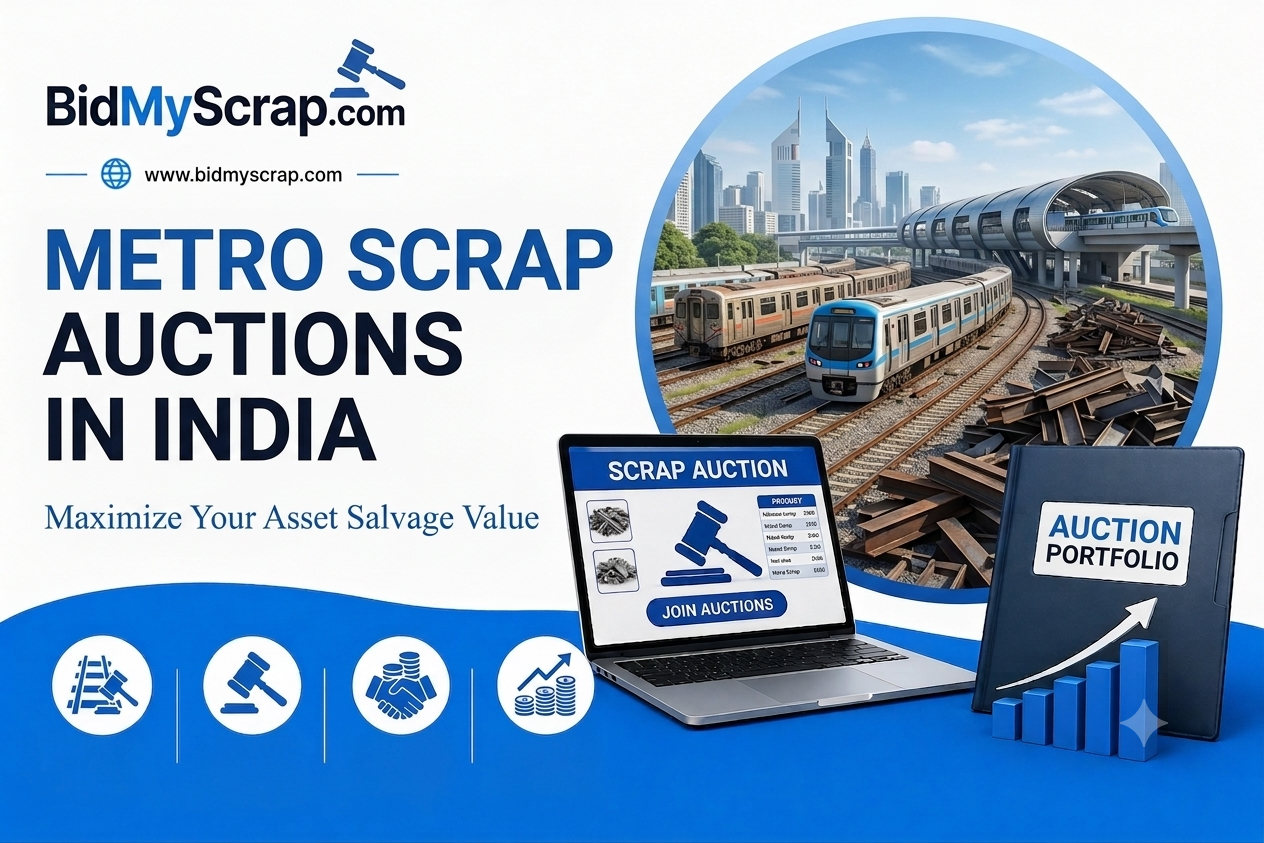
India’s rapid expansion of high-speed rail corridors, dedicated freight corridors (DFCs), and urban metro rail networks represents one of the largest infrastructure modernization efforts globally. Key rail manufacturing and maintenance hubs including Perambur & ICF Chennai (Tamil Nadu), Kapurthala (Punjab), Varanasi & Rae Bareli (Uttar Pradesh), Kolkata (Metro & Eastern Railway Belt), and Mumbai (Western & Central Rail Engineering Depots) house extensive rolling stock factories, maintenance workshops, and track engineering yards.
During rolling stock retrofits, track gauge conversions, overhead electrification (OHE) upgrades, and metro depot modernizations, railway authorities and civil contractors generate heavy industrial scrap. Key material categories include heavy manganese steel rail tracks, cast iron sleepers, high-purity copper catenary/contact wires, aluminum coach bodies, bogie frames, wheelsets, and transformer sub-station scrap.
Managing massive rail and metro scrap reserves across active rail yards and urban maintenance depots involves strict safety controls, security protocols, and operational constraints. Storing multi-ton rail sections or heavy coach bodies at yards in cities like Chennai, Kolkata, Varanasi, or Mumbai occupies critical trackside storage space and obstructs maintenance logistics. Disposing of specialized copper catenary wire or manganese steel tracks through unorganized local scrap brokers leads to severe financial loss. Unorganized buyers lack alloy analyzer tools, pricing high-value rail steel or catenary copper at standard low-grade scrap rates. Furthermore, informal sales lack transparent digital tracking, creating administrative friction and audit red flags. Deploying an online scrap auction system allows rail operators and engineering contractors to liquidate scrap directly to pre-verified steel foundries, secondary copper refiners, and heavy scrap processors.
Eliminating Administrative Bottlenecks in Mass Transit Asset Recovery
Selling heavy railway and metro engineering scrap through conventional paper tenders or local middleman networks creates multiple administrative friction points:
-
Under-Valuation of Specialized Rail Alloys: Unscreened buyers treat high-manganese rail steel and high-conductivity catenary copper as generic melt scrap, lowering financial yield.
-
Depot Congestion & Operational Risks: Slow scrap removal blocks depot tracks and loading bays, delaying active coach maintenance routines.
-
Manual Scale Discrepancies: Paper weighbridge slips cause billing disputes and delay administrative financial closing.
-
Audit & Transparency Gaps: Manual tracking fails to supply the complete digital audit trail required by public transit agencies and oversight boards.
Transitioning to a transparent digital scrap auction platform resolves these operational bottlenecks. The portal connects depot managers directly with accredited steel re-rolling mills, specialized alloy foundries, and bulk recyclers across major industrial hubs like Delhi-NCR, Mumbai, Kolkata, and Chennai.
Maximizing Financial Yields on Heavy Rail Metals
Manganese rail steel, copper catenary wire, and structural aluminum coach panels represent high-purity, premium-grade metals in secondary markets. Heavy steel casting foundries and secondary copper smelters compete aggressively for these single-grade metal streams to cut raw material costs.
By listing material lots on a scrap auction online platform, engineering leads can upload precise metal specifications, lot tonnages, and depot access rules directly to verified bidders. Live competitive bidding ensures the organization secures true market-reflective prices for every lot.
Once an auction finishes, the system collects a 100% advance deposit from the winning buyer before issuing an electronic gate pass. This payment structure eliminates financial credit risk and ensures haulers follow strict yard clearance schedules.
Digital Security Governance and Audit Transparency
Maintaining strict security standards, vehicle tracking, and financial accountability is essential across rail engineering yards in regions like Tamil Nadu, Uttar Pradesh, Punjab, West Bengal, and Maharashtra.
Our specialized e auction scrap portal automates security access and financial documentation:
-
Pre-Screened Buyer Credentials: Only pre-verified buyers with government registrations, tax credentials, and site safety clearances can participate in auctions.
-
Automated Scale Integration: Gross and tare weights are logged automatically from certified weighbridges, eliminating manual data errors.
-
Centralized Executive Dashboard: Material managers, procurement leads, and finance officers can track live bidding, approve sales, and review revenue logs from a single dashboard.
This digital transparency provides internal financial auditors and public oversight committees with an unalterable digital ledger for statutory reporting and governance compliance.
Modernize Your Mass Transit Scrap Liquidation Strategy
Your transit engineering team does not need to allow maintenance depots to become overcrowded or accept below-market prices for high-grade rail metals. Streamline yard clearances, protect material security, and maximize return on surplus transit infrastructure.
Partner your transit organization with our software network today to deploy our online scrap auction system. Register on our Scrap auction portal right now, list your manganese rails, catenary copper, and coach scrap, and execute material sales with total speed, security, and financial control.

 English
 Arabic
 French
 Spanish
 Portuguese
 Turkish
 Dutch
Dutch
 Italiano
 Russian
 Romaian
 Portuguese (Brazil)
 Greek
Greek
