


How Does Lhmachinery Apply High Speed Cold Heading Machine Technology to Fastener Production
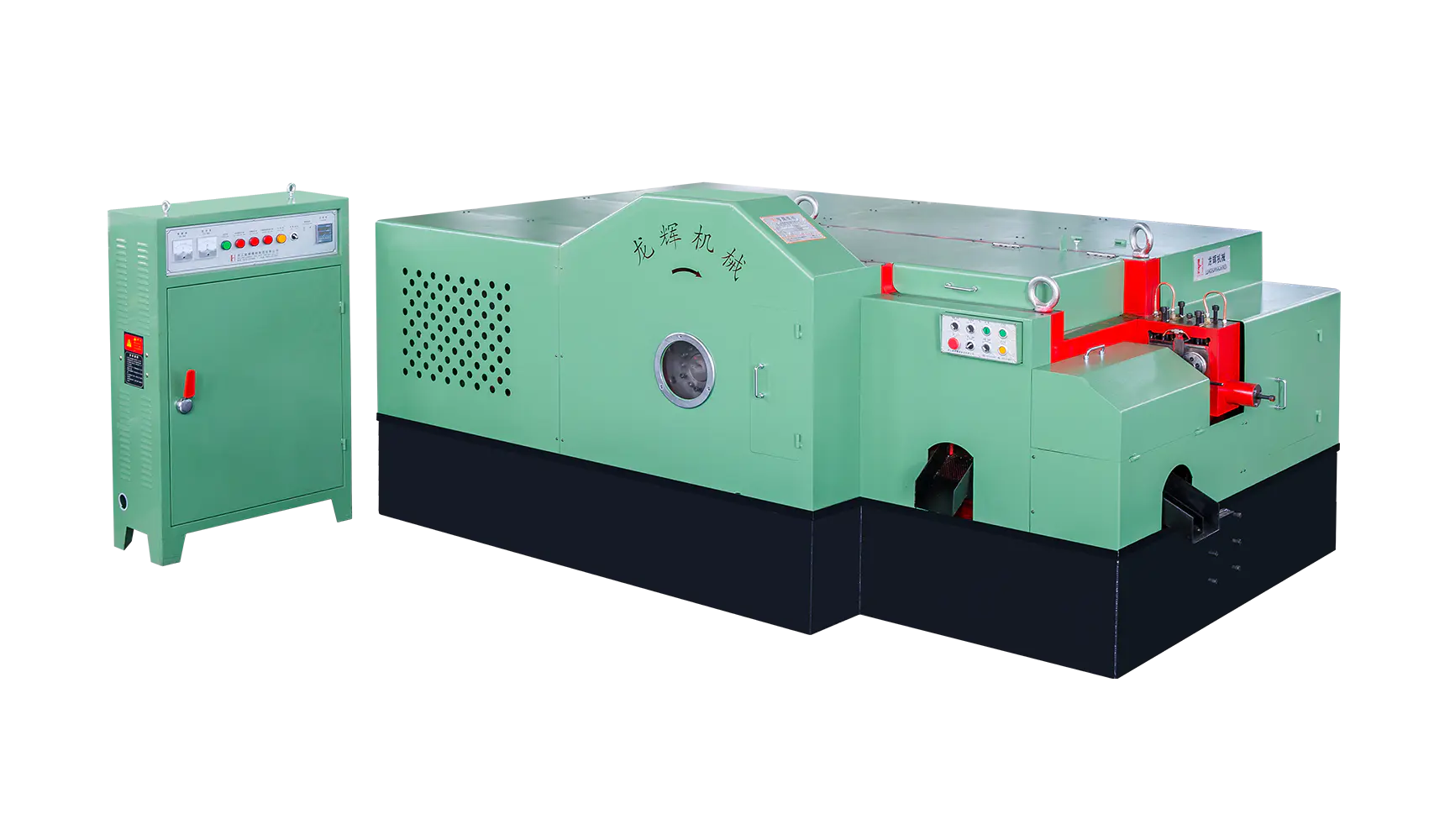
Can a High Speed Cold Heading Machine Reduce Material Waste?
Manufacturing fasteners and precision metal components requires careful control over raw materials, forming pressure, tooling, and production rhythm. A high speed cold heading machine from lhmachinery approaches these demands through controlled cold forming, allowing manufacturers to shape metal blanks with less reliance on cutting processes. Can this forming method help reduce material waste while maintaining stable production?
Cold heading works by reshaping metal wire or blanks under pressure rather than removing large portions of material through machining. This distinction has an important effect on material utilization. When a component is produced by cutting away excess stock, the removed portion becomes scrap. Cold forming instead moves the existing material into the required shape, allowing a greater share of the original blank to remain within the finished component.
The design of the forming sequence is particularly important. A complex fastener may require several forming stages, with each station handling a specific portion of the shaping work. Controlled movement between stages helps distribute deformation instead of forcing one operation to perform the entire task. Such an arrangement can support consistent dimensions while keeping unnecessary material removal out of the process.
Tooling also has a direct relationship with material efficiency. Dies, punches, and other forming components must correspond closely with the intended geometry. When tooling is properly matched to the raw material and production requirement, the forming operation can proceed with controlled deformation. Poorly selected tooling may contribute to defects, dimensional instability, or increased rejection, all of which can raise material consumption.
Production speed is another consideration. High-volume manufacturing often involves continuous feeding and repeated forming cycles. Stable machine movement allows production teams to maintain a predictable rhythm, reducing interruptions that could result in damaged blanks or incomplete components. However, speed alone does not determine efficiency. Feeding accuracy, forming stability, lubrication, tooling condition, and inspection procedures all influence how much usable material reaches the finished stage.
Raw material preparation also deserves attention. Wire diameter, material characteristics, surface condition, and cutting accuracy can affect the forming process before the first station begins its work. Consistent input dimensions provide a reliable foundation for subsequent operations. When the blank enters the machine with suitable specifications, the forming sequence can operate within its intended range, helping limit avoidable rejects.
Multi-stage forming can be useful when a product contains several geometric features. Instead of removing material to create each detail, successive operations can gradually develop the required shape. Heads, shoulders, grooves, points, and other features may be produced through carefully arranged deformation steps. This approach is especially relevant for fasteners where material distribution has a direct relationship with final strength and appearance.
Machine construction matters as well. A forming system needs to coordinate feeding, transfer, impact, positioning, and discharge with consistency. If timing between stations becomes unstable, the resulting parts may show dimensional variation or surface problems. A well-organized production setup therefore considers mechanical precision alongside forming capacity.
Lubrication is another factor that should not be overlooked. Cold forming creates significant contact between the workpiece and tooling surfaces. Appropriate lubrication can help manage friction and heat while supporting smooth material movement. Inadequate lubrication may accelerate tooling wear or affect surface quality, potentially increasing maintenance requirements and rejected parts.
Automation can further support material control by creating a consistent production sequence. Automated feeding and transfer reduce unnecessary manual handling and can help maintain stable positioning from one station to another. Monitoring systems may also provide useful information about machine conditions, allowing operators to respond to unusual behavior before it develops into a larger production issue.
Maintenance has a similar role. Forming equipment operates under repeated mechanical loads, meaning wear can gradually influence alignment, tooling condition, and production accuracy. Routine inspection helps identify issues before they create a substantial quantity of defective components. Keeping dies, punches, feeding mechanisms, and related assemblies in suitable condition can contribute to a steadier manufacturing environment.
For buyers, material efficiency should therefore be considered alongside output capacity, product range, tooling compatibility, maintenance requirements, and customization possibilities. A machine designed for one fastener geometry may not be suitable for another. Understanding the required material, component dimensions, forming stages, and expected production rhythm can help manufacturers select an appropriate configuration.
For companies evaluating cold forming equipment, lhmachinery provides a manufacturing-focused resource for exploring forming solutions and machine configurations. Product information at https://www.lhmachinery.com/ can help manufacturers examine how coordinated forming stages fit into their production plans. When raw material utilization is a key concern, selecting a suitable high speed cold heading machine and matching it with appropriate tooling, materials, and process control can provide a practical path toward reducing unnecessary waste.

 English
 Arabic
 French
 Portuguese
 Deutsch
 Turkish
 Dutch
Dutch
 Italiano
 Russian
 Romaian
 Portuguese (Brazil)
 Greek
Greek
