


Where NJ State Laws Affect Online Prescription Refills
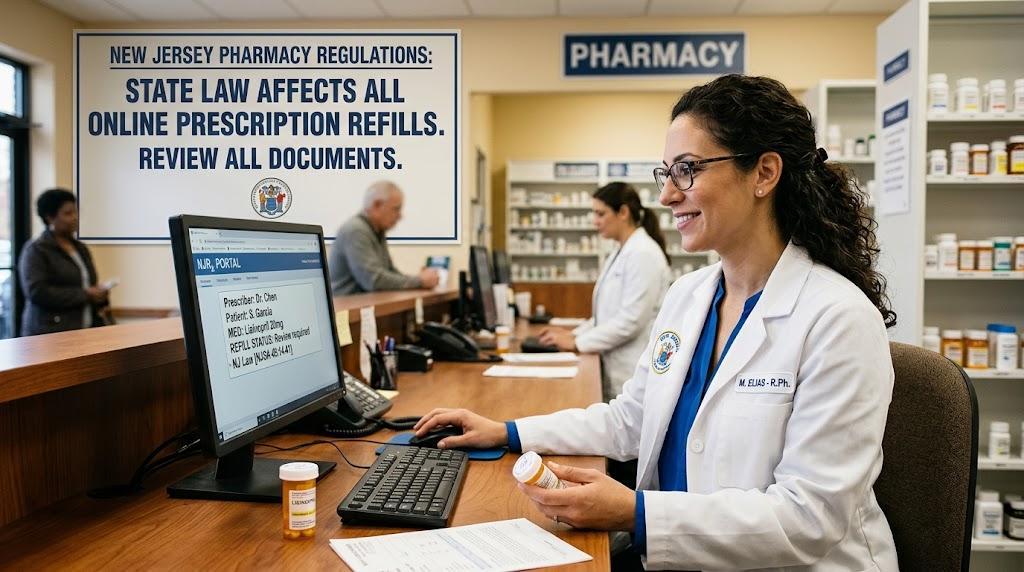
Online prescription refills have become a practical part of everyday health care, especially for people who want to save time, avoid extra trips to the pharmacy, and keep medication routines on track. In New Jersey, however, digital convenience still has to fit within state and federal rules that protect patient safety, pharmacy oversight, and prescribing standards. If you are trying to understand how refill requests work in the Garden State, it helps to know where the law draws the line and what patients can expect when using services such as Online Prescription Refills in New Jersey.
That matters because not every medication can be refilled the same way, and not every request can be approved immediately. Some prescriptions depend on the drug schedule, the original prescriber’s instructions, the time since the last fill, and whether the pharmacy has enough information to verify the request. New Jersey law plays a direct role in each of those steps, shaping what can be refilled online, how quickly it can happen, and when a pharmacist or prescriber must step in for review.
Key points
- New Jersey online refill rules must follow both state and federal prescribing laws.
- Controlled substances face tighter limits than routine maintenance medications.
- Pharmacists may need to verify refill requests before dispensing certain prescriptions.
- Telehealth and electronic prescribing have expanded access, but they do not remove legal safeguards.
- Patients should keep medication lists, refill histories, and provider contact information current to avoid delays.
How New Jersey law shapes online prescription refills
In New Jersey, a refill request submitted online is not simply a convenience feature. It is part of a regulated medication process. Pharmacies must confirm that the prescription is valid, that refills remain available, and that the medication is appropriate to dispense based on the prescriber’s directions. This applies whether the refill request comes through a pharmacy website, a mobile app, or a telehealth-linked service.
State law also works alongside federal rules, especially for medications that can affect safety, dependence, or misuse. That means the online system may be fast on the front end, but the legal review still happens behind the scenes. If a prescription has expired, has no refills left, or is for a drug that requires extra oversight, the pharmacy may need a new prescription from the prescriber before filling it.
What types of prescriptions are affected most
Routine maintenance medications
Medications used for chronic conditions such as high blood pressure, diabetes, high cholesterol, or thyroid disorders are often the easiest to refill online. These prescriptions are commonly written for ongoing use, and many pharmacies can process refill requests efficiently if the original prescription is still active. Even so, the pharmacy may contact the prescriber if the request is early, if the medication has not been filled recently, or if the patient’s history suggests a problem.
Controlled substances
Controlled substances are subject to stricter rules. Depending on the schedule of the drug, refill options may be limited or unavailable. New Jersey pharmacies must follow state and federal standards for these prescriptions, which means online refill requests may trigger extra verification or a requirement for a new prescription. This helps reduce misuse while making sure legitimate patients still receive necessary treatment under proper supervision.
Short-term medications
Medications prescribed for temporary conditions, such as antibiotics or pain relief after an injury, may not be eligible for standard refills at all. If a patient needs more medication, the original diagnosis and treatment plan usually need to be reviewed first. Online systems can handle the request, but approval still depends on whether the medication is appropriate to continue.
The role of pharmacists in online refill decisions
Pharmacists in New Jersey are not just filling containers. They are responsible for checking prescription accuracy, identifying possible drug interactions, and making sure a refill is lawful before it reaches the patient. When a refill comes through online, the pharmacist may review the patient’s profile, medication timing, dosage, and refill history.
If something looks inconsistent, the pharmacist can hold the refill and contact the prescriber. This is especially important when the request appears early, when a medication has been switched, or when the patient is taking multiple drugs that may interact. Online refill tools can speed up communication, but they do not replace the pharmacist’s legal and clinical responsibilities.
Electronic prescribing and telehealth in New Jersey
New Jersey has increasingly relied on electronic prescribing, which helps reduce handwriting errors, speeds up transmission, and improves recordkeeping. In many cases, the prescribing process begins digitally, which makes later refills easier to manage. Patients who use telehealth for routine follow-up visits may find it simpler to request a refill because the prescriber already has recent clinical information.
Still, telehealth does not remove legal requirements. A provider must still determine whether the medication should be continued, whether dosage changes are needed, and whether an in-person evaluation is necessary. For some medications, especially those with higher risk profiles, a virtual visit may not be enough on its own.
Common legal reasons a refill may be delayed
- The prescription has expired under pharmacy or prescriber rules.
- No refills remain on the original order.
- The request is for a controlled substance with tighter restrictions.
- The medication was filled too recently for an automatic refill.
- The pharmacy needs clarification about dosage or directions.
- The prescriber must review the patient’s current condition before authorizing more medication.
These delays are not always signs of a problem. In many cases, they are routine compliance checks. Patients who understand this process are often able to solve issues faster by contacting the prescriber’s office or confirming that their pharmacy has the correct information on file.
What patients can do to avoid refill problems
Good refill management starts with simple habits. Keep an updated list of medications, including dosage and prescribing provider. Watch expiration dates on prescriptions and request refills before running out. If you use a mail-order or online pharmacy, check your account regularly for messages about pending approval or missing information.
It also helps to know which medications require extra planning. If a drug is controlled or used only as needed, do not assume the refill process will be automatic. Ask the pharmacy how much lead time is recommended, especially if travel, weekends, or holidays could interrupt the process.
For patients who take multiple medications, one missed refill can affect the entire treatment plan. That is why New Jersey laws emphasize verification, documentation, and communication. The goal is not to make access harder. It is to make sure each refill is legal, safe, and medically appropriate.
Why state law matters even when the process feels national
Many patients assume online refill systems work the same everywhere, but state laws still matter a great deal. New Jersey can set requirements for pharmacy practice, professional licensing, recordkeeping, and medication review that affect how a refill is handled. Federal law creates another layer, especially for controlled substances and prescription monitoring.
As a result, a refill experience in New Jersey may be different from what a patient sees in another state. That difference is not a flaw in the system. It reflects the balance between convenience and safety. Online tools make the process easier, but they do not eliminate the need for professional oversight.
Conclusion
Online prescription refills are a useful part of modern health care, but in New Jersey they operate within a carefully regulated framework. State law influences which medications can be refilled online, how pharmacists verify requests, when prescribers must be contacted, and how telehealth fits into the overall process. For patients, the best approach is to stay organized, request refills early, and understand that legal review is a normal part of safe medication management.
When patients know the rules, refill delays are easier to interpret and resolve. That creates a better experience for everyone involved, while still protecting the standards that keep prescription use safe and accountable.
FAQ
Can all prescriptions in New Jersey be refilled online?
No. Many routine medications can be refilled online, but controlled substances, expired prescriptions, and medications that require new clinical review may need additional approval.
Why would a pharmacy reject an online refill request?
Common reasons include no refills left, an expired prescription, early refill timing, incomplete information, or restrictions tied to the medication type.
Are online refills legal in New Jersey?
Yes, online refills are legal when they follow New Jersey and federal pharmacy and prescribing rules. The refill still has to be properly authorized and documented.
Do telehealth visits automatically qualify me for a refill?
Not always. A telehealth visit can help a prescriber decide whether to renew a medication, but some drugs may still require more review or an in-person evaluation.
What should I do if my refill is delayed?
Check your pharmacy account, contact the pharmacy, and reach out to the prescriber’s office if needed. Delays often happen because verification is still in progress.
How can I reduce refill interruptions?
Request refills early, keep your medication list updated, and make sure your pharmacy has current contact information for both you and your prescriber.

 English
 Arabic
 French
 Spanish
 Portuguese
 Deutsch
 Turkish
 Italiano
 Russian
 Romaian
 Portuguese (Brazil)
 Greek
Greek
