


Design Considerations for Industrial Floating Ball Systems
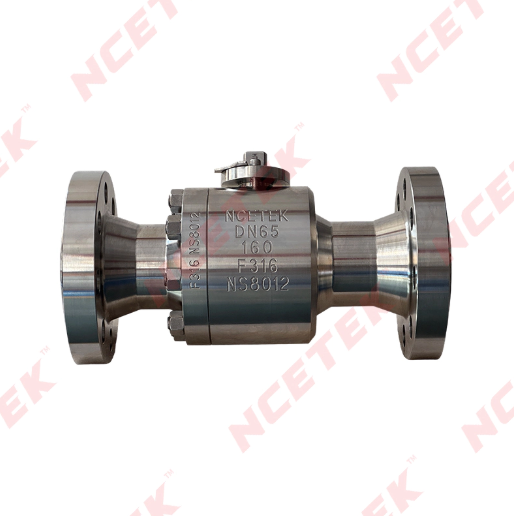
Material selection plays an important role in the construction of industrial valves, especially when the equipment is integrated into demanding pipeline systems. For applications requiring a combination of forged construction and floating ball technology, Forged Steel Floating Ball Valve solutions provide a design approach based on a pressure-containing forged body and a ball that is not fixed by a trunnion structure. Understanding how these elements interact helps engineers evaluate suitable materials, manufacturing processes, and sealing arrangements.
Forged steel begins with the selection of an appropriate steel grade according to the operating environment. Carbon steel may be suitable for many general industrial applications, while stainless or alloy steel can be considered where corrosion resistance, temperature behavior, or other material characteristics are important. The decision should be based on the process medium, operating temperature, pressure conditions, and expected service environment.
The forging process forms the body material under controlled mechanical force. This manufacturing method is often valued for producing pressure-containing components with a dense material structure. Once the forging operation is completed, subsequent processes such as heat treatment, machining, surface preparation, and inspection help transform the basic forged component into a functional valve body.
Machining accuracy is particularly important around sealing and connection areas. The internal flow passage should be produced according to the intended valve geometry, while body interfaces need to maintain proper alignment with internal components. The ball itself requires a carefully controlled spherical surface because its interaction with the seats directly affects shutoff behavior and operating smoothness.
The floating ball principle relies partly on fluid pressure to move the ball toward the downstream seat when the valve is closed. This creates sealing contact around the ball and helps isolate the pipeline. Because the ball is not supported by fixed trunnions, the relationship among pressure, ball movement, seat flexibility, and surface condition becomes an important part of the design.
Seat material selection must therefore be approached carefully. Different process media and temperature ranges can influence the behavior of sealing materials. Polymer seats may be appropriate for certain industrial services, while other applications may require alternative materials or specialized seat configurations. Engineers should consider chemical compatibility, thermal stability, wear characteristics, and expected operating frequency before selecting a sealing arrangement.
The stem is another important component because it transmits rotational movement from the actuator or manual operator to the ball. Proper stem alignment can help reduce friction and maintain controlled movement. For automated pipeline systems, actuator compatibility should be evaluated together with the valve because opening and closing forces must remain within the intended mechanical operating range.
Forged construction can also contribute to the overall structural approach of the valve. Pipeline equipment may encounter vibration, temperature variation, pressure changes, and external mechanical loads. The valve body and connection areas must be integrated appropriately with the surrounding piping so that these forces are managed within the complete system. Installation practices are therefore just as important as the manufacturing quality of the valve itself.
Safety considerations should be incorporated into valve selection from the beginning. Industrial pipelines may transport water, gases, hydrocarbons, chemicals, or other process media. The valve's body materials, sealing materials, stem arrangement, and pressure-control characteristics should be evaluated against the hazards associated with the specific medium. Proper testing and installation procedures can provide additional assurance that the completed assembly is suitable for its intended service.
Quality control is another key stage in forged valve production. Inspection may cover material condition, dimensional accuracy, machining quality, sealing surfaces, and assembly alignment. Functional checks can verify smooth ball rotation and stem operation. Pressure and sealing tests can further evaluate the completed valve before it is introduced into a working pipeline.
Maintenance requirements should also influence equipment selection. Accessible valve placement allows operators to conduct inspections and operational checks more conveniently. Pipeline design should consider the space required around the valve and actuator, especially where future servicing may be necessary. Maintaining clean operating procedures can also reduce unnecessary wear on moving and sealing components.
The engineering value of Forged Steel Floating Ball Valve technology lies in the coordinated relationship between forged material, floating-ball movement, precision machining, sealing technology, and installation practice. Evaluating these factors together enables engineers to select a configuration that matches the actual requirements of the pipeline rather than relying on a single material or structural feature. Zhejiang Naishi Valve Co., Ltd. provides industrial valve solutions through https://www.ncevalve.com/product/ for engineering and procurement teams reviewing flow control equipment.

 English
 Arabic
 French
 Spanish
 Portuguese
 Turkish
 Dutch
Dutch
 Italiano
 Russian
 Romaian
 Portuguese (Brazil)
 Greek
Greek
