


Can Product Size Visualization Improve Understanding of Product Dimensions?
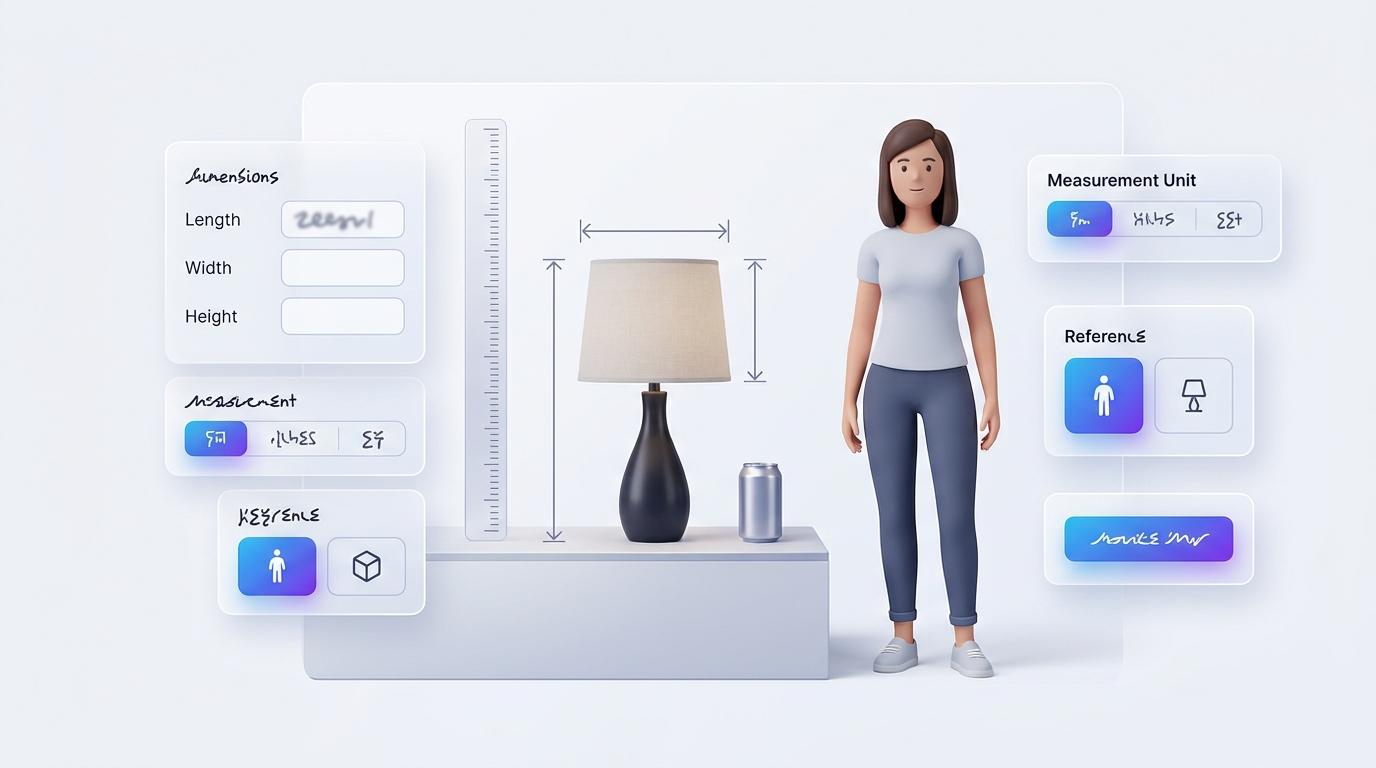
Product Size Visualization is the process of showing the actual or relative dimensions of an item in a visual format so its size is easier to understand. Instead of relying only on measurements such as length, width, and height, visual representation makes those dimensions more meaningful by placing the product beside familiar objects or within a realistic space. A product size visualization tool such as Minitooler can help turn numerical measurements into a clearer visual comparison.
How Product Size Visualization Works
Product size visualization converts basic measurements into a visual reference. For example, a product measuring 30 centimeters may seem difficult to judge from numbers alone. When the same object is displayed next to a common household item, its scale becomes easier to recognize. This approach can be useful for products such as furniture, storage containers, electronics, packages, home accessories, and other objects where physical dimensions matter.
The process generally involves entering or selecting the product dimensions and choosing a suitable comparison object or visual setting. The resulting representation provides a clearer sense of proportion. Depending on the tool, different measurements can be compared while maintaining the correct relationship between length, width, and height.
Why Visual Size Comparison Matters
Measurements provide precise information, but numbers do not always create an immediate sense of physical scale. A visualization bridges this gap by connecting dimensions with something familiar. This can make product specifications easier to interpret, especially when the item is being considered for a particular room, desk, shelf, bag, or storage area.
Visual comparisons are also useful for reducing confusion between products that have similar specifications. Two items can have comparable lengths but very different widths or heights. A three-dimensional or proportional representation can reveal these differences more clearly than a basic specification list.
Product Dimensions in Real-World Context
Product dimensions become more useful when they are viewed in relation to their surroundings. A table, for example, may have a clearly stated height and width, but those figures do not immediately show how much floor space it occupies. A visualization can place the dimensions into a recognizable context, making the scale easier to interpret.
The same principle applies to smaller products. A phone case, bottle, box, picture frame, or decorative item can appear much larger or smaller than expected when viewed only through an online image. Product Size Visualization helps connect the listed measurements with a more realistic understanding of physical size.
Comparing Different Product Sizes
Visual size comparison can also support side-by-side evaluation. When multiple products are represented using the same scale, differences in their dimensions become more apparent. This is particularly useful when product names, photographs, or descriptions make several options appear similar.
For example, two storage boxes may both be described as compact, but one could have substantially greater height while the other has more width. Representing both using consistent proportions provides a more accurate understanding of how their sizes differ.
Product Size Visualization for Online Information
Online product descriptions often depend heavily on written specifications. Images can show appearance, shape, and design, but photographs do not always communicate accurate scale. A visualization adds another layer of information by focusing specifically on dimensions and proportion.
This makes size visualization relevant to ecommerce, product research, educational content, interior planning, packaging, and general measurement comparison. It can help transform technical dimensions into information that is easier to understand at a glance.
Understanding Scale Through Familiar Objects
Familiar objects provide useful reference points because their approximate size is already recognizable. Comparing an unfamiliar product with a common object can make its dimensions easier to imagine without requiring detailed measurement knowledge.
For instance, an object can be visually compared with everyday items such as a smartphone, laptop, book, bottle, or household container. The comparison does not replace the product's exact measurements, but it provides additional context for interpreting them.
Accurate Interpretation of Visualized Dimensions
A visualization is most useful when the underlying measurements are accurate. Length, width, and height should be entered consistently, and the visual comparison should preserve the correct proportions. It is important to distinguish between a proportional visualization and a photograph, because visual representations may communicate relative scale rather than guarantee exact physical appearance.
For this reason, numerical specifications remain important. Visualization works alongside measurements by making those figures easier to understand rather than replacing them.
Product Size Visualization and Better Understanding
Product Size Visualization connects numerical dimensions with visual context. It makes measurements more accessible by showing how an item compares with familiar objects, spaces, or other products. This can improve understanding of proportions, physical scale, and spatial relationships while keeping the original measurements available for reference.

 English
 Arabic
 French
 Spanish
 Portuguese
 Deutsch
 Turkish
 Dutch
Dutch
 Russian
 Romaian
 Portuguese (Brazil)
 Greek
Greek
