


Resin 3D Printer – Complete Guide to High-Detail 3D Printing
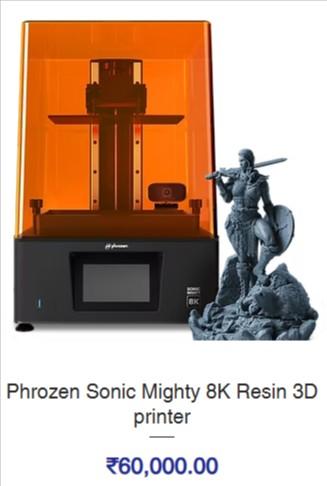
A resin 3D printer is an excellent choice when accuracy, fine details and smooth surface finishes are important. Unlike filament-based 3D printers that melt plastic filament through a nozzle, resin printers use liquid photopolymer resin and light to create objects layer by layer.
Resin 3D printing has become increasingly popular among designers, engineers, hobbyists, manufacturers and professionals who need highly detailed models. Understanding how this technology works can help you decide whether it is suitable for your projects.
What Is a Resin 3D Printer?
A resin 3D printer creates physical objects using liquid photosensitive resin. The printer selectively exposes the resin to light, causing specific areas to harden and form each layer of the model.
The process continues layer by layer until the complete object has been produced.
Modern resin printers can create intricate shapes and very fine features, making them particularly useful when visual quality and detail are more important than producing very large functional components.
How Does Resin 3D Printing Work?
The basic resin printing process involves several stages:
- Create a digital model – A 3D model is designed using CAD or 3D modelling software.
- Prepare the model – Slicing software converts the model into individual printable layers.
- Fill the resin vat – Appropriate 3D printer resin is placed into the printer.
- Light exposure – The printer selectively cures portions of the resin.
- Layer formation – The build platform moves progressively as new layers are created.
- Print completion – Once the model is finished, it is removed from the build platform.
- Post-processing – The print is normally washed and cured, depending on the resin and printer technology.
This combination of precision and fine layer formation allows resin printers to produce impressive levels of detail.
Why Choose a Resin 3D Printer?
There are several reasons users choose resin technology instead of filament printing.
Excellent Detail
One of the biggest advantages is the ability to reproduce small features and intricate designs. This makes resin printing useful for detailed prototypes, miniatures, product models and other applications where precision matters.
Smooth Surface Finish
Resin prints can have a smoother appearance compared with many conventional filament prints. This can reduce the amount of finishing work required for certain models.
Suitable for Small Detailed Models
If your projects involve relatively small components with complex geometries, a resin printer can be an attractive option.
Variety of Resin Materials
Different resin formulations can provide different characteristics, including greater toughness, flexibility, rigidity or visual appearance. Choosing the right material is therefore an important part of the printing process.
Common Applications of Resin 3D Printing
Resin technology can be used in a variety of industries and creative applications.
Product Prototyping
Designers can create detailed prototypes before committing to larger-scale production. This allows the shape and appearance of a product to be assessed at an early stage.
Jewellery Design
The ability to reproduce intricate details makes resin printing useful in jewellery design and prototype development.
Miniatures and Models
Hobbyists and professional model makers often use resin printers to create highly detailed miniature figures, decorative objects and scale models.
Engineering
Certain engineering applications can benefit from resin materials designed for specific mechanical requirements.
Education and Research
Resin printers can also be used to produce detailed educational models and prototypes for research projects.
What Should You Consider Before Buying a Resin 3D Printer?
Buying a printer involves more than looking at its resolution. Consider the following factors before making a decision.
Print Resolution
Higher-resolution systems can be useful for projects involving very small features. However, resolution should be considered alongside print quality and overall printer performance.
Build Volume
Check the maximum size of the object you intend to print. A highly detailed printer may not be suitable if you regularly need to produce large models.
Resin Compatibility
Different printers may be designed around particular resin systems or may support a broader selection of materials. Always check compatibility before purchasing resin.
Printing Speed
If you plan to use the printer regularly, printing speed can influence productivity. However, speed should be balanced with quality and reliability.
Ease of Post-Processing
Resin printing generally involves additional steps after printing. Consider whether you have suitable facilities and equipment for washing, curing and handling finished prints.
Resin 3D Printer Safety
Resin requires responsible handling. Uncured resin should not be treated like ordinary solid plastic.
Users should follow the manufacturer's safety instructions and consider appropriate protective equipment, ventilation and safe handling procedures. Work areas should also be kept clean to reduce accidental exposure or contamination.
Always consult the specific instructions supplied with the printer and resin being used.
Resin Printing vs Filament Printing
The choice between resin and filament technology depends largely on the application.
A resin printer can be particularly attractive when fine detail and surface quality are priorities. Filament printers, meanwhile, can be more appropriate for larger parts, functional prototypes and applications involving materials such as PLA, PETG or other thermoplastics.
There is no single printer technology that is ideal for every project.
Why Consider Hydrotech 3D?
Selecting the right printer and material can make a significant difference to your 3D printing experience. Hydrotech 3D provides 3D printing solutions and offers equipment and materials from recognised brands.
For customers exploring resin-based 3D printing, understanding the intended application, required detail, material properties and expected print volume is a useful starting point.
Whether you are a business developing prototypes or a hobbyist producing detailed models, choosing equipment according to your specific requirements can help you achieve more consistent results.
Final Thoughts
A resin 3D printer can be an excellent solution for users who need detailed models, intricate designs and attractive surface finishes. From product development and jewellery design to miniatures and specialist prototypes, resin technology has applications across numerous fields.
Before purchasing a printer, consider build volume, resolution, resin compatibility, printing speed, post-processing requirements and your intended application.
With the right combination of printer, resin and settings, resin 3D printing can become a valuable part of a professional or creative workflow.
FAQs
1. What is a resin 3D printer?
A resin 3D printer uses liquid photopolymer resin and light to build objects layer by layer.
2. Are resin 3D printers good for detailed models?
Yes. Resin printing is particularly well suited to models and components where fine details and intricate features are important.
3. Do resin 3D prints require post-processing?
Generally, yes. Depending on the printer and resin, finished models may need washing, support removal and curing.
4. Is resin 3D printing suitable for beginners?
It can be, although beginners need to learn proper resin handling, printer setup and post-processing procedures.
5. How do I choose the right resin 3D printer?
Consider the required print detail, build volume, compatible materials, printing speed, post-processing setup and the type of models you plan to produce.
For more details please visit the website - https://www.hydrotech3dchennai.com/3d-printers
Call us: +91-9445390912
Email: hydrotech3dps@gmail
Address: Valasaravakkam, Chennai 600087

 English
 Arabic
 French
 Spanish
 Portuguese
 Deutsch
 Turkish
 Dutch
Dutch
 Italiano
 Russian
 Portuguese (Brazil)
 Greek
Greek
