


How Can Cosmetic Manufacturers Build a GMP System Based on ISO 22716?
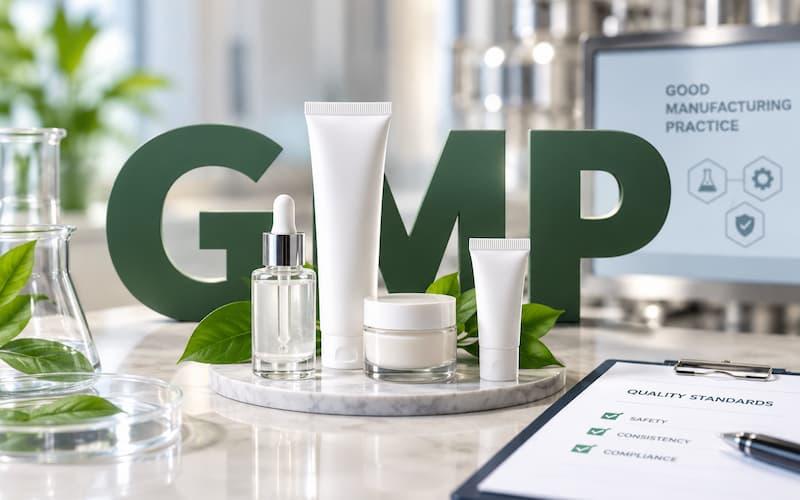
It is important for cosmetic manufacturers to have a constant process in place to guarantee that products are safe, sanitary and made to quality standards defined by the manufacturer. A good cosmetic GMP system can assist the manufacturer in managing activities like raw material handling, production, packaging, storage, quality control, and distribution of the product. It also offers a systematic way to minimize contamination, mix-up, and quality issues risks.
The Good Manufacturing Practices (GMP) in Cosmetics are internationally recognized by ISO 22716. Following these principles while addressing daily activities helps manufacturers enhance quality management, production stability and support their efforts in safe manufacturing. Systematically implementing the requirements can also help organisations that are preparing for iso 22716 certification.
Know the requirements of ISO 22716: Hygiene Requirements For The Manufacture Of Cosmetics
Appropriate development of a cosmetic GMP system requires knowledge of the needs and principles of ISO 22716. Important manufacturing activities are included in the standard such as personnel, premises, equipment, raw materials, production, finished products, quality control, documentation, storage and complaint handling.
For manufacturers, they should assess their current processes and how they compare to the standard. This gap assessment identifies strengths and weaknesses and will provide guidance on what needs to be improved for procedures, records, control or resources.
Implementing Good Personnel Controls and Good Hygiene Practice
Staff can influence the quality of cosmetic products. Manufacturers need to set up suitable hygiene procedures, the duties of staff members, training needs, and hygiene related controls. Staff should be aware of the need for cleanliness, wearing the appropriate protective clothing, hand hygiene and safe working practices.
Frequent training is required to make employees familiar with the procedures in their respective work areas. A record of training should also be kept to demonstrate competence of employees to carry out their duties.
All equipment and premises must be kept under control.
A GMP manufacturing environment should be designed and controlled to reduce the risk of contamination and enable good cleaning. Production areas, storage space and ancillary space should be suitably organised and maintained.
Manufacturing equipment should be appropriate to the intended use, be cleaned, maintained and calibrated, if required. Manufacturers need to have documented equipment operating, cleaning, maintenance and inspection procedures to facilitate regular production.
Learn how to handle raw materials and packaging materials
Some raw materials and packaging materials need to be controlled from the time of their receipt until they are used. Manufacturers to establish procedures for supplier evaluation, material identification, inspection, sampling, testing (where applicable) and approval.
Any materials that do not fulfill the defined specifications should be clearly identified and segregated appropriately. Appropriate stock management procedures can help to minimise the likelihood of using inappropriate or out-of-date materials in production.
Improve production and packaging procedures throughout the company
Clear manufacturing and packaging procedures are essential for a good cosmetic GMP system. All the stages must be carried out in accordance with the approved instructions, including adequate controls to minimize contamination, errors, and product mix-ups.
The manufacturer should have a weighing, mixing, processing, filling, labeling and packaging controls. Consistent with these requirements, batch records should capture significant production data ensuring that the organisation can show that each batch has been produced as required.
Put in place Quality Control and Documentation
Quality control plays an important role in the implementation of ISO 22716 based GMP. Manufacturers must specify and determine appropriate inspections or tests of raw materials, bulk products, packaging material and finished product.
Documentation gives evidence that GMP procedures are followed. Documentation such as controlled procedures, work instructions, specifications, batch records, inspection records, cleaning records, training records and other relevant documents should be retained by the organization. Good documentation also enhances traceability which will facilitate investigation in case of any quality problem.
Set up Complaint, Recall and Deviation Procedures.
Records of procedures for dealing with customer complaints, product deviations, product defects and potential recalls are to be maintained by manufacturers. Complaints should be documented, investigated, and reviewed to decide if corrective and/or preventive action is required.
A structured recall process assists manufacturers to respond rapidly if a product safety or quality issue is identified. Deviation management and root cause analysis are other tools that can help prevent reoccurring issues.
Perform Internal Audits and Continuous Improvement.
Manufacturers should review the effectiveness of the GMP framework on a regular basis after its implementation. Internal audits can determine nonconformities, weaknesses and opportunities for improvement.
Corrective and preventive actions should be recorded and implemented. Management review and continuous monitoring can assist in maintaining the effectiveness of the cosmetic GMP system throughout changes in product, process, equipment, and regulatory expectations.
The ISO 22716 Certification and the Cosmetic manufacturer.
The standard can be applied to cosmetic manufacturing processes as a framework to show that the processes are systematically controlled, for organisations seeking iso 22716 certification. Usually, certification is the evaluation of the implemented system against applicable requirements by an independent certification process.
But certification shouldn't be seen just as a paperwork process. The true benefit is the application of the GMP principles within the actual manufacturing activities, practices of employees, quality control and continuous improvement practices.
Conclusion
To manufacture controlled and consistent products throughout their cosmetic manufacturing operations, it is necessary to have a cosmetic GMP system based on ISO 22716. Personnel hygiene, equipment maintenance, raw material control, production, documentation and complaint handling activities should all be used to ensure quality of the product and consumer safety.
The implementation of iso 22716 certification goes beyond the drafting of policies and procedures for manufacturers planning for the certification. It is about embedding GMP concepts into the normal working practices and striving for continual enhancement of the system. Cosmetic manufacturers can build a solid GMP system in collaboration with their employees if adequate planning, employee involvement, documentation and monitoring are carried out.

 English
 Arabic
 Spanish
 Portuguese
 Deutsch
 Turkish
 Dutch
Dutch
 Italiano
 Russian
 Romaian
 Portuguese (Brazil)
 Greek
Greek
