


How to Prepare for the CPC Exam: Tips, Study Plan and Key Topics
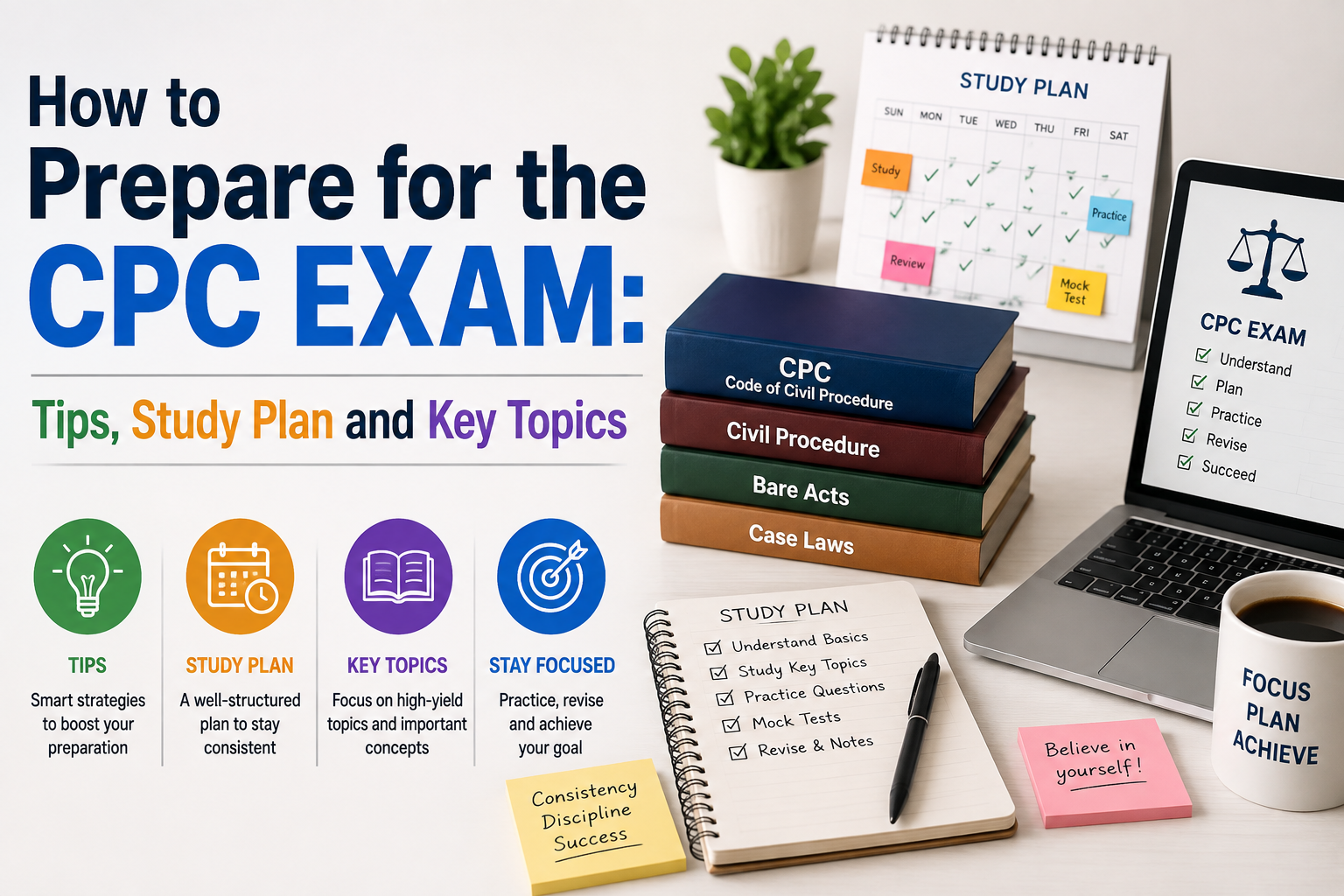
Preparing for the Certified Professional Coder (CPC) exam requires more than memorizing medical codes. The examination tests whether you can apply coding principles to clinical documentation, select appropriate CPT®, ICD-10-CM and HCPCS Level II codes, understand medical terminology and anatomy, and follow coding and compliance guidelines.
The CPC exam is administered by the American Academy of Professional Coders (AAPC). According to AAPC, the exam contains 100 multiple-choice questions and must be completed within four hours. Most questions are based on coding scenarios, and the exam concludes with 10 cases requiring candidates to read medical records and apply coding knowledge. A minimum of 70 correct answers is required to pass.
Because medical coding standards are updated regularly, preparation should always be based on the current-year code books and official guidance rather than outdated study material.
Understand the CPC Exam Before You Start Studying
A good preparation strategy begins with understanding what the examination actually evaluates. AAPC identifies 17 areas of knowledge across the CPC exam, including medical terminology, anatomy, compliance and regulatory concepts, evaluation and management (E/M), anesthesia, radiology, pathology and laboratory, medicine, and surgical coding. The examination also assesses the application of CPT®, ICD-10-CM and HCPCS Level II codes.
The three primary coding systems deserve particular attention. CPT® is used to report medical procedures and services and is maintained by the American Medical Association (AMA). The AMA explains that the CPT code set contains descriptive terms and five-digit codes used to report medical services and procedures.
ICD-10-CM is used for diagnosis coding. The Centers for Medicare & Medicaid Services (CMS) and the National Center for Health Statistics (NCHS) publish the official ICD-10-CM coding guidelines. These guidelines emphasize reviewing the complete medical record and using documentation to determine the conditions and reasons for the encounter.
HCPCS Level II is another important component because it covers many supplies, products, services and procedures that are not represented by CPT® codes.
Build a Practical CPC Study Plan
A structured study schedule is more effective than trying to cover every chapter randomly. Give yourself enough time to learn concepts, practice code selection and complete timed questions.
During the first phase, concentrate on foundations. Review medical terminology, anatomy, physiology and basic pathophysiology. These subjects help you understand clinical documentation and make better coding decisions. AAPC specifically recommends a solid understanding of medical terminology, anatomy and pathophysiology before taking the CPC exam.
In the second phase, focus heavily on CPT®, ICD-10-CM and HCPCS Level II. Learn how to navigate the Alphabetic Index, Tabular List, CPT® sections, code descriptors, guidelines and instructional notes. Instead of simply remembering codes, practice finding the correct code from documentation.
The third phase should emphasize application. Work through realistic clinical scenarios involving different specialties and body systems. Practice identifying the main service performed, reviewing documentation, selecting the appropriate code and checking whether modifiers or additional codes are required.
The final phase should be dedicated to revision and timed practice. Take full-length practice examinations under conditions similar to the actual test. Review every incorrect answer and identify why the selected option was wrong. This helps reveal weaknesses in code-book navigation, terminology, guidelines or clinical interpretation.
Key Topics to Prioritize
CPT® coding should receive substantial attention because the CPC examination requires candidates to apply procedure and service codes to clinical scenarios. Study the major CPT® sections and become comfortable interpreting parenthetical instructions, code-specific guidelines and modifiers. The 2026 CPT® code set contains more than 11,500 codes and includes annual revisions, making current-year resources particularly important.
ICD-10-CM requires a different approach. Focus on conventions, chapter-specific guidelines, sequencing, combination codes, signs and symptoms, laterality, documentation requirements and the distinction between confirmed diagnoses and conditions that cannot be coded in a particular setting. CMS states that the official guidelines should be used together with the official ICD-10-CM classification.
E/M coding is another major area. Candidates should understand documentation requirements, medical decision making and the applicable rules for selecting E/M services. Surgical coding also deserves consistent practice, particularly global surgical concepts, procedures, anatomy, surgical approaches and modifier application.
Do not overlook anatomy and medical terminology. Coding accuracy depends on understanding the body system involved, anatomical location, medical conditions and procedures described in the record. Strong foundational knowledge can make unfamiliar clinical scenarios easier to interpret.
Compliance and regulatory concepts should also be included in your preparation. AAPC identifies areas such as HIPAA, fraud and abuse, NCCI edits, National Coverage Determinations (NCDs), Local Coverage Determinations (LCDs), place-of-service reporting and related payment policies within the CPC examination content.
Learn to Use Your Code Books Efficiently
One of the most important CPC preparation skills is learning how to navigate the permitted code books quickly. AAPC states that candidates may reference the AMA's CPT® Professional Edition and their choice of current-year ICD-10-CM and HCPCS Level II books during the examination.
Practice locating codes without immediately relying on memory. Learn the structure of each book, understand symbols and conventions, and become familiar with guidelines and instructional notes. Proper tabbing can also improve navigation, provided the tabs and notes follow AAPC's examination rules.
This matters because four hours for 100 questions provides approximately 2.4 minutes per question. Spending excessive time searching for individual codes can reduce the time available for complex scenarios and case questions.
Use Practice Questions as a Learning Tool
Practice questions should not be treated only as a measurement of readiness. They should become part of the learning process. After answering a question, verify the code in the appropriate book and read the relevant guideline or instructional note.
Maintain an error log containing the question topic, incorrect reasoning, correct rule and the resource you should have consulted. For example, if you repeatedly confuse modifier application, create a dedicated revision section for modifiers and practice similar scenarios until the decision becomes consistent.
A structured CPC Exam Preparation Course can also provide value when learners need guided instruction, practical coding exercises and a systematic approach to difficult topics. However, candidates should still verify their preparation against the current AAPC examination requirements and official coding resources.
CPC Exam-Day Strategies
On examination day, time management is as important as knowledge. AAPC recommends answering every question and saving difficult questions for later rather than allowing one challenging scenario to consume excessive time.
Read the question carefully, identify what is actually being asked and use the answer choices strategically. When a question involves a medical record, first understand the clinical situation before searching the code book. Avoid selecting a code simply because it looks familiar; confirm the documentation, code definition and applicable guidelines.
Your preparation should also reflect the current certification requirements. Code sets change, and the AMA's CPT® 2026 release included hundreds of additions, revisions and deletions, demonstrating why relying on older coding references can create avoidable problems.
Final Thoughts
Passing the CPC exam requires a combination of coding knowledge, clinical understanding, code-book navigation, accuracy and time management. The strongest preparation strategy is therefore not simply memorizing thousands of codes. Instead, learn the underlying coding principles, study from current authoritative resources, practice realistic documentation-based questions and regularly analyze your mistakes.
Candidates should give particular attention to CPT®, ICD-10-CM, HCPCS Level II, E/M, surgical coding, anatomy, medical terminology and compliance. With a consistent study schedule and repeated application-based practice, learners can approach the examination with a much stronger understanding of professional coding rather than relying on memorization alone.
Most importantly, treat the CPC as a professional competency examination. Accurate medical coding affects documentation, claims, reimbursement, compliance and healthcare data. Building strong coding habits during exam preparation can therefore support not only Affordable CPC Certification but also long-term performance in the medical coding profession.

 English
 Arabic
 French
 Spanish
 Portuguese
 Deutsch
 Turkish
 Dutch
Dutch
 Russian
 Romaian
 Portuguese (Brazil)
 Greek
Greek
