


Insertional Achilles Tendinopathy Treatment & Achilles Tendon Rupture Treatment: A Complete Guide
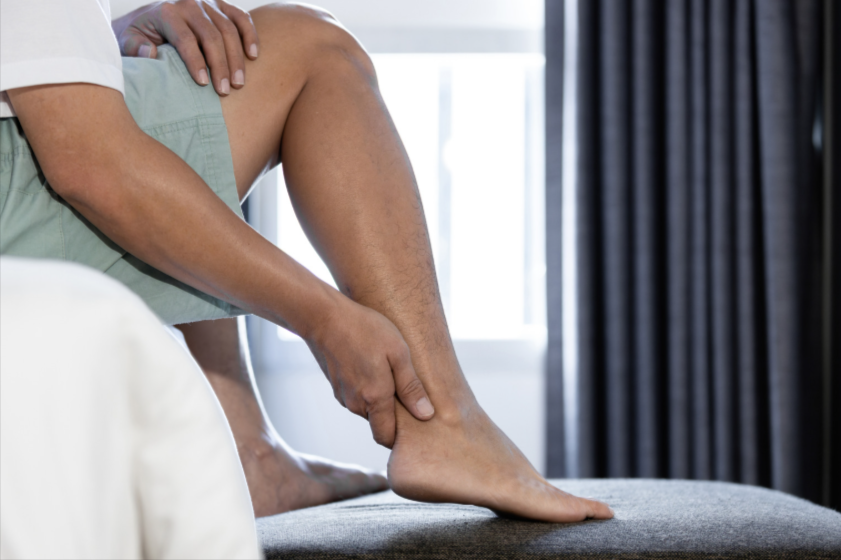
Achilles tendon problems can cause persistent heel pain, stiffness and difficulty with everyday activities. Two conditions that require careful assessment are insertional Achilles tendinopathy and Achilles tendon rupture. Although both involve the Achilles tendon, they are different problems and may require very different treatment approaches.
Understanding the symptoms, available treatment options and recovery process can help patients make informed decisions about their foot and ankle health.
What Is Insertional Achilles Tendinopathy?
Insertional Achilles tendinopathy affects the portion of the Achilles tendon where it attaches to the heel bone.
It can develop gradually and is often associated with repeated loading of the tendon.
Common symptoms include:
- Pain at the back of the heel
- Tenderness where the tendon meets the heel bone
- Morning stiffness
- Pain during walking or running
- Discomfort when wearing certain shoes
- Swelling around the tendon attachment
- Reduced exercise tolerance
Insertional Achilles problems can sometimes occur alongside a heel bone prominence or other changes around the attachment site.
Insertional Achilles Tendinopathy Treatment
The appropriate insertional Achilles tendinopathy treatment depends on symptom severity, duration and the condition of the tendon.
Activity Modification
One of the first steps may be reducing activities that significantly aggravate symptoms.
This does not necessarily mean stopping all physical activity.
A healthcare professional can help identify suitable alternatives that allow fitness to be maintained while reducing excessive stress on the affected tendon.
Appropriate Footwear
Footwear can influence pressure around the back of the heel.
Shoes with suitable cushioning and an appropriate heel design may make symptoms more manageable for some patients.
A clinician may also recommend temporary modifications depending on the individual's circumstances.
Physiotherapy
A structured rehabilitation programme can help improve calf and lower-limb strength.
Exercise should be progressed gradually rather than increased suddenly.
Because insertional Achilles tendinopathy differs from pain occurring in the middle portion of the tendon, exercises may need to be adapted accordingly.
Pain Management
A healthcare professional may discuss suitable pain-management options depending on the patient's health and circumstances.
The objective is to control symptoms sufficiently to allow appropriate rehabilitation while addressing the underlying tendon problem.
Why Is Insertional Achilles Tendinopathy Different?
The Achilles tendon does not behave exactly the same way throughout its length.
Pain at the tendon insertion can require modifications to rehabilitation exercises and loading strategies.
This is why an accurate diagnosis is important before beginning an exercise programme.
Persistent heel pain should not automatically be assumed to be Achilles tendinopathy because other conditions can produce similar symptoms.
When Might Surgery Be Considered?
Most patients are initially treated without surgery.
If symptoms remain severe and significantly affect quality of life despite an appropriate course of non-surgical treatment, a specialist may discuss surgical options.
Depending on the condition, surgery may involve addressing damaged tendon tissue, treating associated bone changes or repairing the tendon attachment.
The exact procedure depends on the individual's anatomy and diagnosis.
What Is an Achilles Tendon Rupture?
An Achilles tendon rupture is different from chronic tendinopathy.
A rupture occurs when the tendon tears, either partially or completely.
It can happen during sports or other activities involving sudden force through the calf and ankle.
Some people describe hearing or feeling a sudden "pop" at the back of the ankle.
Possible symptoms include:
- Sudden pain
- Swelling
- Difficulty walking
- Difficulty pushing off with the foot
- Difficulty standing on tiptoe
- Weakness around the ankle
A suspected Achilles tendon rupture requires prompt medical assessment.
Achilles Tendon Rupture Treatment
The appropriate Achilles tendon rupture treatment depends on factors such as:
- Whether the rupture is partial or complete
- Location of the tear
- Patient age
- Activity level
- General health
- Previous tendon problems
- Individual goals
Treatment can involve either non-operative management or surgery in appropriate patients.
Non-Surgical Treatment
Some Achilles tendon ruptures can be managed without surgery.
This typically involves protecting the tendon and positioning the foot appropriately while the tendon heals.
A structured rehabilitation programme then gradually restores movement and strength.
The exact protocol varies between healthcare providers and individual patients.
Rehabilitation may progress through stages involving:
- Protection
- Gradual movement
- Progressive weight-bearing
- Strengthening
- Functional exercises
- Return to activity
Following the prescribed rehabilitation programme is important.
Surgical Treatment
Surgery may be considered for selected patients with an Achilles tendon rupture.
The decision depends on the individual's circumstances and the potential benefits and risks of surgery.
Surgical repair aims to restore continuity of the tendon.
After surgery, rehabilitation remains essential. The operation itself does not immediately restore normal strength.
Patients typically require a carefully supervised recovery programme.
Surgery or Non-Surgical Treatment?
There is no universally correct answer.
Both approaches can have advantages and disadvantages.
A specialist may consider:
Age and Activity
A highly active person with demanding sporting goals may have different priorities from someone whose main goal is comfortable everyday walking.
Medical History
Existing health conditions can influence treatment decisions.
Type of Rupture
The location and extent of the tear can affect management.
Rehabilitation Commitment
Both operative and non-operative pathways can require substantial rehabilitation.
Patients should discuss the options with an appropriately qualified orthopaedic or foot and ankle specialist.
Recovery After Achilles Tendon Rupture
Recovery can take several months.
The tendon needs time to heal and gradually regain strength.
A rehabilitation programme may include:
- Controlled ankle movement
- Calf strengthening
- Balance exercises
- Progressive resistance training
- Walking rehabilitation
- Sport-specific exercises
Returning to running or competitive sport too quickly can increase the risk of further problems.
A gradual progression based on strength and functional recovery is generally preferable.
How Can Achilles Problems Be Prevented?
Not every Achilles injury can be prevented, but certain strategies may reduce unnecessary tendon stress.
These include:
- Increasing exercise gradually
- Warming up before intense activity
- Maintaining calf strength
- Avoiding sudden changes in training volume
- Using appropriate footwear
- Allowing sufficient recovery
- Addressing persistent pain early
Athletes should be especially cautious when returning to sport after a period of inactivity.
When Should You Seek Medical Advice?
Seek prompt medical assessment if you experience sudden Achilles pain accompanied by:
- A popping sensation
- Significant swelling
- Sudden weakness
- Difficulty walking
- Inability to push off
- Difficulty standing on your toes
For gradual heel pain, arrange an assessment if symptoms persist, worsen or interfere with normal activities.
An accurate diagnosis helps distinguish Achilles tendinopathy from other causes of heel pain.
The Importance of Specialist Assessment
Achilles conditions can vary significantly between patients.
A specialist assessment may involve a physical examination and, where appropriate, imaging such as ultrasound or MRI.
The goal is to understand the tendon problem and develop a treatment plan appropriate to the individual.
Rather than following a generic internet exercise programme, patients with persistent or significant symptoms should seek professional advice.
Final Thoughts
Both insertional Achilles tendinopathy and Achilles tendon rupture involve the Achilles tendon, but they are distinct conditions.
Insertional Achilles tendinopathy treatment may involve activity modification, appropriate footwear, progressive rehabilitation and, in selected cases, surgery.
Achilles tendon rupture treatment can involve either structured non-operative management or surgical repair followed by rehabilitation, depending on the individual circumstances.
Because treatment decisions depend on the specific diagnosis and patient factors, professional assessment is important—particularly after a sudden Achilles injury.
With appropriate diagnosis, treatment and rehabilitation, many patients can work towards improved mobility and a gradual return to their desired activities.
Frequently Asked Questions
1. What is insertional Achilles tendinopathy?
It is a condition affecting the Achilles tendon where it attaches to the heel bone, often causing pain and stiffness at the back of the heel.
2. What is the best insertional Achilles tendinopathy treatment?
Treatment varies between patients but may include activity modification, footwear changes, physiotherapy and progressive rehabilitation. Surgery may be considered in selected persistent cases.
3. How do I know if I have ruptured my Achilles tendon?
A rupture can cause sudden pain, swelling and weakness, sometimes accompanied by a popping sensation. Difficulty pushing off or standing on the toes can also occur.
4. Does an Achilles tendon rupture always require surgery?
No. Some ruptures can be treated without surgery, while surgery may be considered for selected patients.
5. How long does Achilles rupture recovery take?
Recovery commonly takes several months, with rehabilitation progressing gradually. The exact timeframe varies according to the individual and treatment approach.
6. Can you exercise with Achilles tendinopathy?
Some forms of exercise may be possible, but activities that aggravate symptoms may need to be modified. A physiotherapist or specialist can provide an appropriate rehabilitation plan.
7. When should Achilles pain be assessed?
Persistent pain, worsening symptoms or sudden severe pain should be assessed by a healthcare professional, particularly when walking or pushing off becomes difficult.
For more details please visit the website - https://pavelakimau.com/
Call us at - 07934539252 , 01782 432227
Email at - sjukes@protonmail.com
Address - North Staffordshire Hospital Clayton Road, Newcastle-under-Lyme, ST5 4DB

 Arabic
 French
 Spanish
 Portuguese
 Deutsch
 Turkish
 Dutch
Dutch
 Italiano
 Russian
 Romaian
 Portuguese (Brazil)
 Greek
Greek
