


Digital Quality Management for Medical Manufacturing
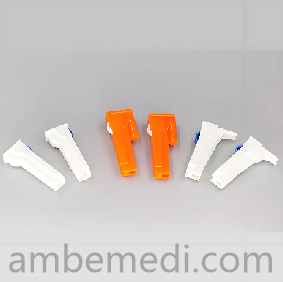
Medical manufacturing places strong emphasis on process stability because assembled products may be used in environments where consistency and cleanliness are important. In this context, a Medical Assembly Machine provides an automated approach to coordinating component feeding, positioning, joining, inspection, and production management. The objective is not simply to increase production speed, but to establish a controlled manufacturing process that supports repeatability and quality.
Component preparation is an essential starting point. Medical products can contain multiple small parts with different shapes, materials, and functional roles. Manual handling can make consistent positioning difficult, especially when production involves large quantities. Automated feeding and orientation systems can organize components before assembly, helping downstream operations receive parts in a predictable manner.
Material compatibility should also receive careful attention. Medical consumables and healthcare products may incorporate polymers, elastomers, metals, films, or other engineered materials. Each material can respond differently to mechanical pressure, heat, friction, or environmental conditions. Automated assembly systems should therefore be designed around the characteristics of the components rather than treating every product as a standard mechanical assembly.
Precision motion control plays an important role in this process. Servo-driven mechanisms, sensors, robotic handling, and programmable control systems can coordinate individual assembly steps with greater consistency. When different stations communicate through an integrated control architecture, manufacturers can create a smoother workflow and reduce unnecessary manual transfers between processes.
Inspection is another major advantage of automated manufacturing. Quality assurance can be incorporated directly into production instead of relying entirely on final inspection. Sensors and machine vision systems may be used to check component presence, positioning, appearance, or assembly conditions where appropriate. Detecting an abnormality close to the point where it occurs can help manufacturers respond more quickly and reduce the possibility of continuing production with an unresolved process issue.
Traceability is becoming increasingly important in modern medical manufacturing. Digital production systems can record information about production stages, inspection results, equipment conditions, and process events. These records can support internal quality analysis and help manufacturers understand production performance over time. A connected manufacturing environment also provides a foundation for identifying recurring issues and improving process management.
Safety and cleanliness must be integrated into equipment design from the beginning. Medical manufacturing environments often require controlled handling and carefully managed production procedures. Equipment surfaces, component transfer mechanisms, protective structures, and operator interfaces should be considered as part of a broader manufacturing environment. Automated handling can also reduce unnecessary direct contact between operators and components, depending on the production application.
Robotics can expand the capabilities of automated assembly systems. Small robotic mechanisms can perform repetitive positioning, transfer, or handling tasks while allowing human workers to focus on supervision, maintenance, quality management, and process improvement. The most effective approach is usually not automation for its own sake, but a balanced division of responsibilities between people and machines.
Production flexibility is equally valuable. Medical manufacturers may need to handle different product variants, packaging formats, or component configurations. A flexible control architecture can make production adjustments more manageable and support future product development. Modular equipment design can also help companies introduce additional functions without replacing the entire production system.
Preventive maintenance is another consideration for long-term manufacturing stability. Automated equipment depends on coordinated mechanical, electrical, and control components. Monitoring equipment conditions and establishing structured maintenance procedures can help manufacturers identify potential issues before they become significant production disruptions. Digital records can further support maintenance planning and equipment lifecycle management.
When evaluating a Medical Assembly Machine, manufacturers should therefore look beyond individual mechanical functions. The overall system should be considered from the perspectives of component handling, process control, inspection, traceability, safety, maintenance, flexibility, and future integration. This approach allows automation to become part of a broader quality-oriented manufacturing strategy rather than an isolated production tool.
AMBE TRADE supports the development of automation-oriented manufacturing concepts that connect equipment engineering with practical production requirements. As medical manufacturing continues moving toward intelligent and data-supported operations, integrated automation can help companies build more organized, transparent, and adaptable workflows. Businesses seeking further information about relevant automation and industrial solutions can explore https://www.ambemedi.com/product/.

 English
 Arabic
 French
 Spanish
 Portuguese
 Deutsch
 Turkish
 Italiano
 Russian
 Romaian
 Portuguese (Brazil)
 Greek
Greek
