


STOK Wheat Beer vs Lager: Taste and Style Compared
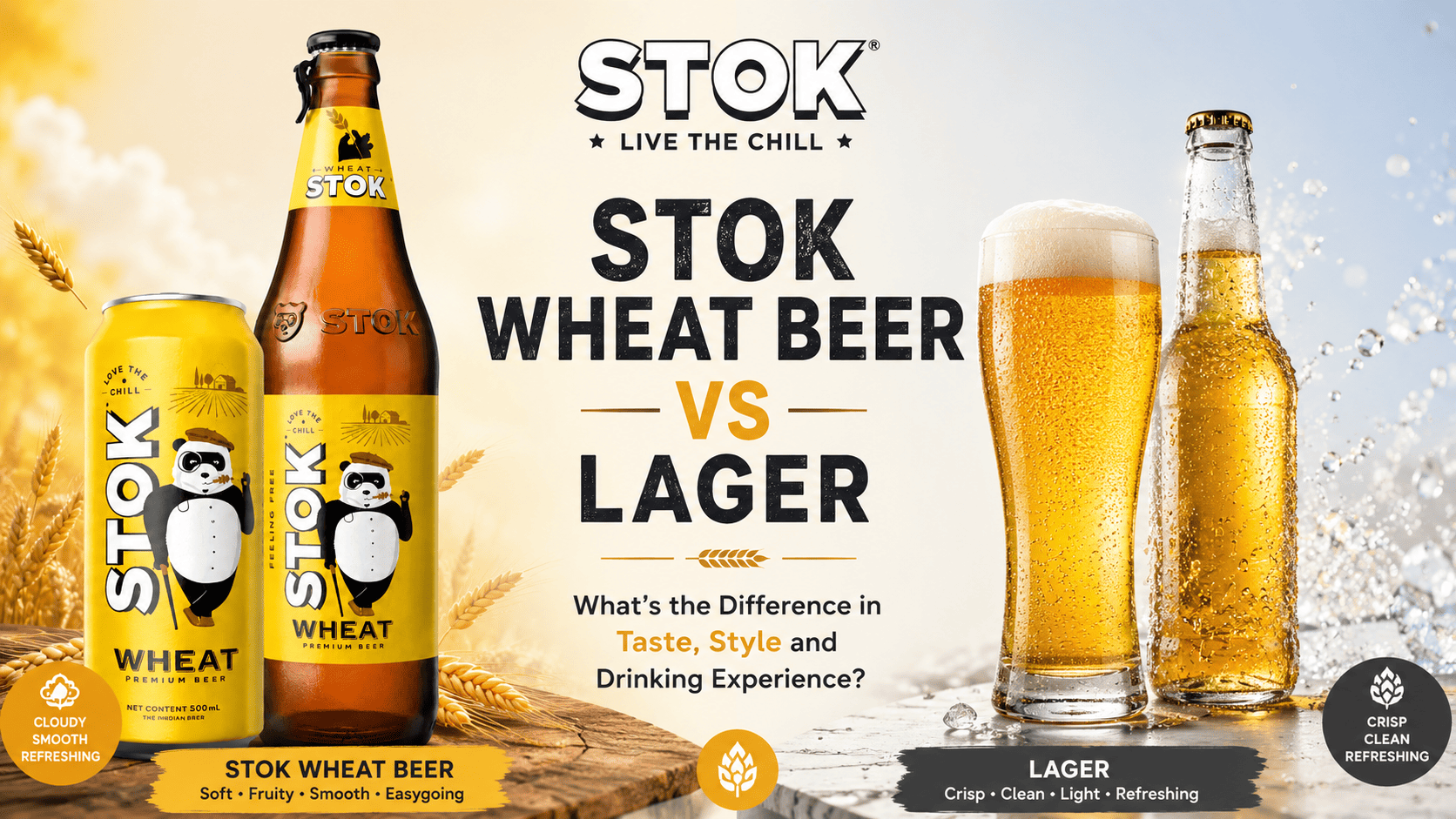
Wheat beer and lager come from two different brewing families, and that single fact explains almost every difference you taste. Wheat beer uses a wheat-heavy grain bill and top-fermenting yeast, which gives it a cloudy look, a soft body, and fruity notes. Lager uses mostly barley malt and bottom-fermenting yeast at cold temperatures, which gives it a clean, crisp finish. India's craft beer segment reached USD 5.8 billion in value in 2025, and more drinkers are now asking which style actually suits their palate. This piece breaks down the taste, brewing process, and drinking experience of STOK Wheat Beer against a standard lager, so you know what to expect in the glass.
What Is the Difference Between Wheat Beer and Lager?
Wheat beer is brewed with a large share of malted wheat alongside barley, using yeast that ferments at warmer temperatures and rises to the top of the tank. Lager uses mostly barley malt with yeast that ferments cold and settles at the bottom. This one change in process shapes everything from appearance to aftertaste.
Fermentation: Top vs Bottom
Top-fermenting yeast works fast and warm, producing fruity esters and a slightly spicy character. Bottom-fermenting yeast works slow and cold, producing a cleaner profile with almost no fruit notes. That is why wheat beer tastes livelier and lager tastes more neutral.
Grain Bill: Wheat Malt vs Barley Malt
Wheat malt has more protein than barley malt, and that protein is what gives wheat beer its hazy look and fuller mouthfeel. Barley-dominant lagers filter clearer and feel lighter on the tongue.
Is Wheat Beer Stronger Than Lager?
Not usually. Wheat beer and lager both typically sit in a similar ABV band, and strength depends far more on the specific brewery's recipe than on the style itself. What differs is perceived strength: the fuller body of wheat beer can feel heavier even at a comparable ABV to a light lager.
Body and Mouthfeel
Wheat beer feels creamy and rounded because of its protein content and higher carbonation. Lager feels sharper and drier, with a snap on the finish that comes from longer cold conditioning.
Bitterness Levels
Lager carries more hop bitterness in most commercial recipes. Wheat beer keeps hops in the background, which lets the malt and yeast character lead.
Why Does Wheat Beer Taste Cloudy and Fruity?
Wheat beer looks cloudy because brewers leave the yeast and wheat proteins in suspension instead of filtering them out. That same yeast produces natural banana and clove-like esters during fermentation. STOK Wheat Beer follows this same top-fermented, unfiltered approach, which is why the aroma reads fruitier than a standard lager straight out of the bottle.
The Role of Yeast Esters
Esters form when yeast is active at warmer temperatures. They are a natural byproduct, not an additive, and they are the reason wheat beer smells different from lager before you even take a sip.
Serving Style Matters
Wheat beer is typically served in a tall, curved glass to trap aroma and support the head. Lager is usually served in a straight pint glass, which keeps the carbonation tighter and the pour cleaner. One detailed look at how an Indian brewery positions its wheat-forward release is worth a read if you want the brewer's own tasting notes: this wheat beer style breakdown covers the grain bill and flavor targets in more depth.
Which One Should Beginners Choose, Wheat Beer or Lager?
Choose lager if you want something crisp, light, and easy to drink in quantity. Choose wheat beer if you want more flavor complexity and don't mind a fuller, cloudier pour. Neither is objectively better; the right pick depends on what you want from the glass.
Quick comparison for first-time drinkers:
- Taste: Lager is clean and crisp. Wheat beer is fruity and soft.
- Appearance: Lager pours clear and golden. Wheat beer pours hazy and pale.
- Best occasion: Lager suits casual, high-volume drinking. Wheat beer suits slower sipping with food.
- Food pairing: Lager works with fried and spicy food. Wheat beer works with citrus, salads, and lighter seafood.
- Glass style: Lager goes in a pint glass. Wheat beer goes in a tall weizen glass.
Key Takeaways
- Wheat beer uses top-fermenting yeast and a wheat-heavy grain bill; lager uses bottom-fermenting yeast and mostly barley.
- The cloudy look in wheat beer comes from unfiltered proteins and yeast, not from a lower-quality brew.
- ABV is not the main differentiator between the two styles; body, aroma, and bitterness are.
- Wheat beer suits food pairing and slower drinking; lager suits crisp, high-volume sessions.
- India's craft beer segment is growing fast, giving drinkers more access to wheat-style options beyond mainstream lager.
Wheat beer and lager will keep sitting side by side on tap lists because they serve different moods, not because one has replaced the other. Once you understand what top-fermentation and grain choice actually do to a beer, picking between STOK Wheat Beer and a standard lager stops being a guess and starts being a preference. The next time you're at a bar with both on tap, which one matches what you're actually in the mood for tonight?

 English
 Arabic
 French
 Spanish
 Portuguese
 Deutsch
 Turkish
 Dutch
Dutch
 Italiano
 Russian
 Romaian
 Greek
Greek
