


Why Does My Diffuser Smell Different After Changing Oils?
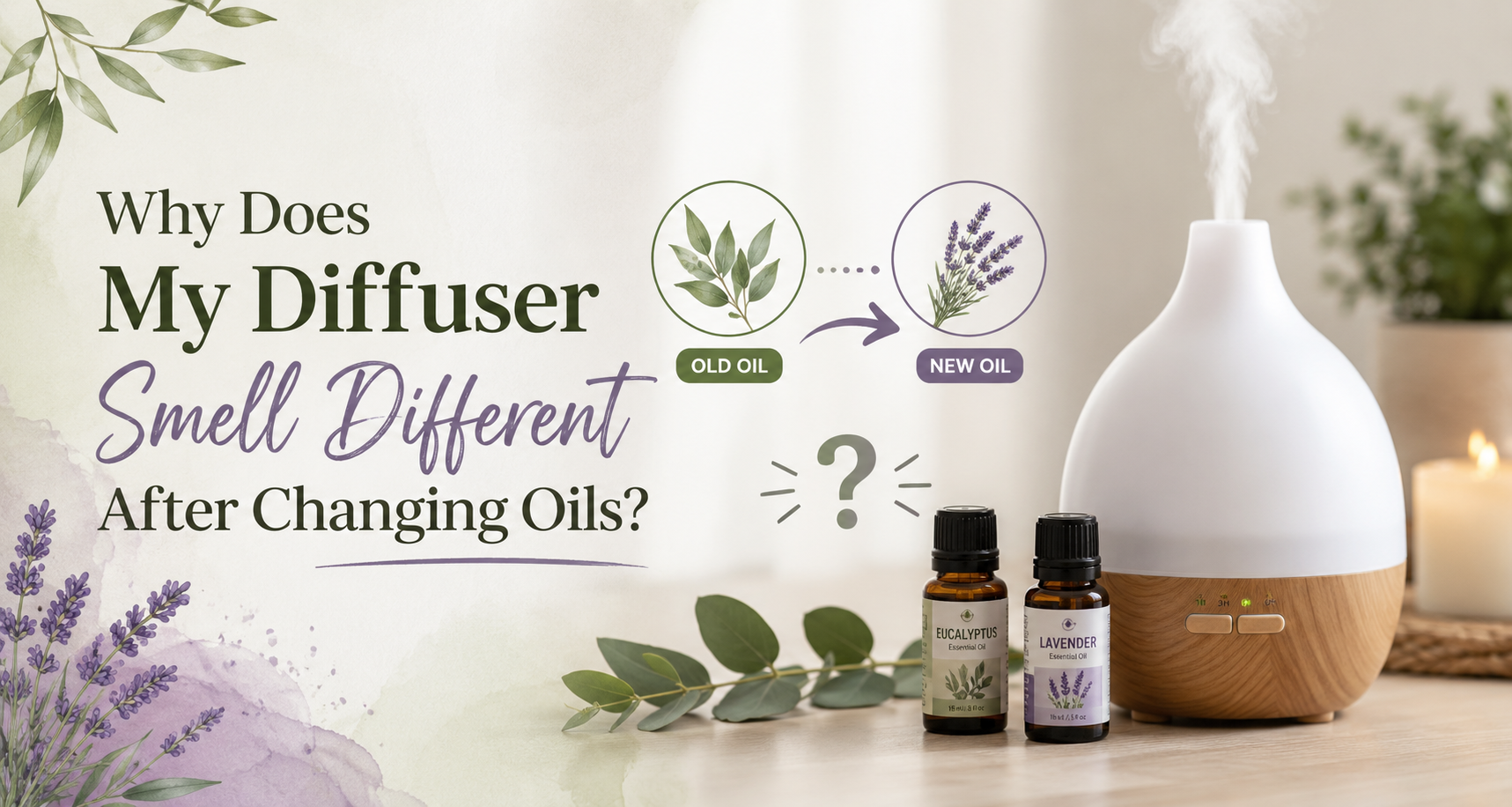
Why Does My Diffuser Smell Different After Changing Oils?
Your diffuser usually smells different after changing oils because traces of the previous oil can remain inside the diffuser. Those residues can combine with the new oil and change its aroma. Oil viscosity, oxidation, water quality, diffuser type, and scent adaptation can also affect what you smell.
If your new oil doesn't smell quite like it should, your diffuser probably isn't broken — it likely just needs a quick reset. This guide explains exactly why the scent changes and gives you a simple process for switching oils without carrying over the old one.
Why Does My Diffuser Smell Different After Changing Oils?
1. Residual Oil Is Still Inside the Diffuser
Oil can leave a thin film on the reservoir walls, the ultrasonic plate, the lid, the nozzle, and other internal surfaces. When you add a new oil, traces of the previous one can blend into the new scent, even if you can't see any visible residue.
2. Some Essential Oils Leave More Residue Than Others
Heavier oils like patchouli, vetiver, sandalwood, frankincense, and myrrh tend to be more persistent than lighter oils. Reddit users specifically report that scents like cinnamon and patchouli can stick around even after fairly thorough cleaning.
3. The New Oil May Be Mixing With the Previous Scent
Old oil residue plus new oil can create scent carryover. For example, switching from lavender to patchouli and then to citrus may leave the citrus smelling less fresh than expected, simply because patchouli residue is still present in the diffuser.
4. Your New Oil Has a Different Volatility
A new oil doesn't always smell exactly like it does in the bottle once it's diffused. Aromatic compounds evaporate and disperse at different rates — citrus and lighter profiles tend to appear quickly and fade sooner, while heavier notes can linger longer. This explains why a diffuser might smell different after several minutes of running, even with fresh oil.
5. The Oil May Be Old or Oxidized
Heat, light, and prolonged air exposure can change how an oil smells over time. If your new oil has been stored for a while or exposed to poor storage conditions, it may smell different from a fresh bottle of the same oil.
6. Your Diffuser Water May Be Affecting the Smell
Old standing water, hard water, and mineral buildup in the reservoir can all influence how a fragrance comes across, separate from anything related to the oil itself.
Does Changing Essential Oils Without Cleaning the Diffuser Mix the Scents?
Yes, this is genuinely one of the most common causes of an "off" or different smell.
Old oil residue combined with a new oil creates scent carryover. For example, if you diffuse lavender, then switch to patchouli, then move to a citrus oil, the citrus may not smell completely fresh — patchouli residue left behind can still influence the new aroma even though you've added a completely different oil.
How to Change Essential Oils Without Carrying Over the Old Scent
- Empty the diffuser. Pour out any remaining water and oil from the reservoir.
- Rinse the reservoir. A basic rinse removes loose residue before deeper cleaning.
- Wipe away visible oil residue. Use a soft cloth to clean the inside walls of the tank.
- Clean the ultrasonic plate according to your manufacturer's instructions. This component often holds the most stubborn residue.
- Rinse and dry completely. Make sure no moisture or cleaning solution remains before refilling.
- Add fresh water and the new oil. Start with your manufacturer's recommended amount and adjust from there.
Always defer to your specific diffuser's manual for exact cleaning steps, since methods and approved cleaning agents vary between models.
How to Remove a Strong Previous Oil Smell
If the old smell is mild, a basic rinse and wipe-down is often enough to clear it.
If the old smell is stubborn, a more thorough clean following your manufacturer's instructions may be needed, especially after diffusing heavier oils like patchouli or sandalwood.
If the smell remains even after cleaning, check less obvious areas: the lid, the nozzle, the ultrasonic plate, seals, the oil tray, and any internal channels where oil can settle unnoticed.
Which Essential Oils Are Most Likely to Leave a Lingering Smell?
Lighter oils tend to leave less residue, while heavier, deeper oils tend to be more persistent.
Citrus oils like lemon and sweet orange are generally lower in residue concern and tend to disperse and clear more easily. Peppermint, lavender, and eucalyptus fall in the middle, with moderate persistence and residue potential. Frankincense leans toward the higher end of both scent persistence and residue concern. Sandalwood, patchouli, and vetiver are typically the most persistent and most likely to leave noticeable residue behind.
Treat this as general guidance rather than a strict rule. Oil formulation, diffuser type, and overall oil quality all affect how much residue a particular oil actually leaves.
Does the Type of Diffuser Change How Oils Smell?
Yes, and this is one of the most overlooked factors in scent carryover.
Ultrasonic diffusers combine water and oil, using vibration to create a fine mist. Residue here typically builds up on the reservoir walls and the ultrasonic plate.
Nebulizing diffusers disperse oil directly without a water reservoir, which means residue tends to concentrate in the nozzle and internal tubing instead.
Waterless diffusers vary by design, but oil carryover can happen differently depending on the cartridge or chamber structure specific to the model.
Passive diffusers, including reed, wood, and ceramic-based designs, absorb oil directly into the material, which can make full scent removal more difficult than with electric diffusers.
Is the Diffuser Actually Changing the Oil's Smell?
Sometimes, the diffuser itself isn't the real issue.
Diffusion method, oil concentration, volatility, room temperature, and airflow can all affect how a scent comes across, independent of any residue. Scent adaptation also plays a role — your nose can become less sensitive to a smell you've been exposed to continuously, which can make a perfectly normal scent seem weaker or different than expected.
Why Does My Diffuser Smell Different After a Few Minutes?
This often comes down to olfactory fatigue, also called scent adaptation or nose blindness. Your brain reduces its response to a smell after continuous exposure, which can make you think the oil "stopped working" or changed, when your sense of smell has simply adjusted. Leaving the room for a few minutes and returning can help you judge whether the scent is genuinely different or whether your nose had adapted.
Essential Oil vs Fragrance Oil: Does It Matter?
Essential oils are typically derived from plant sources, while fragrance oils can include a broader mix of aromatic compounds, whether natural, synthetic, or both. Some fragrance oils are specifically formulated for diffuser use, while others aren't designed for the same purpose.
Not every fragrance oil is automatically unsuitable for a diffuser, but compatibility depends on the specific formulation and your diffuser type. Always check your manufacturer's guidance before using a product not specifically labeled for your device.
How Often Should You Clean Your Diffuser?
Cleaning frequency depends on how often you use the diffuser, your diffuser type, the oils you use, and your manufacturer's recommendations. As a practical rule, clean the diffuser whenever you're switching between very different oils, especially if you want the new scent to smell as intended. Routine cleaning between fragrance changes helps prevent the residue buildup that leads to scent carryover in the first place.
Diffuser Smell Troubleshooting Checklist
If your diffuser smells like the previous oil, check the reservoir, plate, and lid for residue. If a new oil smells weaker than expected, check the oil-to-water ratio and the diffuser's placement. A musty smell usually points to old standing water that needs emptying and cleaning. A sour or off smell often means residue or stagnant water has built up and a deeper clean is needed. If the oil smells different from the bottle, this is typically related to diffusion and volatility rather than a fault. If the smell disappears quickly, olfactory fatigue is a likely explanation — try leaving the room and returning. A strong, oily smell often points to excess oil or residue buildup. Weak mist commonly traces back to mineral or oil buildup on the ultrasonic plate. If the smell remains even after cleaning, persistent residue in less accessible internal parts is the likely cause.
How to Prevent Your Diffuser From Smelling Different
- Empty old water rather than topping it up with fresh water
- Wipe the reservoir regularly, not just when problems appear
- Clean thoroughly between dramatically different oils
- Avoid overloading the diffuser with too much oil
- Store your oils properly to prevent oxidation before you even use them
- Keep the diffuser dry between uses rather than leaving standing water
- Follow your manufacturer's specific cleaning instructions
- Use oils appropriate for your specific diffuser type
- Investigate when mist output noticeably changes, since this can signal buildup
Common Mistakes to Avoid
- Assuming a new oil has "gone bad" when the diffuser itself holds the leftover scent
- Skipping cleaning when switching between very different fragrance profiles
- Adding more oil to try to fix a weak or different-smelling scent without checking for residue first
- Assuming all diffusers behave the same way when switching oils
- Leaving old water in the reservoir between different oils
- Ignoring less visible parts like the nozzle, lid, and internal channels during cleaning
- Assuming every fragrance oil is automatically compatible with any diffuser
Frequently Asked Questions
"Does changing diffuser oils make them mix?" Yes, residual oil can remain inside the diffuser and influence the aroma of the next oil you use.
"Do I need to clean my diffuser between essential oils?" If you want the new scent to smell as accurate as possible, cleaning between substantially different oils is recommended.
"Why does my diffuser still smell like the old oil?" Oil can remain on the reservoir, lid, ultrasonic plate, or other internal surfaces even after a basic clean.
"How do I get an old essential oil smell out of my diffuser?" Empty it, clean the relevant components according to your manufacturer's instructions, rinse thoroughly, and let it dry completely before adding new oil.
"Can I put a different essential oil in my diffuser every day?" Usually yes, as long as your diffuser is designed for the oils you're using and you maintain it appropriately between changes.
"Why does my new essential oil smell bad in my diffuser?" Possible causes include leftover residue, old water, oil oxidation, using too much oil, general buildup, or simply the natural characteristics of the new oil.
"Why does my diffuser smell fine at first and different later?" The aroma changes as more volatile compounds disperse over time, and your sense of smell can also adapt the longer you're exposed to it.
"Why does my diffuser smell weak after changing oils?" Check the oil quantity, how fresh the oil is, your room size, airflow, diffuser output, and whether residue from a previous oil is present.
"Can fragrance oils be used in an essential oil diffuser?" Only use products confirmed compatible with your specific diffuser, following the manufacturer's instructions for approved oil types.
"Why does my diffuser smell musty?" Old standing water, residue buildup, and inadequate drying between uses can all contribute to a stale or musty odor.
"Can I use vinegar to clean my diffuser?" Some manufacturers and cleaning guides recommend vinegar for specific diffuser types, but your owner's manual should always take priority over general advice.
"When should I replace my diffuser?" Consider replacement if proper cleaning doesn't restore normal mist and scent output, or if you notice persistent malfunction, leaking, or other hardware problems.
Conclusion
A diffuser that smells different after changing oils is usually experiencing scent carryover, not a genuine fault. Leftover residue from a previous oil, combined with the natural differences in how oils diffuse and disperse, accounts for most of what you're noticing. A simple reset — empty, rinse, wipe, clean the plate, dry, and refill — solves the vast majority of these cases.
Pay extra attention when switching between very different fragrance profiles, since heavier oils like patchouli and sandalwood tend to linger the longest. With a bit of regular maintenance, each new oil you diffuse should smell the way it's meant to.
Looking for oils and diffusers designed to perform consistently? Explore our range of Affordable Scent Diffusers In UAE For Homes & Businesses, built for reliable, long-lasting fragrance in any space.

 English
 Arabic
 French
 Spanish
 Portuguese
 Deutsch
 Turkish
 Dutch
Dutch
 Italiano
 Russian
 Romaian
 Portuguese (Brazil)
