


Improving Vehicle Guidance in Commercial Parking Areas
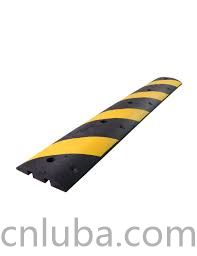
Effective parking management depends on more than painted lines and directional signs. Physical guidance can also play an important role, and a Car Wheel Stopper provides a practical way to define the final position of a vehicle within a designated parking space. Its material, structure, installation method, and application environment should all be considered during product selection.
Parking facilities vary significantly in their operating conditions. Residential garages, commercial parking lots, logistics centers, office buildings, shopping areas, and industrial sites may experience different levels of vehicle movement and environmental exposure. A suitable stopping device should therefore be selected according to the actual characteristics of the site rather than based solely on appearance or basic dimensions.
Material behavior is particularly important. Rubber is widely used in parking protection because it can provide a combination of flexibility, impact absorption, and practical surface contact. Compared with rigid materials, rubber-based products can help reduce the severity of contact between a moving vehicle and the stopping point, while also supporting repeated use in ordinary parking environments.
Recycled rubber can be considered in applications where material efficiency and resource utilization are important. However, material selection should always take account of formulation, processing quality, environmental conditions, and expected service behavior. Consistent material composition helps manufacturers maintain more predictable product characteristics throughout production.
The physical structure also affects usability. A stopping device needs to create a clear visual and physical reference for drivers without unnecessarily interfering with surrounding parking operations. Its shape should support vehicle positioning while leaving adequate space for doors, pedestrian movement, cleaning activities, and routine maintenance.
Surface design can further influence installation and daily use. Clearly visible markings or reflective elements may help drivers identify the stopping location, especially in garages or parking areas with limited natural lighting. A recognizable visual reference can support easier vehicle alignment and improve the organization of individual parking spaces.
Manufacturing technology plays a central role in achieving consistent quality. Rubber products may be produced through molding processes that convert prepared material into a controlled structural form. Careful control of material preparation, molding, curing, trimming, and finishing helps reduce inconsistencies that could affect installation or long-term usability.
Installation conditions should also be evaluated before purchasing. Different ground surfaces may require different fixing approaches, and the installation area should be checked for cleanliness, levelness, accessibility, and surrounding obstacles. Correct installation helps the equipment remain properly positioned and allows it to perform its intended guiding function.
For facility managers, parking contractors, and distributors, product consistency is an important purchasing consideration. A dependable Car Wheel Stopper manufacturer should understand the relationship between material selection, structural design, manufacturing processes, and actual parking conditions. Clear communication about application requirements can help buyers select suitable products for different project environments.
Parking protection is also closely connected with pedestrian safety. Vehicles often operate close to walkways, building entrances, columns, walls, and loading areas. Physical stopping points can help establish a predictable boundary between the vehicle and nearby structures, reducing unnecessary vehicle movement beyond the intended parking position.
In commercial and industrial environments, organized vehicle positioning can contribute to more efficient use of available space. Consistent stopping locations make individual parking spaces easier to recognize and can help maintain orderly circulation. This is particularly valuable in facilities where parking arrangements need to remain clear despite frequent changes in vehicle occupancy.
Environmental exposure should not be overlooked. Outdoor parking areas may experience sunlight, rain, dust, temperature variation, and repeated vehicle contact. Materials and surface finishes should therefore be selected with the surrounding environment in mind. Manufacturing quality and suitable material formulation are important factors in maintaining consistent physical performance under ordinary outdoor conditions.
As parking facilities become more organized and safety-focused, simple physical guidance products continue to have practical value. Their effectiveness comes from combining appropriate materials, functional geometry, reliable manufacturing, suitable installation, and clear application planning rather than relying on a single feature.
Zhejiang Luba Traffic Technology Co.,Ltd. develops traffic safety products for parking, roadway, and infrastructure applications. Businesses seeking practical vehicle positioning and traffic protection solutions can visit https://www.cnluba.com/product/ to learn more about the available product range and application possibilities.

 English
 Arabic
 French
 Spanish
 Portuguese
 Deutsch
 Turkish
 Dutch
Dutch
 Italiano
 Russian
 Romaian
 Portuguese (Brazil)
