


Advanced Technologies for Stable Power Distribution
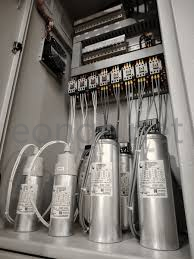
In industrial and utility power networks, Reactive Power Compensation Device technology plays an important role in managing electrical operating conditions and improving the overall behavior of AC systems. Electrical loads such as motors, transformers, and other inductive equipment can influence current flow and system efficiency. Proper compensation engineering helps engineers manage these effects while considering equipment protection, operating stability, maintenance requirements, and changing load conditions.
The basic principle behind compensation is closely connected with the relationship between active and reactive power. Although reactive power does not directly perform useful mechanical work, it is required by many electromagnetic devices to establish operating fields. Excessive reactive demand can increase current in electrical infrastructure and place additional loading on cables, transformers, and switching equipment. Engineering solutions therefore aim to maintain an appropriate balance within the network.
Capacitor technology is commonly associated with compensation systems because capacitive behavior can counteract inductive effects. However, reliable equipment requires more than simply selecting a suitable capacitor. Engineers must consider dielectric materials, conductive elements, insulation structures, thermal behavior, enclosure design, switching components, and protection mechanisms. Every part contributes to the safe and stable operation of the completed assembly.
Material engineering has a major influence on product reliability. Dielectric materials need appropriate electrical characteristics and resistance to environmental conditions. Conductive materials must provide stable current paths while supporting efficient heat management. Insulating structures need to maintain separation between energized sections and grounded or external surfaces. Manufacturers therefore evaluate material consistency carefully from incoming inspection through final assembly.
Thermal management is another important consideration. Electrical components generate heat during operation, and accumulated heat can influence material aging and service performance. Engineers may use suitable structural arrangements, ventilation concepts, conductive pathways, and thermal-resistant materials to manage temperature. Manufacturing accuracy is equally important because poorly fitted components or inconsistent contact surfaces can create localized heating and mechanical stress.
Protection engineering should also be integrated into the overall design. Electrical equipment may experience switching events, abnormal operating conditions, environmental influences, or unexpected changes in load. Protective components and appropriate isolation structures can help limit the consequences of these conditions. From a manufacturing perspective, protection is not an isolated feature; it should be considered together with insulation, enclosure construction, electrical connections, and quality control.
Automatic control has expanded the role of modern compensation systems. Traditional fixed arrangements may be appropriate for relatively stable loads, but many industrial facilities experience changing demand throughout the working day. Monitoring and control technologies can help equipment respond to variations in electrical conditions. Sensors, controllers, switching elements, and communication interfaces can work together to support more responsive operation.
Manufacturing consistency is essential for equipment used in electrical networks. Precision assembly helps ensure that conductive parts, insulation components, terminals, and structural elements remain correctly positioned. Automated production equipment can improve repeatability in processes such as component placement, fastening, forming, and inspection. At the same time, skilled technical supervision remains important for process validation and troubleshooting.
Quality assurance should include both material and functional evaluation. Manufacturers can inspect incoming materials, monitor critical production stages, verify dimensions, and perform electrical or mechanical checks according to the intended application. Traceability systems are also useful for B2B customers because they provide a structured way to connect production batches with inspection records. Such practices support continuous manufacturing improvement and more consistent product delivery.
Application planning is equally important. Engineers should evaluate the characteristics of the electrical system before selecting compensation equipment. Load behavior, operating schedules, network configuration, harmonic conditions, environmental factors, and maintenance practices can all influence the appropriate engineering approach. A solution designed around actual operating conditions is more likely to integrate effectively with existing infrastructure.
As industrial facilities adopt more automated equipment and electricity-intensive processes, Reactive Power Compensation Device technology will continue supporting more efficient electrical network management. Its effectiveness depends on coordinated electrical design, reliable materials, thermal control, protection engineering, precision assembly, and systematic quality assurance. Shanghai Yongjin Electric Technology Co.,Ltd. continues developing professional electrical technologies and manufacturing capabilities, with further product information available through https://www.eonge.net/product for evolving energy infrastructure.

 English
 Arabic
 French
 Spanish
 Portuguese
 Deutsch
 Turkish
 Italiano
 Russian
 Romaian
 Portuguese (Brazil)
 Greek
Greek
