


How Food Paper Supports Efficient Kitchen Workflows
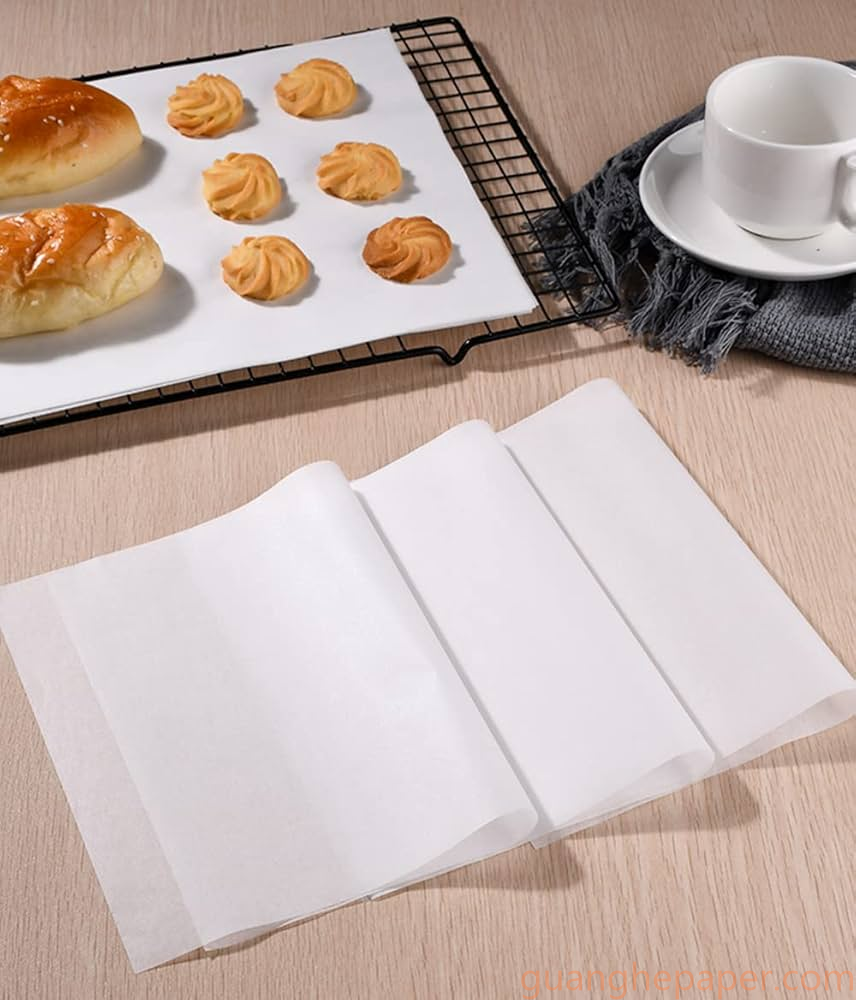
From small bakeries to large food-processing facilities, Baking Paper has become a practical material for managing food contact during preparation and production. Its value comes from the relationship between the paper substrate, surface treatment, converting process, and intended application. Understanding these elements helps buyers select materials that fit their production methods without introducing unnecessary complexity.
The foundation of food paper is its substrate. Paper intended for baking applications needs to provide a suitable surface for food preparation while remaining practical to handle. Fiber composition, paper formation, surface characteristics, and finishing can influence flexibility and converting behavior. Selecting an appropriate substrate is therefore an important part of designing a finished food paper product.
Surface treatment provides another layer of functionality. Silicone-coated paper is widely used because its treated surface can reduce adhesion between food and paper. This release characteristic can be useful when preparing baked products such as cookies, pastries, bread, and other foods. The coating may also help the paper resist grease and moisture during use, depending on the material formulation and application.
Coating consistency is particularly important in manufacturing. A stable coating process helps maintain a more uniform surface across the paper web. Production technology therefore plays a major role in the usability of the finished material. Coating equipment, process control, drying, and inspection all contribute to maintaining consistency during manufacturing and converting.
Converting is equally important because professional users often require food paper in practical formats rather than unfinished rolls. Paper can be converted into sheets, rolls, liners, and other application-specific formats. Cutting accuracy, edge quality, winding, folding, and packaging can influence how efficiently the product is handled by customers. Well-organized converting processes can make food paper easier to integrate into both manual and automated workflows.
Food-contact safety must remain part of the manufacturing philosophy. Producers need to consider suitable raw materials, hygienic production environments, appropriate handling, and relevant documentation. Buyers should also evaluate whether the material is appropriate for their intended food-contact application and target market. Clear technical communication can help prevent misunderstandings during international procurement.
The technology behind food paper is increasingly connected with automation. In industrial food production, materials may move through preparation, filling, baking, cooling, packaging, and inspection stages with limited manual intervention. Paper formats that can be handled consistently are therefore valuable for production efficiency. Converting design should take the downstream process into account, particularly when paper will be used with automated feeding or packaging equipment.
Storage and handling also deserve attention. Paper products should be protected from excessive moisture, contamination, and unsuitable environmental conditions. Proper packaging helps preserve the material before use, while organized warehouse practices can reduce handling-related damage. These considerations are especially relevant for distributors and manufacturers that maintain inventory for multiple customers.
Sustainability is another area receiving increasing attention across the food industry. Paper-based food materials can be considered within broader efforts to manage packaging consumption and material selection. Buyers may evaluate responsibly sourced paper, efficient packaging, and suitable material formats according to their own environmental objectives and market requirements. Sustainability decisions should be based on the complete product lifecycle rather than a single material characteristic.
For B2B buyers, the most useful approach is to evaluate food paper from the perspective of the entire application. Baking Paper should be selected according to substrate characteristics, coating technology, converting requirements, food-contact considerations, storage conditions, and the production environment where it will be used. Companies seeking food-grade paper products and customized converting solutions can explore Zhejiang Guanghe New Materials Co., Ltd. through https://www.guanghepaper.com/product/ for further product information.

 English
 Arabic
 Spanish
 Portuguese
 Deutsch
 Turkish
 Dutch
Dutch
 Italiano
 Russian
 Romaian
 Portuguese (Brazil)
 Greek
Greek
