Facial symmetry and well-defined contours contribute significantly to the overall appearance of the face. However, almost everyone has some degree of natural asymmetry. Aging can make these differences more noticeable as skin loses elasticity, facial tissues shift downward, and changes occur around the cheeks, jawline, and neck. A facelift may help improve certain contour irregularities associated with aging, although it is not designed to create perfectly symmetrical facial features.
For people considering facelift in riyadh, understanding the relationship between facial symmetry, tissue laxity, and surgical planning is important. Modern facelift techniques focus on repositioning selected facial tissues and managing excess skin rather than simply pulling the surface of the face. When carefully planned, this approach can create more balanced contours while preserving the individual characteristics of the face.
How Aging Can Affect Facial Symmetry
Facial aging does not always occur evenly on both sides of the face. One side may develop more noticeable jowling, cheek laxity, or neck looseness than the other.
Uneven Tissue Laxity
Differences in skin elasticity and underlying tissue position can make one side of the lower face appear slightly heavier or less defined. A facelift may address these age-related changes when they are caused by tissue descent.
Changes in Facial Volume
Loss of facial volume can also influence perceived symmetry. Reduced fullness in the cheeks or other areas may create differences that cannot be corrected through lifting alone.
Can a Facelift Improve Facial Contours?
Yes, a facelift can improve certain facial contours, particularly when sagging tissues are responsible for changes in the lower face.
Defining the Jawline
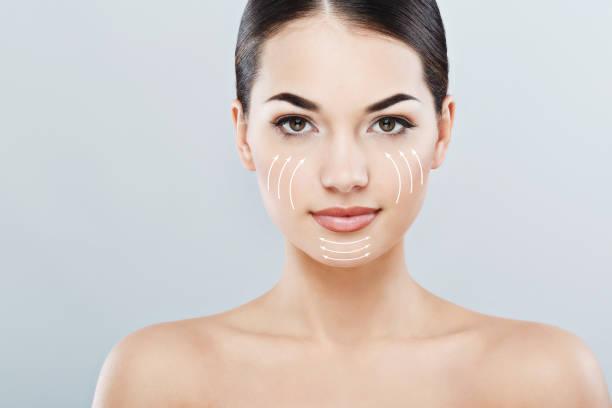
Loose skin and displaced facial tissues can create jowls and soften the jawline. Repositioning appropriate tissues and managing excess skin may help restore a clearer lower-face contour.
Improving Cheek Contours
As facial tissues descend with age, the cheeks may appear less elevated and the transition toward the lower face can become less defined. Depending on the technique, a facelift may reposition tissues to create a smoother appearance.
Addressing the Neck
When neck laxity contributes to an indistinct jaw-neck transition, a facelift may sometimes be combined with neck-focused treatment. The appropriate approach depends on individual anatomy.
How Modern Techniques Support Balanced Results
Modern facelift surgery places greater emphasis on the underlying facial structures. Rather than relying exclusively on skin tension, some techniques address deeper supporting tissue layers.
SMAS-Based Approaches
The superficial musculoaponeurotic system, or SMAS, is a connective and muscular tissue layer beneath the skin. Techniques involving this layer can help reposition facial tissues and reduce the need for excessive skin tightening.
Deep-Plane Techniques
A deep-plane facelift works within deeper anatomical planes and can allow selected facial tissues to be repositioned together. Whether this approach is appropriate depends on facial anatomy, aging patterns, and the surgeon's assessment.
Can a Facelift Correct Perfect Symmetry?
A facelift should not be viewed as a procedure for achieving mathematically perfect facial symmetry. Natural asymmetry is common, and differences can involve bone structure, muscles, facial volume, skin thickness, and other anatomical characteristics.
Setting Realistic Expectations
The objective is generally to create a more balanced and harmonious appearance rather than making both sides of the face identical. A qualified surgeon can explain which asymmetries may be influenced by lifting and which may remain.
Understanding Structural Differences
If asymmetry is primarily caused by differences in facial bones or other underlying structures, a facelift alone may have limited ability to change it. Treatment should therefore be based on the actual cause of the asymmetry.
Why Individualized Surgical Planning Matters
Every face responds differently to aging and has its own anatomical characteristics. A personalized surgical plan is therefore essential for achieving balanced contours.
During a consultation for Facelift in Riyadh, the surgeon may assess skin elasticity, facial tissue position, cheek volume, jawline definition, neck laxity, existing asymmetry, and overall facial proportions. Previous procedures and medical history may also be considered.
Evaluating Both Sides of the Face
Careful assessment of both sides allows the surgeon to identify differences in tissue descent and determine how much correction may be appropriate on each side.
Avoiding Overcorrection
Trying to force both sides into complete visual symmetry can sometimes produce an unnatural result. Conservative and individualized correction may provide a more harmonious appearance.
Does a Facelift Change Your Natural Facial Features?
A well-planned facelift is generally intended to rejuvenate the face without changing the fundamental characteristics that make it recognizable.
Preserving Facial Identity
The goal is usually to restore age-related tissue position while maintaining natural facial proportions. The patient's existing cheek shape, jawline, and other defining features remain important parts of the surgical plan.
Maintaining Natural Movement
Facial muscles and nerves play an important role in expression. Surgical planning must account for these structures to support natural facial movement during and after recovery.
What a Facelift Cannot Correct
A facelift primarily addresses sagging and tissue laxity. It does not correct every possible cause of facial asymmetry or every sign of aging.
Fine lines, pigmentation, changes in skin texture, significant volume loss, and structural differences may require other approaches. During an evaluation for Facelift in Riyadh, a surgeon can distinguish between concerns that may respond to lifting and those that may need another type of treatment.
What Happens After Surgery?
Swelling, bruising, tightness, and temporary changes in sensation are common during the early recovery period. These effects can make the face appear uneven temporarily, so symmetry should not be judged immediately after surgery.
As healing progresses, swelling decreases and the tissues settle into their new position. Follow-up appointments allow the surgeon to monitor healing and assess the developing result.
Choosing the Right Approach for Your Facial Goals
Improving facial contours is not simply about making the face tighter. It involves understanding how skin, soft tissue, facial volume, and natural asymmetry interact. The most appropriate technique depends on the patient's anatomy and specific concerns.
For anyone researching Facelift in Riyadh, consultation with a qualified and experienced surgeon can provide a clearer understanding of whether facelift surgery may improve age-related asymmetry and contour changes. Realistic expectations and individualized planning are essential for achieving balanced results.
Book an Appointment
If you are concerned about facial sagging, uneven contours, or age-related changes in facial symmetry, Royal Clinic Saudia can provide a personalized consultation. A professional assessment can help determine whether facelift surgery is appropriate for your facial structure and goals.
FAQs:
Can a facelift make my face more symmetrical?
It may improve asymmetry caused by uneven skin or soft-tissue laxity, but it cannot guarantee perfectly symmetrical features.
Does a facelift improve jawline definition?
Yes. When sagging tissues and excess skin contribute to a less defined jawline, a facelift may improve its appearance.
Can a facelift correct facial asymmetry caused by bone structure?
Usually, a facelift has limited ability to change underlying bone differences. Other approaches may be considered depending on the cause.
Will my face look even immediately after a facelift?
Not necessarily. Temporary swelling and bruising can make the face appear uneven during early recovery, with the appearance refining as healing progresses.




 English
 Arabic
 French
 Spanish
 Portuguese
 Deutsch
 Dutch
Dutch
 Italiano
 Russian
 Romaian
 Portuguese (Brazil)
 Greek
Greek
