


£7,500 or £9,000 Heat Pump Grant? Boiler Upgrade Scheme 2026 Explained
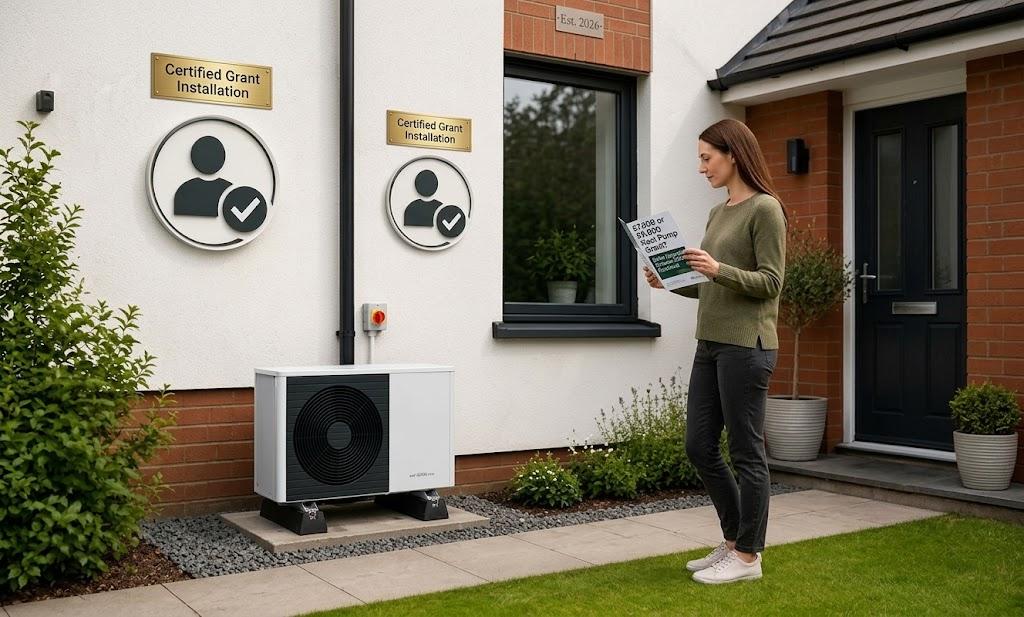
Thinking about replacing your existing boiler with a heat pump? The Boiler Upgrade Scheme (BUS) could help reduce the upfront cost of making the switch.
In 2026, the standard Boiler Upgrade Scheme grant provides £7,500 towards eligible heat pump installations. However, qualifying properties that are not connected to the gas grid can receive an additional £1,500, bringing the potential grant to £9,000 for eligible air-to-water or ground-source heat pumps.
So, which grant could you receive, who qualifies and how much might you actually need to pay?
This guide explains the Boiler Upgrade Scheme in simple terms, including the difference between the £7,500 and £9,000 grants, eligibility requirements, installation costs and the application process.
What Is the Boiler Upgrade Scheme?
The Boiler Upgrade Scheme is a government-backed programme designed to encourage property owners to replace conventional fossil-fuel heating with lower-carbon heating technologies.
The scheme is available for eligible properties in England and Wales and can provide financial support towards qualifying heat pump installations.
Rather than applying for the grant entirely by yourself, the process is normally managed by an eligible installer. The installer applies for the BUS voucher and, once the installation requirements are satisfied, claims the grant.
This means the grant can effectively reduce the amount you need to pay towards the installation.
Is the Boiler Upgrade Grant £7,500 or £9,000 in 2026?
The answer depends on the property and heating system.
For many eligible installations, the standard grant is £7,500.
However, under the 2026 scheme arrangements, qualifying off-gas-grid properties can receive an additional £1,500, increasing the available support to £9,000 for qualifying air-to-water or ground-source heat pumps.
| Grant level | Who may receive it? |
|---|---|
| £7,500 | Eligible properties installing qualifying heat pumps |
| Up to £9,000 | Qualifying off-gas-grid properties installing eligible air-to-water or ground-source heat pumps |
The £9,000 figure should therefore not be treated as a universal replacement for the £7,500 grant. Eligibility depends on the property's circumstances and the technology being installed.
What Heating Systems Can Be Replaced?
The Boiler Upgrade Scheme is intended to help property owners move away from existing conventional heating.
Depending on the scheme requirements, an eligible existing heating system may include:
- Gas heating
- Oil heating
- LPG heating
- Electric heating
- Electric storage heaters
- Electric panel heaters
- Certain other eligible fossil-fuel systems
The replacement system must meet the relevant BUS requirements.
An existing heat pump does not simply qualify for another BUS-funded heat pump because it is old or needs replacing.
£7,500 vs £9,000: What's the Difference?
The key difference is the property's connection to the gas grid and the type of heat pump being installed.
£7,500 standard grant
The standard grant can provide £7,500 towards eligible heat pumps, including qualifying:
- Air-to-water heat pumps
- Ground-source heat pumps
- Water-source heat pumps
Up to £9,000 enhanced grant
Qualifying off-gas-grid properties may be eligible for the enhanced amount when installing an eligible:
- Air-to-water heat pump, or
- Ground-source heat pump.
The increased support is particularly relevant to homes currently relying on heating oil or other off-grid heating arrangements.
Who Can Qualify for the Boiler Upgrade Scheme?
Eligibility depends on several factors.
Property ownership
You generally need to own the property you're applying for.
This can include:
- Your main home
- A second home
- A property you rent to tenants
- Certain eligible non-domestic properties
Property location
The property must be located in England or Wales for this scheme.
Different support arrangements apply in other parts of the UK.
Existing heating system
You must normally be replacing an eligible existing heating system rather than installing a qualifying heat pump as a completely new heating system.
Eligible replacement technology
The proposed heating system must meet the technical and eligibility requirements of the scheme.
Certified installer
The installation must be completed through an appropriately certified installer.
For BUS, the installer must be MCS-certified and meet the relevant certification requirements.
Does Your Home Need to Be Off the Gas Grid for the £9,000 Grant?
Yes, the enhanced £9,000 support is specifically linked to qualifying properties that are not connected to the gas grid.
This means a homeowner with a standard gas-connected property should not assume that they automatically qualify for £9,000.
If your home is currently heated by oil and is not connected to the gas network, it is worth asking your installer to check whether the property meets the requirements for the enhanced grant.
Can Oil-Heated Homes Get the £9,000 Grant?
Potentially, yes.
The 2026 increase is particularly relevant to households using heating oil in off-gas-grid areas.
However, having an oil boiler alone does not automatically guarantee £9,000 funding. The property, existing heating arrangement and replacement heat pump must satisfy the applicable BUS requirements.
An assessment by a certified installer is therefore important before you commit to an installation.
Can Gas-Heated Homes Get the £7,500 Grant?
Yes, an eligible property currently heated by gas can potentially receive the standard £7,500 BUS grant when the existing system is replaced with a qualifying heat pump.
The scheme is designed to support the transition from fossil-fuel heating to lower-carbon alternatives.
However, the installation must satisfy the scheme's eligibility and technical conditions.
Can Landlords Apply?
Eligible landlords can potentially apply through the Boiler Upgrade Scheme for qualifying rental properties.
The scheme is not simply based on household income. Instead, eligibility is determined by the property, existing heating system, proposed installation and other scheme conditions.
For landlords with multiple properties, each installation should be assessed against the applicable requirements.
What Properties Are Not Eligible?
There are several circumstances where BUS funding may not be available.
These can include:
- Social housing
- New-build properties still under construction
- Properties where an existing low-carbon heating system is already installed
- Certain installations that have already received prohibited government funding
- Hybrid heating systems that combine a heat pump with fossil-fuel heating
- Installations that do not meet the required technical standards
- Properties outside England and Wales
Self-build properties can have separate eligibility rules, so relevant evidence may be required.
Are Self-Build Homes Eligible?
Certain self-build properties can qualify even though most new-build properties are excluded.
Generally, the property needs to meet the scheme's self-build criteria.
Evidence may be required to demonstrate that:
- The property was built mainly using the first owner's labour or resources.
- It has not previously been owned by a business or organisation.
- It is not part of an excluded development.
If you own a self-build property, discuss its status with your installer before applying.
How Much Does a Heat Pump Cost After the Grant?
The amount you pay after BUS funding depends on the total installation cost.
There is no single price for every property because heat-pump installations can vary significantly.
Additional costs can arise from:
- Radiator upgrades
- Pipework changes
- Hot-water cylinder installation
- Electrical work
- Insulation improvements
- Ground works
- System controls
- Property-specific design requirements
Example calculation
Suppose an eligible heat-pump installation costs £15,000.
With a £7,500 grant:
£15,000 − £7,500 = £7,500 remaining
If the same installation qualifies for the £9,000 grant:
£15,000 − £9,000 = £6,000 remaining
These are examples only. Your actual quotation will depend on the property and system design.
Air Source vs Ground Source Heat Pumps
Both technologies can qualify for BUS, but they are installed differently.
| Feature | Air-to-water heat pump | Ground-source heat pump |
|---|---|---|
| Heat source | Outdoor air | Ground |
| Installation | Usually simpler | More complex |
| Land requirement | Generally lower | Usually higher |
| Standard grant | £7,500 | £7,500 |
| Enhanced off-grid grant | Up to £9,000 if eligible | Up to £9,000 if eligible |
| Best suited to | Many residential properties | Properties with suitable land or ground conditions |
An installer should assess the property before recommending one technology over another.
What Are the Benefits of Installing a Heat Pump?
A heat pump can offer several advantages compared with conventional fossil-fuel heating.
Lower-carbon heating
Heat pumps transfer heat rather than producing heat by burning fuel, making them an important low-carbon heating technology.
Reduced reliance on fossil fuels
Replacing an oil or gas heating system with a heat pump can reduce your property's dependence on fossil fuels.
Potential energy savings
A well-designed and correctly operated heat pump can be efficient, but actual running costs depend on factors such as electricity prices, insulation, property size and heating behaviour.
Compatible with renewable energy
Heat pumps can work alongside technologies such as solar PV and smart heating controls, potentially helping households make greater use of renewable electricity.
Future-focused heating
Moving to low-carbon heating can help property owners prepare for the UK's longer-term transition towards cleaner energy.
What Documents Do You Need?
The exact documentation depends on your property and installation.
You may need information such as:
- Proof of property ownership
- EPC information
- Details of your existing heating system
- Property information
- Self-build evidence, where applicable
- Relevant declarations
- Consent for the installer to apply on your behalf
Your installer should confirm the documents required before submitting the application.
How Does the Boiler Upgrade Scheme Application Work?
The application process is primarily installer-led.
1. Check your eligibility
Confirm that your property and existing heating system meet the BUS requirements.
2. Arrange a property assessment
An installer assesses the property and determines whether a heat pump is suitable.
3. Choose your heat-pump system
The installer recommends a suitable system based on the property's heating requirements.
4. Receive your quotation
Your quotation should make clear how the applicable BUS grant affects the installation cost.
5. Installer applies for the voucher
The MCS-certified installer submits the BUS application.
6. Confirm your consent
The property owner provides the required consent for the application.
7. Installation takes place
Once the relevant requirements are satisfied, the heat pump is installed.
8. Grant is claimed
The installer completes the voucher process and claims the grant, with the funding reducing the customer's installation cost.
How Long Does the BUS Process Take?
Timing depends on the installer, property and installation requirements.
Once a BUS voucher has been issued, the installation must normally be completed within the applicable voucher validity period.
Property owners should therefore avoid assuming that an approved voucher remains valid indefinitely.
Your installer should explain the relevant deadlines when your application is submitted.
Is BUS Based on Household Income?
No. The Boiler Upgrade Scheme is not primarily a means-tested grant.
You do not generally have to receive a particular benefit or fall below a specific income level to qualify.
Instead, the scheme focuses on criteria such as:
- Property ownership
- Location
- Existing heating system
- Proposed low-carbon heating technology
- Installer certification
- Technical requirements
- Previous funding
This makes BUS different from some other energy-efficiency schemes that target households according to income.
Can You Combine BUS With Other Grants?
This depends on the other funding programme and the specific installation.
The same installation cannot normally receive multiple forms of public funding where the rules prohibit funding overlap.
However, receiving support for other eligible energy-efficiency improvements, such as insulation, does not necessarily prevent a property from qualifying for BUS.
Always have your installer check funding compatibility before accepting another grant for the same heating installation.
Is a Heat Pump Right for Your Home?
A heat pump can be a good option, but suitability should be assessed rather than assumed.
Important factors include:
- Property size
- Current heat demand
- Insulation
- Existing radiators
- Hot-water requirements
- Available outdoor space
- Electrical supply
- Property layout
- Available ground area for ground-source systems
- Your current heating fuel
A professional heat-loss assessment can help determine the correct system size and design.
Boiler Upgrade Scheme 2026: Quick Comparison
| Question | Standard BUS | Enhanced BUS |
|---|---|---|
| Grant | £7,500 | Up to £9,000 |
| Property | Eligible property | Qualifying off-gas-grid property |
| Main heat-pump options | Eligible heat pumps | Qualifying air-to-water or ground-source heat pump |
| England & Wales | Yes | Yes |
| MCS-certified installer | Required | Required |
| Means-tested | No | No |
| Can everyone receive £9,000? | No | No |
How British Energy Services Can Help
If you are considering a heat pump, British Energy Services can help you understand the Boiler Upgrade Scheme process and assess your potential eligibility.
The service includes support with the eligibility process, property assessment, system recommendation and BUS application process.
The company states that its installation service uses MCS-certified installers and that the applicable grant can be deducted from the installation cost.
The right heat-pump system depends on your property, so an assessment should be completed before you make a final decision.
Frequently Asked Questions
Is the Boiler Upgrade Scheme £7,500 in 2026?
The standard BUS grant is £7,500 for eligible heat-pump installations. Qualifying off-gas-grid properties may receive up to £9,000 for eligible air-to-water or ground-source heat pumps.
Who qualifies for the £9,000 heat pump grant?
The £9,000 support is aimed at qualifying off-gas-grid properties that meet the relevant BUS conditions and install an eligible air-to-water or ground-source heat pump.
Can I get £7,500 for replacing a gas boiler?
An eligible gas-heated property can potentially receive the standard £7,500 BUS grant when replacing its existing heating system with a qualifying heat pump.
Can an oil boiler be replaced through BUS?
Yes. An eligible oil-heated property can potentially qualify for BUS when replacing its heating system with a qualifying low-carbon heating system.
Can landlords receive BUS funding?
Eligible landlords can potentially use the scheme for qualifying rental properties.
Do I need to be receiving benefits?
No. BUS is not primarily a means-tested scheme. Eligibility is based on the property and heating installation requirements.
Can I use BUS for an existing heat pump?
A property with an existing heat pump generally cannot receive BUS funding simply to replace that heat pump.
Can I keep my gas or oil boiler alongside the heat pump?
Hybrid systems combining a heat pump with fossil-fuel heating are generally not eligible for BUS funding.
Does BUS cover the entire installation cost?
No. The grant contributes towards the eligible installation cost. The property owner normally pays the remaining balance.
Is the Boiler Upgrade Scheme available across the UK?
The BUS covered by this guide is available in England and Wales. Scotland and Northern Ireland have separate support arrangements.
Final Takeaway
The Boiler Upgrade Scheme can make the transition to low-carbon heating considerably more affordable.
For many eligible properties, the standard grant is £7,500. However, qualifying off-gas-grid properties may be able to access up to £9,000 for an eligible air-to-water or ground-source heat pump under the 2026 arrangements.
The most important point is that the higher grant is not automatically available to everyone. Your property, existing heating system, connection to the gas grid, chosen heat-pump technology and installer all affect eligibility.
If you are considering replacing your boiler, start with an eligibility assessment and a property-specific heat-pump quotation so you know which grant level may apply and what your remaining installation cost could be.
Why this variation is stronger: it has a different search intent from your previous article. Instead of simply answering “Who qualifies?”, it starts with the high-value £7,500 vs £9,000 comparison, then covers eligibility, costs, technology comparison and application. The current government information confirms the 2026 grant structure and England/Wales scope.

 English
 Arabic
 French
 Spanish
 Portuguese
 Deutsch
 Turkish
 Dutch
Dutch
 Italiano
 Russian
 Romaian
 Greek
Greek
