


12 Terms You’ll Want to Know If You’re into Battle Horse Knives
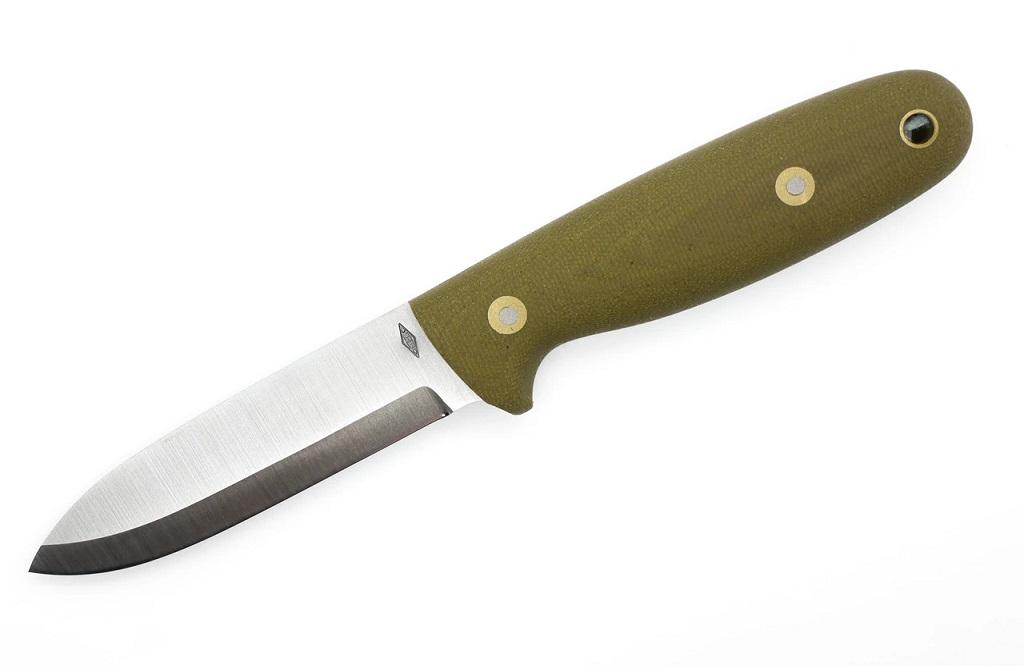
Battle Horse Knives are handmade in the United States from premium steels and other components. The brand is respected as one of the premier options in the industry.
That being said, there are some terms that the company uses wantonly in its product descriptions. To know what you’re getting, you should understand them. Here are some of the more common ones:
- O1 steel: This is the flagship steel from which Battle Horse Knives are typically forged. It is a tool steel that is high in carbon and chromium and which as a result offers pretty good edge retention and, for a tool steel, corrosion resistance.
- Micarta: Micarta is a scale material made from a textile, in the case of Battle Horse Knives, canvas, which is then compressed and impregnated with resin. It is highly durable and requires no maintenance.
- G10: G10 is a dense type of fiberglass composite that, like Micarta, is extremely tough and which will never need any special care or maintenance.
- Grind: A knife’s grind is how the blade is “ground” (hence the name) to form an edge. Battle Horse Knives have either a flat, Scandi, or saber grind. A flat grind is best for hunters or anyone else doing a lot of fine cutting, a Scandi grind is ideal for bushcrafters and other outdoorsmen, and a saber grind is great for all-around use.
- Pancake Kydex: Pancake Kydex consists of two sheets of Kydex (and thermoplastic material) riveted together. It is tough, strong and durable, and usually Battle Horse Knives which come with Kydex sheaths are also outfitted with a leather backer which aids in carrying, especially on a belt.
- Liner: A liner is a strip of material that is installed between the knife tang and scales, often added for visual relief.
- Spacer: A spacer is a strip of material that horizontally divides the knife’s scales. You can see a space when you look at the profile of a knife.
- Bolster: A bolster is a piece of material that sits at the front of the knife scales, nearest the shoulder of the blade. Traditional bolsters are made of nickel or some other alloy, but modern bolsters can be made from Micarta, G10, or other synthetics.
- Finish: A finish refers to how the blade is treated. Satin is most common and is non-reflective. Some Battle Horse Knives also sport gun-blued finishes (which are not food safe) as well as acid-etched finishes, which make the blade appear to have some texture.
- RTD: RTD, or “random textured divots” are basically small scalloped indentations on a knife’s scales that improve traction and control of the knife.
- Filework: Filework is applied to the spine of a knife, typically near the handle, to create texture known as “jimping”. This aids in control of the knife and helps afford a non-slip grip, especially when the knife is held in a saber grip.
- False edge: A false edge is a ground section near the point of the knife, along the spine. It is not sharp, but it does aid the tip in puncturing, whenever the knife is used for tasks like that.
Now You Know the Lingo: Explore Battle Horse Knives at The Knife Connection
Armed with a bit more information surrounding these terms, you’ll better know what you’re looking at when you see a picture of a Battle Horse Knife (or when you’re perusing a product description).
If you’re interested in adding one to your collection, visit The Knife Connection or get in touch with them directly if you have any questions before you buy.
For More Information About Bushcraft Knife and stroup knives Please Visit: The Knife Connection.

 English
 Arabic
 French
 Spanish
 Portuguese
 Deutsch
 Turkish
 Italiano
 Russian
 Romaian
 Portuguese (Brazil)
 Greek
Greek
