


Key Features of a Modern Agricultural Transportation Platform
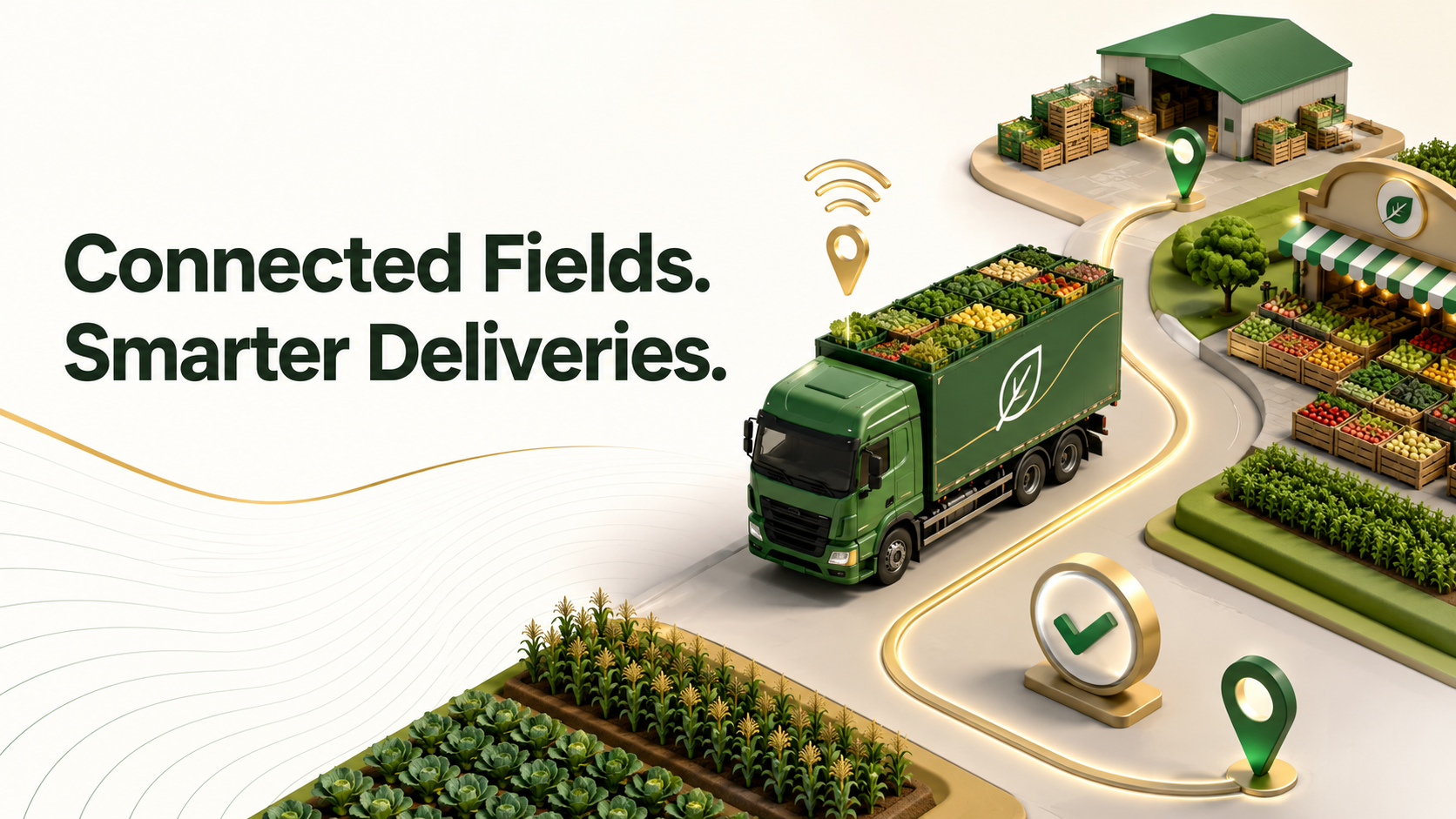
Moving crops from farms to collection centers, processors, warehouses, and markets is one of the most time-sensitive parts of the agricultural supply chain. A delay of even a few hours can affect freshness, selling prices, and product quality. Traditional coordination through phone calls, paper records, and informal transport networks often makes this process difficult to manage.
A modern agricultural transportation platform brings farmers, farmer producer organizations (FPOs), buyers, drivers, and fleet operators into one connected digital environment. It helps participants find appropriate vehicles, organize pickups, monitor shipments, and maintain reliable transaction records. However, the value of such a platform depends on whether its features reflect actual rural logistics conditions.
Below are the key capabilities founders should consider when planning a digital solution for farm-to-market transportation.
Simple Registration and Role-Based Profiles
Agricultural logistics platforms serve users with different responsibilities. A farmer requesting a vehicle does not need the same interface as a driver accepting trips or an administrator managing the network.
Separate Access for Each Participant
The platform should provide dedicated profiles for farmers, FPO representatives, transporters, drivers, produce buyers, and administrators. Each user should see the functions relevant to their role. Farmers may manage pickup requests, while fleet operators may add vehicles, assign drivers, and review completed trips.
On-Demand and Scheduled Vehicle Booking
Vehicle booking is the central function of an agricultural transportation platform. Users should be able to request immediate transportation or reserve a vehicle for a future harvest, market day, or warehouse delivery.
Booking Based on Agricultural Requirements
A useful booking flow should collect the pickup point, destination, preferred date, produce category, estimated load, and vehicle requirement. Different goods may require mini trucks, tractors, refrigerated vehicles, or larger commercial carriers. Matching the load with the right vehicle reduces wasted capacity and protects goods during transportation.
Founders evaluating these workflows can review a configurable AgriMove clone as an example of how agricultural booking and logistics functions can be organized within one solution.
Intelligent Transporter and Vehicle Matching
Manual vehicle searches take time and often provide limited visibility into availability or pricing. A digital matching system can identify suitable transporters based on vehicle type, load capacity, distance, service area, availability, and historical performance.
Location and Capacity-Aware Matching
The platform should prioritize vehicles that can handle the requested load and reach the pickup location efficiently. Assigning a distant vehicle may increase waiting time and fuel costs. Location-aware matching can improve response times while reducing unnecessary empty travel.
Operators may choose an instant-assignment model, allow transporters to accept open requests, or let them submit price offers. The right model depends on regional supply, route density, and the level of pricing flexibility required.
Real-Time Shipment Tracking
Limited shipment visibility creates uncertainty for farmers and buyers. GPS-based tracking allows authorized users to follow an active delivery and estimate when it will reach its destination.
Status Updates Throughout the Journey
Tracking should be supported by clear stages such as driver assigned, vehicle arriving, goods collected, shipment in transit, delivery approaching, and order completed. Automatic notifications can keep participants informed without repeated calls to drivers.
Route Planning and Navigation
Agricultural routes can involve remote farms, seasonal road conditions, collection points, and several deliveries within one trip. Basic consumer navigation may not always reflect these operational realities.
Efficient Single and Multi-Stop Routes
The platform should help drivers identify practical routes based on distance, estimated travel time, delivery priority, and vehicle suitability. Multi-stop planning is particularly useful when a transporter collects smaller loads from several farms before travelling to a market or processing center.
Transparent Pricing and Fare Calculation
Unclear pricing can lead to disputes and discourage users from returning. The platform should explain how the estimated transportation charge is calculated before a booking is confirmed.
Flexible Rules for Different Operations
Pricing may consider distance, vehicle type, load weight, waiting time, tolls, seasonal demand, refrigeration, or handling needs. Administrators should be able to adjust these factors without requiring major technical changes. A quotation or bidding option may be appropriate where trip conditions vary significantly.
The final invoice should show base charges, additional fees, discounts, taxes, and the total amount. Transparent records give farmers and transporters a shared reference if questions arise later.
Secure Digital Payments and Payouts
Cash can remain important in rural markets, but digital payment support improves recordkeeping and gives users more choice. A platform may support cards, bank transfers, mobile wallets, UPI, cash payments, or region-specific gateways.
Reliable Settlement for Transporters
The system should record payment status, platform commission, transporter earnings, refunds, and outstanding amounts. Fleet owners need a clear earnings dashboard and predictable payout process. Administrators should be able to configure commission rules by vehicle class, region, or transaction type.
A properly structured farm logistics solution can combine booking, payment, communication, and payout records so operators do not have to reconcile disconnected systems manually. Automated alerts can cover driver assignments, arrivals, cancellations, payments, and completed deliveries.
Ratings, Reviews, and Service Reliability
Trust is essential when users depend on unfamiliar transporters to move valuable goods. After delivery, farmers can rate punctuality, vehicle condition, communication, and handling quality. Drivers may also provide feedback about pickup readiness or inaccurate load details.
Administrative Control and Operational Analytics
The admin dashboard is the operating center of the platform. Administrators need tools to manage users, documents, vehicles, bookings, payments, commissions, service areas, cancellations, and complaints.
Decisions Supported by Practical Data
Reports should show booking volume, completion rates, average trip value, active transporters, cancellation reasons, popular routes, peak periods, and platform revenue. This information can reveal whether supply is sufficient in a region or whether users are struggling at a specific stage of booking.
Miracuves can tailor administrative controls around the business model rather than limiting operators to one fixed workflow. This flexibility matters when the platform expands into new districts, vehicle categories, or agricultural segments.
Security, Scalability, and System Integration
The platform will store personal information, locations, payment records, and operational data. Secure authentication, encrypted communication, controlled permissions, audit logs, regular backups, and fraud monitoring should therefore be treated as core requirements.
The technical architecture must also handle seasonal traffic. Booking activity may rise sharply during harvesting periods, and the system should scale without slowing down. APIs can connect it with payment gateways, mapping services, weather data, warehouse software, ERP tools, or government agriculture systems where appropriate.
Businesses considering regional expansion should evaluate whether their agricultural logistics platform can support additional languages, currencies, service zones, pricing rules, and user volumes without extensive redevelopment.
Final Thoughts
A modern agricultural transportation platform is more than a vehicle-booking application. It is a coordination system connecting agricultural production with markets through matching, tracking, routing, communication, payments, trust, and administrative oversight.
Founders should prioritize features that solve real operational problems in their target region. Simple onboarding may matter more than an elaborate interface, while transparent pricing and dependable driver availability may have a greater effect on retention than promotional discounts. Miracuves helps businesses adapt these core capabilities to their chosen users, geography, and revenue model.
When technology is designed around actual farm-to-market movement, it can reduce uncertainty, improve vehicle utilization, strengthen accountability, and help agricultural goods reach their destinations more efficiently.

 English
 Arabic
 French
 Spanish
 Portuguese
 Deutsch
 Dutch
Dutch
 Italiano
 Russian
 Romaian
 Portuguese (Brazil)
 Greek
Greek
