


The Future of Efficient Garment Printing with Dual Printhead Technology
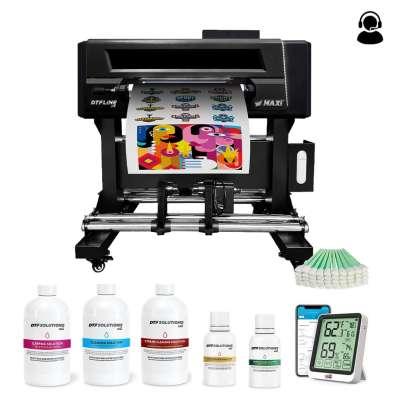
Garment printing has changed considerably over the past decade. What was once a process dominated by manual setup and lengthy production cycles is now becoming increasingly digital, automated, and responsive to customer demand. Print shops are under constant pressure to deliver better quality, shorter turnaround times, and greater design flexibility without allowing operating costs to rise out of control.
This is where dual printhead technology is beginning to make a meaningful difference. Rather than relying on a single printhead to manage the entire production process, these systems are designed to improve output capacity and support a smoother workflow. For businesses handling a growing number of custom orders, the difference can be significant.
The increasing popularity of DTF Printers reflects a broader shift within the apparel decoration market. Businesses are looking for equipment that can handle detailed artwork, varied order sizes, and different fabric applications while remaining practical for everyday production.
Why Production Speed Is No Longer the Only Priority
Speed matters, but it is not the only measure of an efficient garment printing operation. A machine can produce prints quickly and still create problems if it requires frequent intervention, produces inconsistent results, or causes bottlenecks elsewhere in the workflow.
Modern print shops need to consider the complete production cycle. This includes artwork preparation, printing, powder application, curing, transfer, and final quality inspection. Improving only one stage does not necessarily improve the entire operation.
Dual printhead systems are designed with this bigger picture in mind. Their purpose is not simply to make the printer move faster. They can help businesses increase output while maintaining the consistency needed for commercial production.
How Dual Printhead Technology Changes the Workflow
A dual printhead configuration uses two printheads instead of one to support the printing process. Depending on the system and configuration, this can improve productivity and allow the machine to handle production demands more efficiently.
For a busy print shop, the practical benefit is straightforward: more capacity can mean fewer delays when orders begin to accumulate.
Better Support for Growing Order Volumes
Small businesses often start with manageable production requirements. However, a successful apparel business can quickly move from producing a few custom shirts each day to handling multiple orders with different deadlines.
A system designed for higher throughput can give operators more room to manage that growth. This is particularly useful for businesses serving online stores, local organizations, sports teams, promotional companies, and clothing brands.
Consistency Across Production Runs
Consistency is another important consideration. Customers expect repeat orders to look the same as previous batches. Color variation, weak detail, or inconsistent white ink can quickly affect a company's reputation.
Reliable production equipment helps operators maintain established settings and workflows. While no machine eliminates the need for proper maintenance and quality control, advanced configurations can provide a stronger foundation for repeatable production.
The Role of Print Quality in Business Growth
Fast production has little value if the finished garment does not meet customer expectations. Apparel buyers notice color vibrancy, image detail, and the overall appearance of a transfer.
Modern digital printing technology allows businesses to reproduce detailed artwork that would be difficult or time-consuming with some traditional methods. Fine lines, gradients, photographic elements, and multicolor graphics can all be part of a digital workflow.
For businesses that specialize in custom orders, this flexibility creates additional opportunities. They can accept more varied artwork without needing to redesign every job around production limitations.
Reducing Bottlenecks in a Busy Print Shop
Most production delays do not come from one major failure. They usually develop through a series of smaller interruptions.
An operator may spend extra time waiting for a job to finish. Another order may be delayed because the previous batch took longer than expected. Maintenance tasks may interrupt production during a busy period.
Equipment that supports higher production capacity can help reduce some of these bottlenecks. However, businesses should remember that the printer is only one part of the setup.
An efficient operation also needs:
- Properly prepared artwork
- Reliable RIP software
- Quality inks and transfer materials
- Organized workstations
- Regular maintenance procedures
- Trained operators
The best results come when these elements work together.
Choosing Technology That Matches Your Business
Not every print shop needs the same level of production equipment. A startup working from a small studio may have very different requirements from an established company processing hundreds of garments each week.
Before investing in new equipment, business owners should consider their current and expected production needs.
Useful questions include:
How Many Orders Do You Handle Each Week?
Production volume is one of the clearest indicators of what type of equipment may be suitable. Buying a system that is too small can limit growth, while purchasing excessive capacity may create unnecessary costs.
What Type of Customers Do You Serve?
A business focused on one-off personalized garments has different workflow requirements from a supplier serving large corporate accounts.
Do You Have Room to Expand?
Equipment decisions should also consider available workspace, ventilation, power requirements, and supporting equipment.
Planning for future growth can prevent the need for a complete operational change within a short period.
Training and Support Remain Important
Advanced equipment can improve production, but technology alone does not guarantee success. Operators need to understand how to prepare files, manage color, perform routine maintenance, and recognize potential issues before they affect an entire production run.
This is why training and technical support remain important when selecting printing equipment. Businesses benefit from suppliers that can provide product knowledge, onboarding assistance, and guidance after installation.
DTGPRO, for example, operates in the digital apparel printing market and offers equipment and related solutions for businesses exploring different levels of production technology. Access to information and support can help buyers make more informed decisions based on their actual business requirements.
The Future Is About Smarter Production
The future of garment printing is unlikely to be defined by one feature alone. Instead, successful production environments will combine faster equipment with better software, organized workflows, skilled operators, and reliable supply chains.
Dual printhead technology fits into this larger trend by giving print businesses another way to increase capacity without losing sight of quality and consistency.
As custom apparel continues to grow through e-commerce, local branding, events, and independent clothing labels, businesses will need production systems capable of adapting to changing demand.
Conclusion
Efficient garment printing is ultimately about finding the right balance between speed, quality, operating costs, and reliability. Dual printhead technology offers an important option for businesses that are reaching higher production volumes and need equipment capable of supporting their next stage of growth.
The right investment will depend on the size of the operation, the type of work being produced, and future business plans. For print shops evaluating ways to improve capacity while maintaining professional output, a well-chosen DTF Printer can become an important part of a more efficient and scalable production workflow.

 English
 Arabic
 French
 Spanish
 Portuguese
 Deutsch
 Turkish
 Dutch
Dutch
 Italiano
 Romaian
 Portuguese (Brazil)
 Greek
Greek
