


Improving Material Processing Through Better Engineering
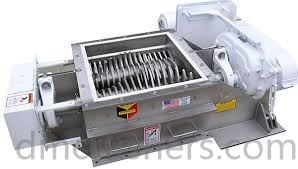
In modern aggregate, mining, and construction operations, a Stone Crushing Machine plays an important role in transforming large pieces of natural material into useful feedstock for downstream processes. However, effective crushing is not simply a matter of applying mechanical force. Equipment selection, material characteristics, structural design, wear management, process planning, and operator safety all influence the overall performance of a crushing operation. A well-designed crushing system therefore needs to balance mechanical efficiency with reliability, maintainability, and responsible resource utilization.
The nature of the material being processed is one of the first considerations when evaluating crushing equipment. Natural stone can differ significantly in hardness, abrasiveness, moisture content, fracture behavior, and particle structure. Granite, limestone, basalt, sandstone, and other rocks respond differently to compression, impact, and shear forces. Understanding these characteristics helps engineers select a suitable crushing principle and arrange the processing stages according to the requirements of the application. Matching equipment to material properties can also help reduce unnecessary wear and improve the consistency of the final output.
Mechanical design has a direct influence on how effectively crushing forces are transferred through the equipment. Frames, chambers, shafts, bearings, liners, and other components must work together under repeated loads. Good engineering considers not only the force generated during normal operation but also vibration, cyclic stress, temperature changes, and irregular feed conditions. Structural stability is especially important in industrial environments where equipment may operate for extended production periods. Properly engineered systems can support predictable operation while reducing the likelihood of mechanical problems caused by unsuitable loading or poor installation.
Material science is another important part of modern crushing technology. Wear-resistant materials are commonly used in components exposed to repeated contact with abrasive rock. The appropriate material must provide a practical balance between hardness, toughness, fatigue resistance, and serviceability. Extremely hard materials are not automatically the best choice for every component because excessive hardness can sometimes be accompanied by reduced toughness. Engineers therefore need to consider the actual operating environment, material characteristics, and expected stress pattern when determining suitable component materials.
Process configuration can be just as important as individual equipment design. Many aggregate applications use multiple stages because one crushing process may not efficiently achieve the desired particle distribution from a large feed. Primary, secondary, and sometimes tertiary processing can be arranged to progressively reduce material size. Screening and conveying equipment may be integrated into the same production system to control material flow and separate particles according to processing requirements. A properly planned process can reduce unnecessary recirculation and help maintain stable production conditions.
Feed management also deserves careful attention. Irregular feeding can create unstable operating conditions, increase mechanical stress, and influence the consistency of processed material. A controlled and evenly distributed feed helps the crushing chamber work under more predictable conditions. Operators should also avoid introducing unsuitable foreign materials that could damage internal components. Feed preparation, monitoring, and appropriate separation practices are therefore important parts of responsible equipment operation rather than secondary considerations.
Safety should remain central throughout the design and operation of a crushing facility. Mechanical equipment contains moving parts and can generate significant noise, dust, vibration, and flying material. Guards, emergency stopping systems, appropriate access arrangements, warning signs, and safe maintenance procedures help reduce operational risks. Personnel should receive suitable training and follow established procedures before inspecting, cleaning, or servicing machinery. Lockout and isolation practices are particularly important during maintenance because equipment should not be treated as safe simply because it appears to be stationary.
Dust management is another consideration in stone processing environments. Crushing and material transfer can generate airborne particles, particularly when dry materials are handled. Depending on the application and local requirements, operators may use appropriate suppression, extraction, enclosure, or ventilation strategies. Good housekeeping can further reduce accumulated dust around machinery and working areas. Environmental planning should consider not only the crushing process itself but also transportation, storage, water consumption, energy use, and the handling of by-products.
Maintenance planning can significantly influence the long-term condition of equipment. Instead of waiting for a component to fail, operators can establish inspection routines that focus on wear surfaces, lubrication systems, fasteners, bearings, structural components, and other critical areas. Changes in vibration, unusual noise, temperature, or material flow may indicate developing problems. Recording inspection findings and maintenance activities also creates useful operational history that can support future decisions. Preventive and condition-based maintenance approaches can help organizations manage downtime more systematically.
Digital monitoring is increasingly becoming part of industrial crushing operations. Sensors and control systems can provide information about equipment condition, process stability, energy consumption, and material flow. Such information can help operators identify unusual operating patterns and respond before minor issues develop into larger disruptions. Data should support practical decision-making rather than replace engineering judgment. The greatest value comes when monitoring information is combined with regular inspections, experienced personnel, and a clear maintenance strategy.
Sustainability is also becoming increasingly relevant to material processing. Efficient crushing can support better utilization of extracted resources by producing usable material while limiting unnecessary processing. Recycled concrete, construction waste, and other recoverable materials can also be processed in suitable applications, helping reduce dependence on newly extracted resources. The specific suitability of recycled materials depends on their composition and intended use, but thoughtful process design can contribute to more efficient material cycles.
When evaluating a Stone Crushing Machine, buyers should therefore look beyond basic crushing capacity and consider the complete operating environment. Material properties, process configuration, component durability, maintenance accessibility, safety systems, environmental controls, and after-sales technical support all contribute to the practical value of an installation. For companies planning a stationary aggregate or mining operation, information about suitable equipment configurations can be explored through https://www.dmcrushers.com/product/stationary-crusher/ as part of a broader engineering and production assessment.

 Arabic
 French
 Spanish
 Portuguese
 Deutsch
 Turkish
 Dutch
Dutch
 Italiano
 Russian
 Romaian
 Portuguese (Brazil)
 Greek
Greek
