


Material Selection for Demanding Pipeline Applications
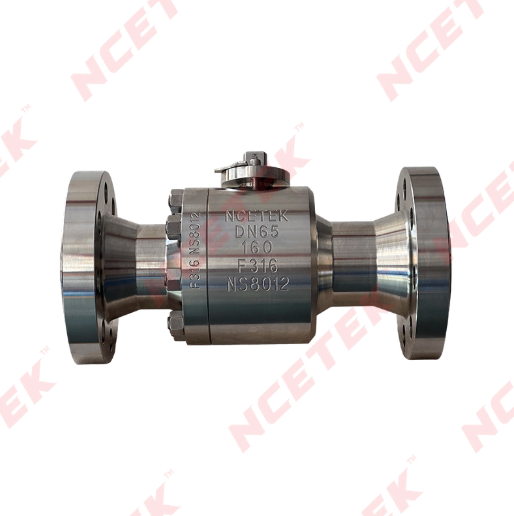
Demanding pipeline applications often require valve designs that can manage mechanical loads while providing controlled isolation during repeated operation. For these conditions, a Cast Steel Trunnion Mounted Ball Valve can provide a fixed-ball construction in which the ball is supported by trunnions or similar mechanical elements. This arrangement changes how operating forces are distributed and can be considered for pipeline systems where mechanical stability and controlled actuation are important.
Unlike a floating-ball arrangement, a trunnion-mounted configuration supports the ball from fixed locations within the valve structure. Line pressure does not need to move the complete ball toward the downstream seat in the same way. Instead, the mechanical support system carries much of the ball load, while the sealing system manages contact with the seats. This design principle can help make larger or demanding valves easier to operate when appropriate engineering is applied.
Cast steel is often selected for industrial valve bodies because the casting process allows manufacturers to create complex body configurations while maintaining a suitable manufacturing route for different industrial applications. Material selection should always be based on the actual service environment. Process temperature, pressure, fluid chemistry, corrosion potential, erosion, and operating cycles all influence the suitability of a particular material.
The relationship between the body, ball, trunnion supports, stem, seats, and seals is central to valve performance. Each component has a different mechanical or sealing function, but they must operate together as a complete system. The ball needs appropriate surface characteristics, the trunnion system needs sufficient structural support, and the stem must transmit operating movement without creating unnecessary mechanical stress.
Seat design is especially important in trunnion-mounted systems. Depending on the application, the valve may use different seat configurations to accommodate pressure conditions, thermal changes, and process requirements. Engineers should evaluate the characteristics of the fluid and the expected operating cycle before selecting the sealing arrangement. Temperature changes can also influence clearances and sealing behavior, making thermal considerations important in certain installations.
Manufacturing precision has a direct influence on the relationship between these components. Casting inspection, machining accuracy, alignment, surface finishing, assembly procedures, and functional testing should all be managed carefully. Poor dimensional control can create unwanted loading or interference between moving and stationary parts, while inconsistent surface conditions may affect sealing behavior.
Testing and inspection provide another layer of quality control. Depending on the project requirements, valves may undergo pressure, shell, seat, functional, or other applicable inspections. Documentation can also be important for industrial procurement, particularly when equipment is incorporated into a larger process system requiring material records, inspection reports, or traceability.
Safety considerations extend beyond the valve itself. Pipeline operators should establish suitable isolation and depressurization procedures before maintenance begins. Internal cavities and connected piping may retain pressure even after the primary flow path has been closed, depending on the system configuration. Appropriate venting, draining, isolation, and lockout procedures should therefore be determined by qualified personnel according to site requirements.
Maintenance planning should consider the complete operating environment. Changes in operating torque, external leakage, actuator performance, unusual movement, or abnormal sounds can provide useful indications of developing problems. Regular inspection can help identify issues before they become more disruptive to the process. Maintenance procedures should also account for access conditions and the valve's position within the pipeline.
Trunnion-mounted construction can also be suitable for automated systems. Because actuator requirements depend on the mechanical characteristics of the valve and process conditions, engineers should select the actuator and accessories as part of the complete valve package. Pneumatic and electric actuation can support remote isolation and process control, while position monitoring can provide useful feedback to plant control systems.
When evaluating a Cast Steel Trunnion Mounted Ball Valve, buyers should look beyond the body material and consider the entire operating system. Body construction, ball support, seat behavior, sealing materials, pressure management, maintenance access, automation compatibility, and application conditions all contribute to the suitability of the final configuration. For further information on industrial ball valve solutions and related valve products, Zhejiang Naishi Valve Co., Ltd. provides product information at https://www.ncevalve.com/product/.

 English
 Arabic
 French
 Spanish
 Portuguese
 Turkish
 Dutch
Dutch
 Italiano
 Russian
 Romaian
 Portuguese (Brazil)
 Greek
Greek
