


The Future of Digital Signage Softwares: Top Trends, Features & Innovations to Watch in 2026
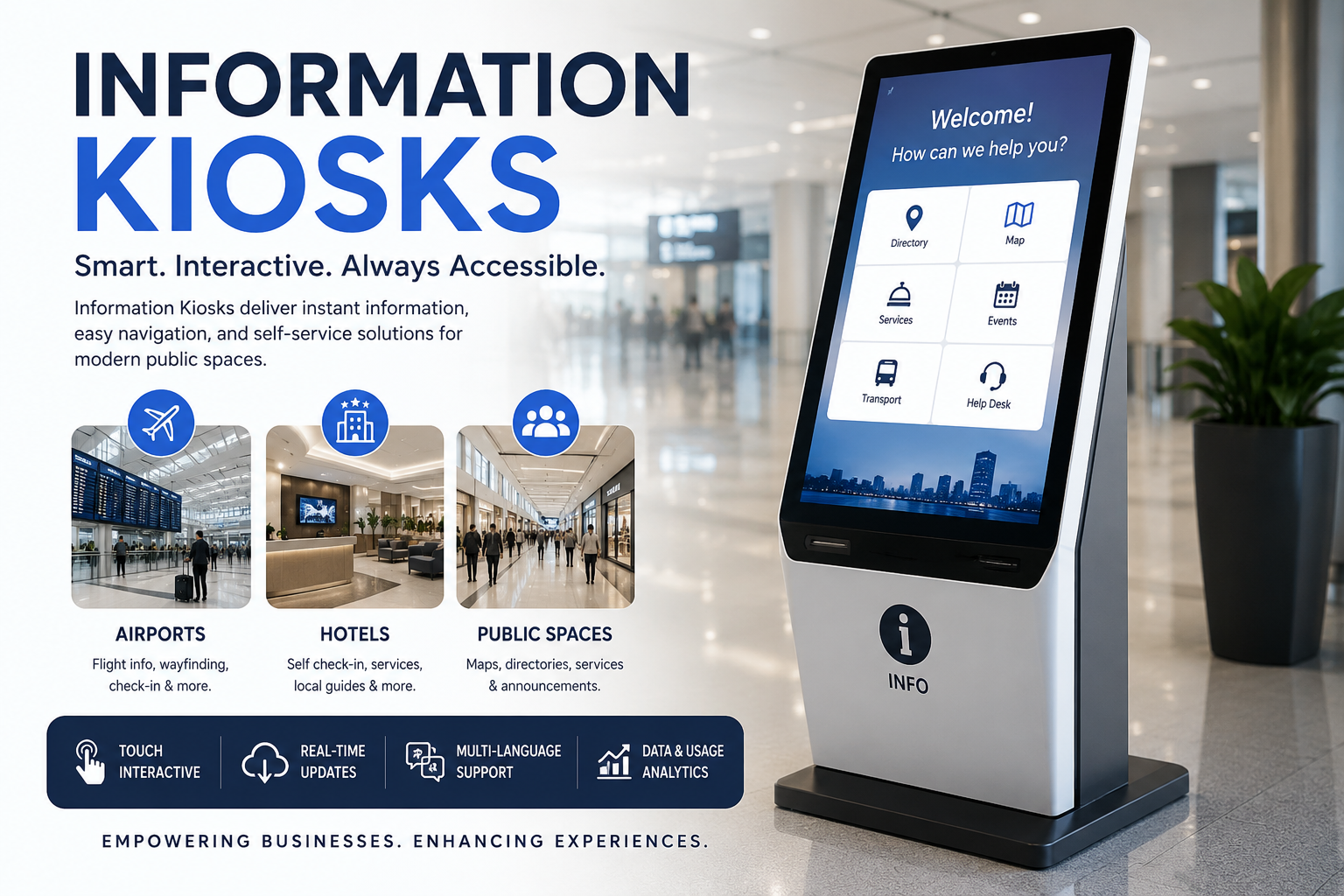
Digital communication is changing rapidly, and businesses are looking for smarter ways to connect with their audiences. From retail stores and corporate offices to healthcare facilities, restaurants, and educational institutions, digital displays have become an essential communication tool.
At the center of this transformation are digital signage softwares, which help businesses create, manage, schedule, and display content across multiple screens. As technology continues to evolve, digital signage is becoming more intelligent, interactive, personalized, and data-driven.
In 2026, several emerging trends are expected to shape the future of digital signage. Let’s explore the most important innovations and features businesses should watch.
1. AI-Powered Digital Signage
Artificial intelligence is becoming one of the biggest developments in digital signage. Modern digital signage softwares can use AI to help businesses deliver more relevant content based on audience behavior, location, time, and other contextual factors.
AI can also assist with content creation, recommendations, automated scheduling, and audience insights. Instead of manually managing every campaign, businesses can use intelligent automation to make their displays more effective.
This makes digital signage more responsive and helps organizations deliver the right message to the right audience at the right time.
2. Cloud-Based Digital Signage Management
Cloud technology is making digital signage management easier than ever. With cloud-based software, businesses can manage screens remotely from almost anywhere with an internet connection.
Whether a company has five displays or hundreds of screens across different locations, centralized management can simplify content updates, scheduling, monitoring, and organization.
In 2026, cloud-based digital signage softwares will continue to be particularly valuable for businesses with multiple branches, franchises, offices, and geographically distributed displays.
3. Personalized Content Experiences
Generic advertising is becoming less effective as audiences expect more relevant experiences. Personalization is therefore becoming an important digital signage trend.
Businesses can use data and audience insights to display targeted promotions, announcements, recommendations, and information. For example, a retail store could promote seasonal products, while a restaurant could highlight specific offers during different parts of the day.
Personalized digital content can help businesses create stronger connections with their audiences while improving engagement.
4. Interactive Digital Displays
Digital signage is moving beyond passive screens. Touchscreens, interactive kiosks, QR codes, mobile integration, and other technologies are turning displays into two-way communication platforms.
Customers can browse products, access additional information, participate in surveys, explore menus, or interact with promotional campaigns.
Interactive capabilities can make digital signage more engaging and provide businesses with valuable opportunities to understand customer preferences.
5. Real-Time Content Updates
Businesses often need to communicate information immediately. Whether it is a flash sale, emergency announcement, event update, changing menu, or real-time information, digital signage provides the flexibility to update content quickly.
Modern digital signage softwares make it possible to schedule and publish changes across multiple screens without physically visiting each display.
This real-time capability is particularly useful in environments where information changes frequently.
6. Advanced Analytics and Reporting
Data is becoming an increasingly important part of digital signage strategies. Businesses want to know whether their content is actually engaging audiences.
Advanced software platforms are increasingly incorporating analytics and reporting features that can help organizations understand content performance, campaign effectiveness, and audience interactions.
These insights allow businesses to make better decisions about what content to display, when to display it, and how to improve future campaigns.
7. Integration With Business Tools
The future of digital signage will be increasingly connected. Businesses are looking for software that can integrate with existing systems rather than operate separately.
In 2026, integrations with content management systems, social media platforms, scheduling tools, retail systems, data feeds, and other business applications will become increasingly important.
These integrations can reduce manual work and help organizations automatically display updated information across their screens.
8. Stronger Security and Device Management
As businesses connect more displays to networks and cloud platforms, security becomes increasingly important.
Modern digital signage softwares need to provide secure user access, permissions, device monitoring, and reliable content management. Businesses also need visibility into the status of their displays so potential issues can be identified quickly.
Improved security and centralized device management will be essential as digital signage networks continue to expand.
9. Sustainable Digital Communication
Sustainability is becoming a priority for businesses worldwide. Digital signage can support more sustainable communication by reducing the need for printed posters, banners, flyers, and other physical promotional materials.
Energy-efficient displays and smart scheduling can further help organizations manage their environmental impact.
As sustainability becomes more important in business decisions, digital signage can become part of a broader environmentally conscious communication strategy.
10. Smarter and More Flexible Content Creation
Creating professional digital content no longer needs to require advanced design skills. Modern platforms are making it easier for businesses to create attractive layouts using templates, drag-and-drop tools, media libraries, animations, and other features.
AI-assisted content creation is expected to make this process even easier in 2026.
Businesses will be able to create, customize, schedule, and distribute content faster, allowing teams to focus more on their communication strategy and less on repetitive tasks.
Why Digital Signage Softwares Matter in 2026
The growing popularity of digital signage is not simply about replacing printed signs with screens. It is about creating a smarter communication ecosystem.
With automation, AI, personalization, analytics, cloud management, and interactive capabilities, digital signage softwares can help businesses communicate more efficiently while creating engaging experiences for their audiences.
Organizations that invest in flexible and scalable digital signage solutions can also adapt more easily as technology and customer expectations continue to change.
FAQs
What are digital signage softwares?
Digital signage software helps businesses create, manage, schedule, and display digital content such as videos, images, menus, announcements, and promotions on screens.
Why is digital signage important in 2026?
Digital signage helps businesses deliver engaging, flexible, and real-time communication while supporting personalization, automation, analytics, and centralized screen management.
Can digital signage software be managed remotely?
Yes. Many modern solutions use cloud-based management, allowing businesses to update, schedule, monitor, and control digital displays remotely from a centralized platform.
How does AI improve digital signage?
AI can help automate content creation, personalize messages, analyze audience behavior, optimize scheduling, and deliver more relevant content based on different conditions.
Is digital signage suitable for small businesses?
Yes. Small businesses can use digital signage for promotions, menus, announcements, branding, product information, and customer engagement without requiring large-scale display networks.
What features should digital signage software have?
Important features include content management, scheduling, remote control, templates, analytics, integrations, multi-screen management, security, and easy-to-use publishing tools.
Can digital signage software support multiple locations?
Yes. Cloud-based platforms can help businesses manage content across multiple screens and locations from one centralized system, making large networks easier to operate.
What is the future of digital signage?
The future includes AI-powered personalization, interactive displays, cloud management, real-time content, advanced analytics, automation, stronger security, and smarter integrations.
Conclusion: The Future Is Smarter With Intelisa
The future of digital communication is becoming more intelligent, connected, and personalized. From AI-powered content and cloud-based management to real-time updates, analytics, interactive displays, and automated workflows, digital signage softwares are evolving into powerful business communication platforms.
As businesses look for reliable ways to engage customers, employees, and visitors, choosing a flexible and future-ready digital signage solution will become increasingly important.
Intelisa is an innovative technology solution designed to help businesses simplify and enhance their digital signage experience. With a focus on smart technology, efficient content management, and modern digital communication, Intelisa helps organizations create meaningful experiences across their digital displays.

 English
 Arabic
 French
 Spanish
 Portuguese
 Deutsch
 Dutch
Dutch
 Italiano
 Russian
 Romaian
 Portuguese (Brazil)
 Greek
Greek
