


Curt’s Heavy Towing: Preparing for a Commercial Vehicle Breakdown
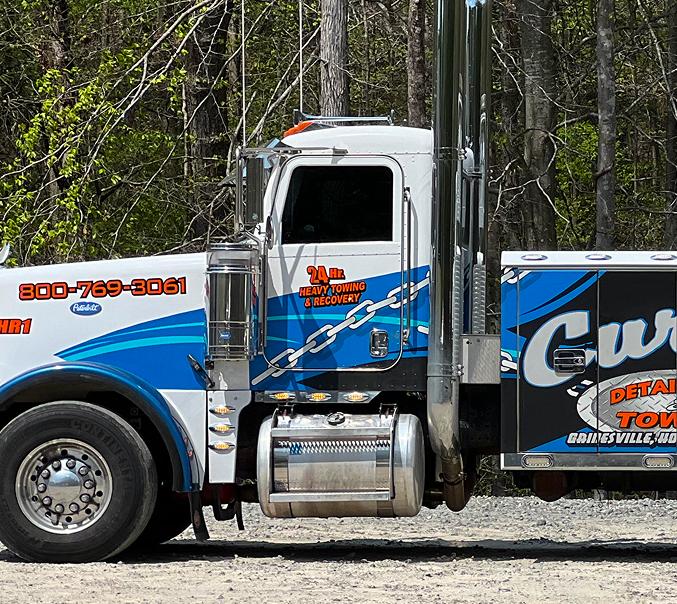
A commercial vehicle breakdown rarely happens at a convenient time.
A truck may be miles into a delivery route when a warning light appears. A driver may notice a tire problem while traveling on the interstate. A construction machine may become stuck at a jobsite just as a crew is getting ready to finish the day's work.
When a large vehicle stops moving, the problem can quickly become more than an inconvenience.
Freight may be delayed. Traffic may be affected. Employees may be left waiting. A business schedule can change within minutes.
Knowing what to do before calling a towing company can make a stressful situation easier to manage. For businesses and drivers in North Georgia, Curt’s Heavy Towing provides towing and recovery services for commercial vehicles and equipment.
Before You Need a Tow
The easiest time to prepare for a breakdown is before one happens.
Commercial drivers can keep a towing company's phone number saved in their phones rather than searching for a provider while sitting on the roadside.
Fleet managers can also keep towing information with vehicle records and emergency contacts.
It is useful to know the basic details of each vehicle, including its approximate weight, trailer configuration, and typical cargo. Drivers should also know the basic information for the area where they are traveling.
This may seem like a small preparation step, but it can save time during an actual emergency.
When the Truck Stops
If a commercial vehicle breaks down, safety comes first.
If the vehicle can be moved safely, the driver should pull away from active traffic and turn on the hazard lights.
On an interstate or busy highway, drivers should be cautious about leaving the cab. Fast-moving traffic can create significant danger.
If there is an accident, injury, fire, fuel leak, or another immediate hazard, emergency services should be contacted.
Once the immediate safety concerns have been addressed, the driver can contact a towing provider and explain the situation.
Give a Precise Location
A towing company needs a good description of the vehicle's location.
For highway breakdowns, useful information includes:
- Highway or interstate number
- Direction of travel
- Exit number
- Mile marker
- Nearby businesses or landmarks
If the vehicle is at a warehouse, distribution center, parking lot, or construction site, provide the full address.
For a jobsite, explain where the equipment is located and whether the access route has any restrictions.
A phone's map application can also help provide accurate location information.
Describe the Vehicle
The towing company will need to know what type of vehicle requires assistance.
A tractor-trailer is different from a bus. A bus is different from an RV, and construction equipment can present its own challenges.
For a semi-truck, provide information about the tractor and trailer.
If the trailer is loaded, provide the approximate cargo weight when known.
For construction equipment, identify the machine and provide its approximate size.
These details can help the towing provider determine what kind of equipment may be suitable.
Explain the Problem
You do not have to identify the mechanical failure yourself.
Tell the operator what you observed.
Perhaps the engine stopped suddenly. Maybe the truck will not start. The vehicle could have a flat tire, overheating problem, electrical issue, or visible accident damage.
Mention unusual sounds, smoke, fluid leaks, warning lights, or vibration if you noticed them.
If the vehicle is still running but cannot be driven safely, explain why.
A clear description gives the towing provider a better picture of the situation.
When a Semi-Truck Needs Towing
Semi-trucks can carry significant weight, particularly when transporting a loaded trailer.
A standard tow vehicle is not designed for every heavy commercial recovery.
The weight and configuration of the tractor-trailer affect how the vehicle should be moved.
A truck sitting on the shoulder after a mechanical failure may require one approach. A truck that has left the roadway or sustained collision damage may require another.
If the trailer is loaded, the towing company should know the approximate weight and type of cargo whenever possible.
Accident Recovery Can Be Complicated
A commercial truck collision may involve damaged equipment, spilled cargo, blocked lanes, or an overturned trailer.
Recovery must be handled carefully.
An overturned semi-truck may require heavy-duty wreckers, winches, and controlled pulling equipment.
Drivers and bystanders should stay away from the recovery area unless directed otherwise.
If the accident involves injuries or an immediate hazard, emergency responders should handle those concerns first.
After the scene is safe, a towing provider can assist with moving the damaged vehicle and, when needed, coordinating other recovery work.
Construction Equipment Recovery
Construction equipment does not always fail on pavement.
A machine may become stuck in mud, soft soil, gravel, or uneven terrain.
Trying to force a heavy machine out can make the situation worse.
Winching and recovery equipment may be used to bring the machine back onto stable ground.
The towing operator will need information about the equipment, terrain, access route, and its current position.
A photo or location description may also help explain the situation.
Load Transfers
A disabled commercial truck does not necessarily mean the freight must remain with the vehicle.
In some situations, a load transfer can move cargo to another truck so it can continue toward its destination.
This can be useful when a shipment is time-sensitive or the original truck cannot be repaired quickly.
Cargo weight, size, and type can affect how the transfer is handled.
Businesses should provide accurate cargo information when requesting this type of assistance.
After the Vehicle Is Moved
Once the truck or equipment has been recovered, the job may not be finished.
The vehicle may need to reach a repair shop, fleet yard, storage facility, or another designated location.
Drivers should confirm the destination before the tow begins.
Businesses should also document the incident, particularly when a commercial vehicle or cargo is involved.
Keeping records of the breakdown, accident, recovery, and repair can be useful for fleet management and future planning.
Keep a Reliable Contact Available
Curt’s Heavy Towing provides towing and recovery services for commercial vehicles and equipment in North Georgia.
Its services include semi-truck towing, bus towing, RV towing, construction equipment recovery, accident recovery, winch-outs, and load transfers.
For independent drivers, fleet operators, and construction companies, having a towing contact ready can make a roadside emergency less chaotic.
Large vehicles require appropriate equipment and careful handling. The right towing provider can help move a disabled vehicle toward a safer location or suitable repair facility.
A breakdown cannot always be predicted. Preparing for one, however, is something every commercial operator can do.
Saving a towing number, knowing the vehicle's basic details, and understanding what information to provide during an emergency can make a difficult day a little easier.
When a large vehicle stops moving, knowing who to call is often the first step toward getting the operation moving again.

 English
 Arabic
 French
 Spanish
 Portuguese
 Deutsch
 Turkish
 Dutch
Dutch
 Italiano
 Russian
 Romaian
 Portuguese (Brazil)
