


How Can Moldpartsfactory Mold Safety Lock Support Safer Mold Maintenance
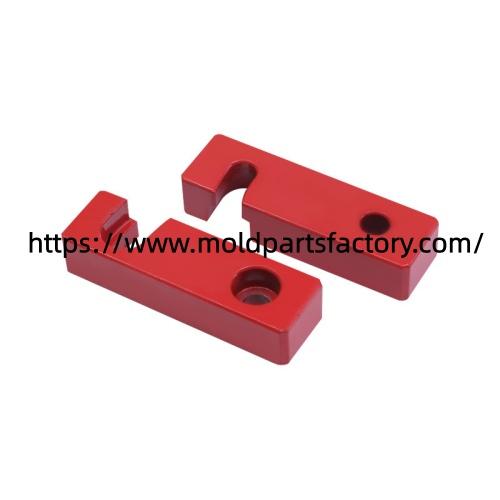
Mold Safety Lock selection matters during mold maintenance because maintenance often requires access to areas where unexpected movement can create hazards. The component should be considered as part of a broader maintenance procedure rather than treated as an independent accessory. Before service begins, technicians need to understand the tooling structure, machine condition, stored energy, access points, and applicable safety procedures. OSHA guidance specifically notes that servicing injection molding equipment may require lockout and tagout when workers are exposed to hazardous energy.
A maintenance plan normally starts with inspection. Before removing components or opening tooling, technicians can check visible surfaces, fasteners, mounting areas, guide elements, and other mechanical parts for unusual wear or damage. Regular inspections are useful because small changes can provide early indications that a component needs adjustment, cleaning, lubrication, or replacement. Industry maintenance guidance also recommends scheduled checks at different intervals rather than relying only on repairs after a problem appears.
The physical condition of the securing component should receive particular attention. Scratches, deformation, corrosion, loose fasteners, damaged contact areas, or changes in engagement can affect its intended function. Maintenance personnel should follow the manufacturers recommended inspection and replacement procedures instead of assuming that a component remains suitable simply because it still appears usable.
Installation position is another factor worth reviewing. Different tooling structures provide different amounts of available space. A component may need to fit around guide posts, ejector assemblies, cooling connections, plates, inserts, or other mechanical features. Before replacement, technicians should compare the existing installation with the original tooling drawing whenever documentation is available.
Dimensions also deserve careful checking. Mounting holes, overall size, contact surfaces, fastening points, and clearances should correspond with the tooling design. Incorrect dimensions can create assembly difficulties and may require additional machining. For maintenance teams, having accurate drawings and replacement specifications can make service work more organized.
Material and surface condition can influence maintenance requirements as well. Repeated mechanical contact may gradually affect surfaces through friction and pressure. Depending on the application, designers may consider hardness, corrosion resistance, surface treatment, and lubrication requirements. These factors should be selected according to the actual working environment and the manufacturers technical recommendations.
Cleaning is another important part of scheduled service. Residue, dust, oil, and other contaminants can accumulate around mechanical areas. Proper cleaning helps technicians inspect contact surfaces more clearly and identify changes that may otherwise remain hidden. Maintenance references commonly recommend cleaning, drying, lubrication, rust prevention, and inspection as parts of a regular tooling care program.
Lubrication should also be handled according to the component and tooling requirements. Too little lubrication can increase friction in suitable applications, while excessive or unsuitable lubricant may create contamination or other production concerns. The maintenance team should use products and quantities recommended for the specific assembly.
Safety procedures remain separate from the mechanical component itself. A securing device should not be treated as a replacement for machine isolation or established servicing procedures. OSHA states that workers performing maintenance on injection molding machinery should follow lockout and tagout procedures when the work exposes them to hazardous energy. This distinction is important when planning maintenance activities because mechanical restraint and energy isolation serve different purposes.
Replacement planning can also make future service easier. Buyers should consider whether replacement parts are available, whether dimensions are documented, and whether technicians can reach the installation area without unnecessary disassembly. These details may seem minor during initial assembly but can become valuable when a mold requires scheduled service at a production facility.
Moldpartsfactory provides mold components for manufacturers working with injection tooling and related mechanical applications. Buyers can provide drawings, dimensions, material requirements, and installation information when discussing component selection. This gives the manufacturer a clearer understanding of the tooling environment and helps connect the requested component with the actual maintenance requirements.
Maintenance should be viewed as an ongoing process rather than a single repair activity. Cleaning, inspection, lubrication, fastening checks, documentation, and functional verification can all contribute to more organized tooling management. Recent industry guidance similarly emphasizes that maintenance affects mold condition, production consistency, downtime, and repair planning.
For manufacturers reviewing component options for maintenance and tooling projects, the available product range can be viewed at https://www.moldpartsfactory.com/product/

 English
 Arabic
 French
 Spanish
 Portuguese
 Turkish
 Dutch
Dutch
 Italiano
 Russian
 Romaian
 Portuguese (Brazil)
 Greek
Greek
