


Structural Design for Residential and Commercial Doors
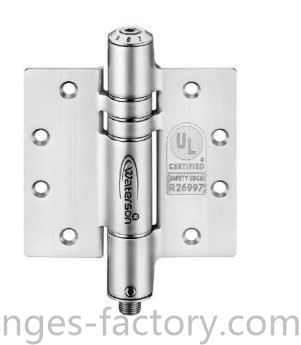
International architectural projects often require door hardware that fits established construction practices while maintaining consistent manufacturing quality. In this environment, American Standard Hinges represent a category where dimensional coordination, material engineering, structural design, and installation considerations must work together. Buyers are not simply selecting a metal component; they are evaluating how the hardware integrates with doors, frames, fasteners, finishes, and the overall construction process.
Material selection has a direct influence on structural performance and manufacturing efficiency. Common engineering metals used in door hardware must balance strength, machinability, corrosion resistance, and surface compatibility. Steel can provide a practical foundation for load-bearing components, while stainless materials may be considered for environments where moisture or corrosive exposure is a greater concern. The correct choice depends on the application rather than on material type alone.
Manufacturing accuracy is essential because hinges contain several interacting surfaces and connection points. Hole positions, plate geometry, knuckle formation, pin alignment, and overall dimensional consistency can influence how a door operates after installation. Modern production lines may combine stamping, forming, machining, drilling, polishing, and inspection processes. Each stage needs suitable process control so that the finished component remains consistent from one production batch to another.
Structural engineering should begin with the expected relationship between the door, frame, and hinge. A hinge transfers movement and load through a relatively small mounting area, so the surrounding structure must be considered during product development. Engineers can evaluate stress concentration, contact surfaces, connection stability, and repeated movement to create a more balanced design. This approach helps reduce the possibility that one component will carry loads beyond its intended function.
Surface treatment is another important part of architectural hardware manufacturing. Door components may encounter humidity, temperature variation, cleaning products, fingerprints, dust, and other environmental influences during their service life. Finishing processes should therefore be selected according to the intended environment and required appearance. Proper cleaning, pretreatment, coating, plating, or polishing can help improve surface consistency and provide an appropriate level of protection.
The manufacturing process should also account for assembly efficiency. Hardware supplied for large construction projects needs to be practical for installers working under different site conditions. Consistent component dimensions make it easier to position fasteners and align doors with frames. Clearly defined production tolerances can also help reduce variation during installation. When hardware and surrounding components are manufactured with compatible dimensions, the overall installation process can become more predictable.
Quality control should be integrated throughout production rather than limited to the final inspection stage. Incoming material checks can verify basic material consistency, while in-process inspections can identify dimensional deviations before additional manufacturing steps are completed. Final inspection can then focus on assembly quality, surface condition, movement, and overall appearance. Digital measurement equipment and production records can further support traceability.
Automation can strengthen this quality-management approach. Automated feeding, stamping, machining, measurement, and assembly technologies can reduce manual variation in repetitive operations. However, automation is most effective when supported by appropriate process design and human oversight. Manufacturing engineers still need to determine suitable production sequences, inspection points, tooling conditions, and maintenance procedures.
Application requirements can vary considerably between projects. Residential construction may emphasize appearance, ease of installation, and compatibility with interior design. Commercial buildings can introduce higher levels of repeated use and maintenance requirements. Hospitality projects often require consistency across many rooms, while institutional buildings may place additional emphasis on serviceability and long-term operational planning. These differences should be considered when selecting a suitable hardware configuration.
Environmental considerations are becoming increasingly relevant to modern manufacturing. Efficient material utilization can reduce production waste, while optimized machining and forming processes can improve resource efficiency. Manufacturers can also evaluate packaging design, component recyclability, surface-treatment processes, and production energy consumption. Responsible manufacturing does not require sacrificing engineering quality; instead, it encourages more efficient use of materials and production resources.
For international buyers, supplier evaluation should include more than a product photograph or basic catalog description. Important considerations include manufacturing capability, material sourcing, production consistency, inspection procedures, finishing technology, packaging, documentation, and communication throughout the purchasing process. A supplier with an integrated manufacturing system can often provide more consistent support when buyers need products for different architectural projects.
The role of standardization is therefore closely connected with manufacturing discipline. American Standard Hinges can provide a practical hardware solution when their design, materials, production processes, and installation requirements are properly coordinated with the intended door system. Lanxi Maya Hardware Co., Ltd. provides architectural hardware sourcing support and product information at https://www.hinges-factory.com/product/catalogue-download/ for buyers evaluating suitable hinge solutions for international projects.

 English
 Arabic
 French
 Spanish
 Portuguese
 Deutsch
 Turkish
 Dutch
Dutch
 Russian
 Romaian
 Portuguese (Brazil)
 Greek
Greek
