


Understanding Modern Lens Treatments for Everyday Vision
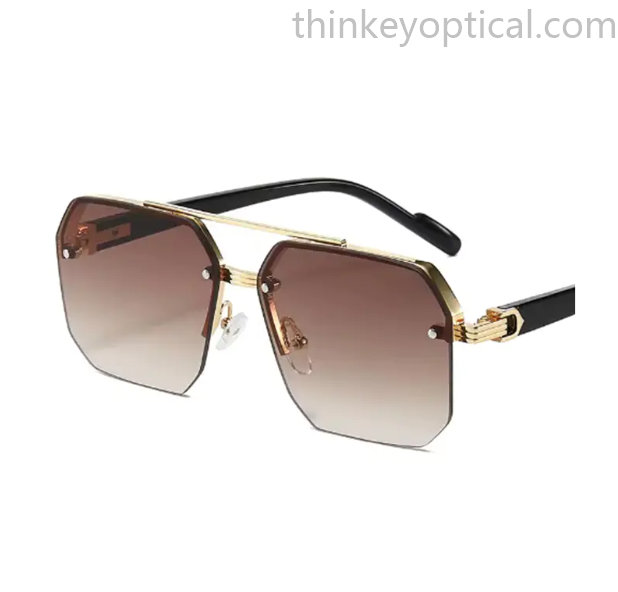
Changing lighting conditions create different demands for modern eyewear, which is why Photochromic Blue Glasses have attracted attention among optical manufacturers, distributors, retailers, and professional buyers. These products combine light-responsive technology with optical features intended for modern visual environments, making material selection, coating technology, production consistency, and quality inspection important considerations throughout the manufacturing process.
The basic principle behind light-adaptive lenses involves specialized photochromic materials that respond to changes in ultraviolet exposure. When exposed to suitable outdoor light conditions, the photochromic components undergo a reversible chemical transformation that changes the optical appearance of the lens. When the wearer moves back into an environment with less activating radiation, the material gradually returns toward its clearer state. The actual response depends on material formulation, environmental conditions, temperature, lens construction, and manufacturing processes.
Blue-light-related optical requirements add another layer of technical consideration. Digital displays, indoor lighting, and other artificial light sources have increased interest in lens technologies designed for contemporary visual environments. Manufacturers need to distinguish between different approaches to blue-light management because optical performance can be influenced by material composition, absorption characteristics, reflection behavior, and surface coatings. A clear understanding of the intended function helps buyers select an appropriate production solution.
Lens material is especially important when combining multiple optical functions. The base material needs to support the intended prescription, manufacturing process, surface treatment, and durability requirements. Material uniformity can influence tint behavior, optical clarity, coating adhesion, and processing consistency. Manufacturers therefore need controlled material storage and preparation procedures before lenses enter cutting, shaping, or coating operations.
Coating technology can further influence the final product. Anti-reflective treatments may be used to manage surface reflections, while hard coatings can contribute to surface protection during normal handling and cleaning. When multiple treatments are combined, compatibility becomes an important engineering consideration. Surface cleanliness, coating deposition, curing, and inspection must be carefully coordinated because weaknesses at one stage can affect later performance.
Manufacturing equipment also has a role in achieving consistent results. Precision edging and surfacing systems help maintain dimensional accuracy, while automated inspection equipment can assist with identifying surface defects and processing deviations. However, automation does not eliminate the need for skilled production management. Equipment calibration, process monitoring, maintenance, and quality-control procedures remain essential for maintaining stable manufacturing conditions across different production batches.
Temperature can also influence photochromic behavior. Because the chemical response of light-adaptive materials is affected by environmental conditions, manufacturers and buyers should understand that real-world performance may vary between climates and usage environments. Products intended for international markets therefore benefit from testing and evaluation under conditions that reflect their expected applications. This is particularly relevant when buyers distribute optical products across regions with substantially different temperatures and sunlight exposure.
Optical quality inspection should cover more than visual appearance. Manufacturers may evaluate lens power, surface condition, coating uniformity, tint consistency, and other relevant characteristics according to product requirements. Inspection procedures should be integrated into the production workflow rather than performed only at the final packaging stage. Early detection of process deviations can reduce material waste and improve overall production efficiency.
For international B2B buyers, documentation is another practical consideration. Product specifications, coating descriptions, material information, packaging requirements, and inspection procedures should be communicated clearly between buyers and manufacturers. When products combine multiple optical functions, vague descriptions can create misunderstandings during sampling and mass production. Clear technical communication allows both sides to establish a common understanding before manufacturing begins.
Customization may also be valuable for businesses serving different market segments. Buyers may request different lens appearances, prescription ranges, coating combinations, packaging designs, or private-label presentations. A flexible manufacturing partner should be able to review these requirements from both technical and commercial perspectives. Customization should begin with a clear specification and sample-confirmation process so that production teams can work from an agreed reference.
Sustainability considerations are increasingly relevant to optical manufacturing as well. Efficient material utilization, responsible production management, reduced process waste, and durable product design can contribute to more practical manufacturing systems. While environmental priorities differ between markets, manufacturers can improve resource efficiency by monitoring material consumption and optimizing production workflows without compromising necessary quality controls.
As optical technology continues to develop, Photochromic Blue Glasses represent a product category where several technologies may work together rather than operating independently. Material science, photochromic chemistry, coating engineering, precision processing, and quality inspection all contribute to the final optical product. Buyers who understand these relationships can communicate more effectively with manufacturers and make sourcing decisions based on production capability rather than surface-level product descriptions.
Thinkey Optical Co.,Ltd provides optical manufacturing solutions for businesses exploring advanced lens applications and customized requirements. For more information about its optical capabilities, product categories, and manufacturing support, visit https://www.thinkeyoptical.com and review the available resources for international optical sourcing.

 English
 Arabic
 French
 Spanish
 Portuguese
 Deutsch
 Turkish
 Dutch
Dutch
 Italiano
 Russian
 Portuguese (Brazil)
 Greek
Greek
