


AI Chatbot Development: A Complete Guide for 2026
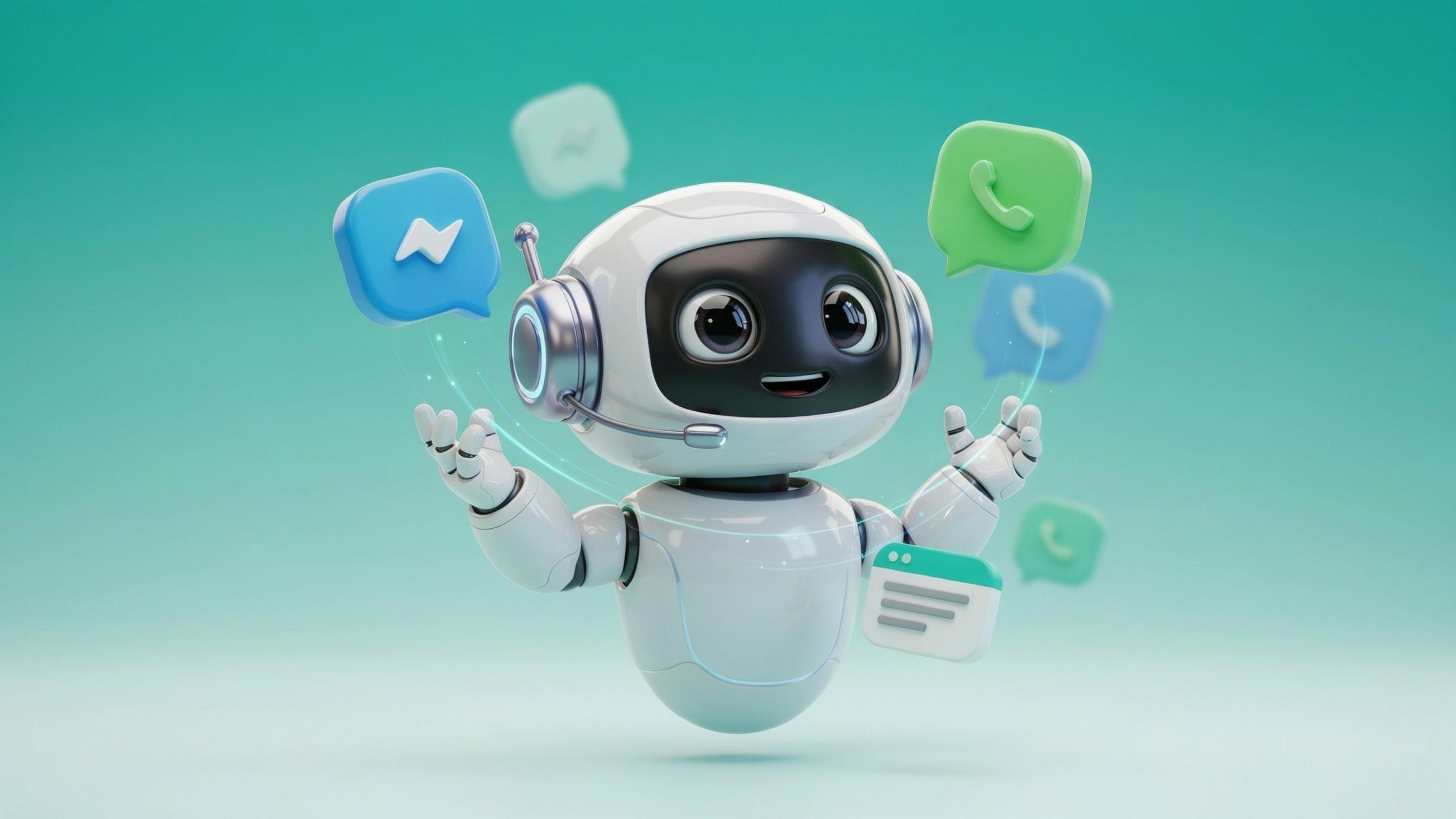
AI chatbot development is the process of designing, building, and training a conversational bot that uses natural language processing, machine learning, and large language models to understand questions and give human-like replies. A typical project includes discovery, data preparation, model selection, integration, testing, and ongoing training.
Introduction
Your customers do not wait. Neither should your business.
Here is a scene I have watched play out at dozens of companies over the last ten years. A customer lands on your website at 11 pm with a simple question about pricing. Your support team is offline. The customer waits, gets frustrated, and buys from a competitor who answered in ten seconds with a chatbot.
That single moment is why AI chatbot development has moved from a nice-to-have experiment to a core business investment. I have written and consulted on conversational AI projects for years, and I can tell you this with confidence: the companies that win are not the ones with the fanciest bots. They are the ones that understand the development process, avoid the common traps, and train their bots on real customer data.
In this guide, I will walk you through everything I have learned about AI chatbot development. We will cover how the technology works, the exact steps to build a bot, what it costs, and the mistakes that quietly kill most projects before they launch.
What Is AI Chatbot Development?
AI chatbot development is the end-to-end process of creating a software application that can hold a human-like conversation through text or voice. Unlike older rule-based bots that follow rigid scripts, an AI chatbot uses natural language processing (NLP), natural language understanding (NLU), machine learning (ML), and large language models (LLMs) to interpret what a user means and generate a relevant response on the fly.
In simple terms, a scripted chatbot can only say what you programmed it to say. An AI chatbot can figure out what to say.
That difference matters more than it sounds. When I audit failed chatbot projects, the root cause is almost always the same: the business bought a scripted tool but expected AI-level conversations. Understanding this gap is the first step in any serious AI chatbot development effort.
Why Do Businesses Struggle With Traditional Chatbots?
Before we talk about building, let me be honest about the pain points I see every week:
· Dead-end conversations. A customer asks a question slightly outside the script, and the bot replies with "Sorry, I did not understand that." Trust evaporates instantly.
· High ticket volume with burnt-out agents. Your human team spends 70% of its day answering the same ten questions, while complex cases wait in the queue.
· No memory between sessions. The customer explains their problem to the bot, then repeats everything to a human agent. That repetition is a silent conversion killer.
· Scaling costs. Hiring, training, and retaining support staff gets more expensive every year, while customer expectations for instant answers keep rising.
Modern AI chatbot development solves these problems because the bot learns from your actual business content: your help center, product documentation, past tickets, and internal wikis. Instead of a fixed script, you get a virtual agent that improves over time.
How Does AI Chatbot Development Work?
Every AI chatbot development project stands on four technical pillars. You do not need to be an engineer to understand them:
1. Natural language understanding (NLU) figures out what the user wants. If someone types "my order never showed up," the NLU layer identifies the intent (order status) and the entities (order, delivery).
2. Natural language processing (NLP) handles the mechanics of reading human language: typos, slang, multiple languages, and sentence structure.
3. Machine learning (ML) lets the bot improve with every conversation instead of waiting for a developer to add new rules.
4. Large language models (LLMs) such as the models behind ChatGPT and Gemini generate fluent, context-aware replies instead of picking from pre-written templates.
Many advanced builds also add retrieval augmented generation (RAG). A RAG-powered chatbot searches your own knowledge base and documents before answering, which dramatically reduces wrong or made-up answers. If you want a deeper look at this architecture, Google Cloud's AI chatbot overview explains how RAG and conversational agents fit together.
Types of AI Chatbots You Can Build
Not every project needs the same bot. In my experience, AI chatbot development falls into five practical categories:
· Conversational AI chatbots for customer support and FAQs
· Generative AI chatbots that create original responses using LLMs
· Transactional chatbots that complete actions like bookings, refunds, and order tracking
· Voice assistants that handle spoken input through speech recognition and text-to-speech
· Hybrid chatbots that mix scripted flows for sensitive steps (like payments) with AI for open conversation
The right choice depends on your use case, your data, and your risk tolerance. A healthcare provider, for example, almost always needs a hybrid approach with strict guardrails.
The AI Chatbot Development Process: 7 Steps
This is the exact framework I recommend to clients. Skipping a step here is where most budgets go to die.
Step 1: Define one clear job for the bot
"Improve customer experience" is not a goal. "Resolve 40% of order-status tickets without a human" is. Every successful AI chatbot development project I have seen started with one measurable job.
Step 2: Audit your conversation data
Pull your last six months of support tickets, live chat transcripts, and call logs. This data tells you what customers actually ask, which is often very different from what you assume they ask.
Step 3: Choose your build approach
You have three realistic paths:
· Platform-based: Tools like Google Dialogflow (https://cloud.google.com/dialogflow) or Microsoft Bot Framework for faster launches
· Open-source frameworks: Options like Rasa (https://rasa.com/) when you need full control and on-premise data privacy
· Custom LLM development: Fine-tuned models with RAG for complex, knowledge-heavy products
Step 4: Design the conversation flows
Map the happy paths and the failure paths. Decide exactly when the bot hands off to a human, and make that handoff seamless with full conversation history attached.
Step 5: Train, integrate, and ground the model
Feed the bot your documentation, connect it to your CRM and order systems through APIs, and add RAG so answers come from your verified content rather than the model's imagination.
Step 6: Test like your angriest customer
Test with misspellings, mixed languages, angry messages, and questions outside scope. I always tell teams: if your bot only works in perfect conditions, it does not work.
Step 7: Launch small, then train continuously
Start with one channel and one use case. Review failed conversations weekly and retrain. AI chatbot development never really ends; the best bots are the ones that keep learning.
Must-Have Features of an AI-Powered Chatbot
When you evaluate any AI chatbot development proposal, these features are non-negotiable in 2026:
· Omnichannel support across web, mobile, WhatsApp, and voice
· Human handoff with full context transfer
· Multilingual understanding
· Sentiment analysis to detect frustration and escalate early
· Analytics dashboard showing resolution rate and containment rate
· Security, encryption, and compliance (GDPR, HIPAA where relevant)
· RAG-based knowledge grounding to keep answers accurate
How Much Does AI Chatbot Development Cost?
Honest answer: it depends on complexity, but here are realistic ranges I see in the market:
|
Build Type |
Typical Cost |
Timeline |
|
Platform-based bot (FAQ support) |
$3,000 to $15,000 |
2 to 6 weeks |
|
Mid-level AI chatbot with integrations |
$15,000 to $60,000 |
2 to 4 months |
|
Custom LLM chatbot with RAG and compliance |
$60,000 to $250,000+ |
4 to 9 months |
Ongoing costs matter too. Budget for model usage fees, hosting, and continuous training, usually 15 to 25 percent of the build cost per year. Any vendor who quotes you a price without asking about your data and integrations first is guessing.
Common AI Chatbot Development Mistakes I See Everywhere
After a decade in this space, these are the mistakes that hurt the most:
1. Building for every use case at once. Start narrow, prove value, then expand.
2. Ignoring the handoff. A bot without a clean path to a human agent creates more anger than no bot at all.
3. Training on marketing copy instead of real tickets. Customers do not talk like your website.
4. No plan for wrong answers. Every AI chatbot will be wrong sometimes. The winners plan for it with guardrails, fallbacks, and escalation rules.
5. Treating launch as the finish line. The first 90 days of real conversations are where the actual product gets built.
AI Chatbot Use Cases by Industry
AI chatbot development looks different in every vertical:
· HealthTech: Appointment scheduling, symptom triage, and patient follow-ups, always with strict compliance controls. Organizations like NYU Langone Health use conversational AI to manage patient communication at scale.
· FinTech: Balance checks, fraud alerts, and transaction support. Bank of America's virtual assistant Erica is the classic example, serving millions of customers.
· Retail and eCommerce: Product recommendations, order tracking, and personalized offers. Sephora's Virtual Artist shows how a chatbot can drive sales, not just deflect tickets.
· Insurance: Claims intake and policy questions, where accuracy and audit trails are critical.
Key Takeaways
· AI chatbot development means building a bot that understands intent and generates answers, not one that recites scripts.
· Start with one measurable job, real conversation data, and a clean human handoff.
· NLP, NLU, ML, and LLMs are the foundation; RAG keeps answers grounded in your own content.
· Budget realistically: platform bots start around $3,000, while custom LLM builds can exceed $250,000.
· The projects that fail almost always skip testing, data preparation, or post-launch training.
Frequently Asked Questions
How long does AI chatbot development take?
A simple platform-based bot takes 2 to 6 weeks. A custom AI chatbot with integrations and RAG typically takes 2 to 9 months, depending on complexity, data readiness, and compliance requirements.
What is the difference between a chatbot and an AI chatbot?
A traditional chatbot follows pre-written scripts and decision trees. An AI chatbot uses NLP, machine learning, and large language models to understand intent and generate responses it was never explicitly programmed to say.
Do I need a developer to build an AI chatbot?
For a basic FAQ bot, no-code platforms can work without a developer. For anything involving CRM integrations, custom training, or sensitive data, you need an experienced AI chatbot development team.
How much does it cost to maintain an AI chatbot?
Plan for 15 to 25 percent of the initial build cost per year. This covers model usage fees, hosting, monitoring, and the continuous retraining that keeps accuracy high.
Can an AI chatbot understand multiple languages?
Yes. Modern NLP models support multilingual understanding, and many platforms let you train one bot that responds in dozens of languages without building separate bots for each.
What is RAG in chatbot development?
Retrieval augmented generation (RAG) is a technique where the chatbot searches your own documents and knowledge base before answering. It keeps responses accurate and reduces hallucinated or made-up information.
Will an AI chatbot replace my support team?
No, and it should not. The best results come from bots handling repetitive questions while human agents focus on complex, emotional, or high-value conversations.
Conclusion
AI chatbot development is not a technology purchase. It is a business transformation project that happens to use AI. The companies that treat it that way, with clear goals, real data, careful testing, and continuous training, are the ones turning their chatbots into genuine competitive advantages.
If you are planning your first AI chatbot development project, start with the seven-step framework above and resist the urge to build everything at once. And if your use case involves sensitive data, complex integrations, or regulated industries, talk to an experienced development partner before you commit budget. A one-hour scoping conversation now is far cheaper than rebuilding a failed bot later.

 English
 Arabic
 French
 Spanish
 Portuguese
 Turkish
 Dutch
Dutch
 Italiano
 Russian
 Romaian
 Portuguese (Brazil)
 Greek
Greek
