


Planning a Career as a Pilot in India: A Step-by-Step Guide for Students in 2026
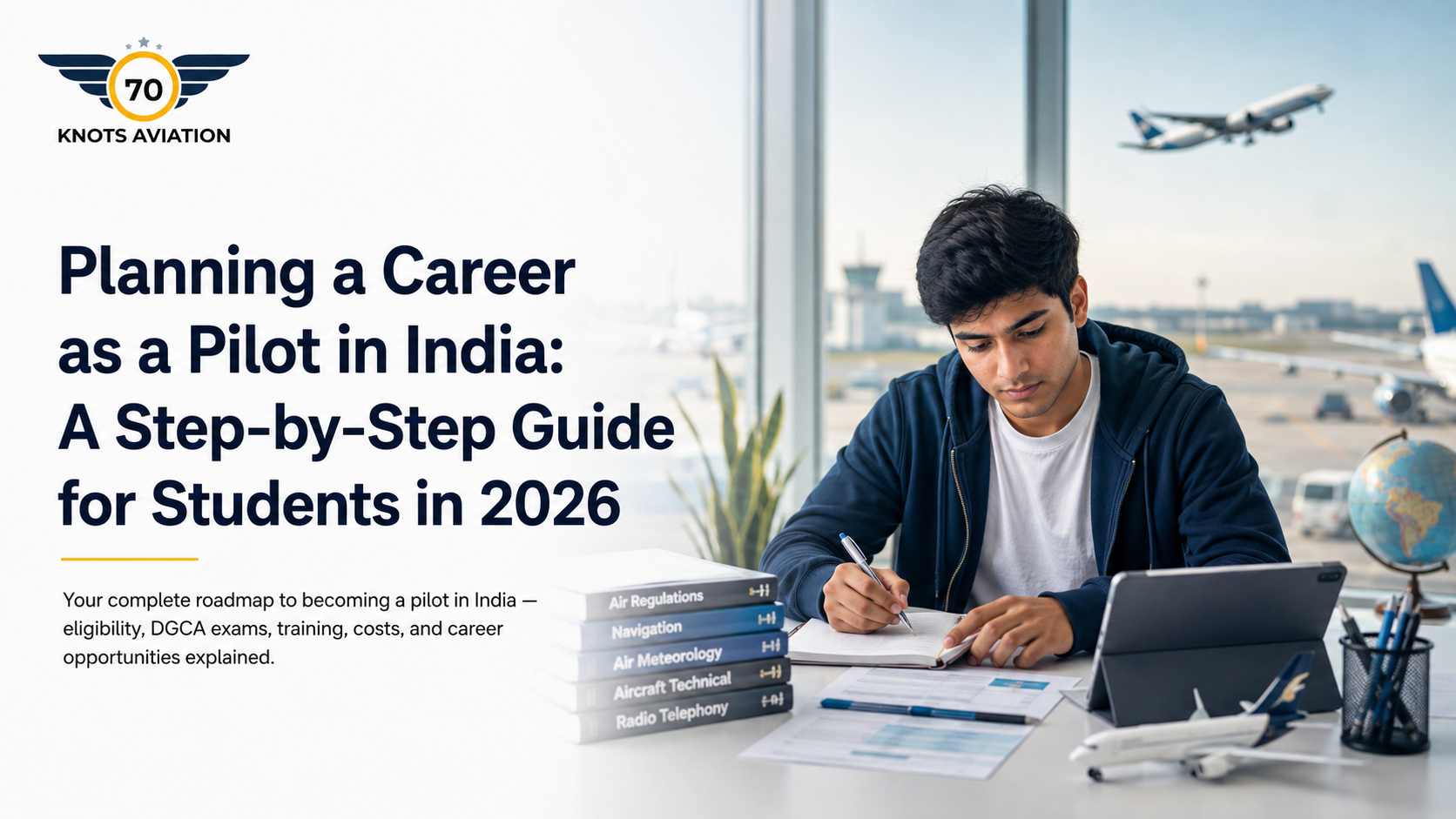
For many students, becoming a pilot represents an exciting opportunity to build a career in the aviation industry. Flying an aircraft requires technical knowledge, discipline, decision-making skills, and extensive practical training. Students who want to enter this profession should therefore understand the complete training pathway before making important educational and financial decisions.
The Indian aviation sector continues to create opportunities for trained aviation professionals. At the same time, pilot training requires serious commitment. Students need to understand eligibility criteria, medical requirements, examinations, flight training, licensing procedures, and financial planning.
This guide explains the major stages involved in professional pilot training and provides practical information for students planning their aviation careers in 2026.
How to Become a Pilot in India
Students often begin their research by asking How to become a pilot after completing school.
The answer depends on the type of pilot career a student wants to pursue. Those interested in becoming professional airline pilots generally follow the commercial pilot pathway and need to meet the applicable DGCA requirements.
The journey normally includes several important stages:
- Complete the required educational qualification.
- Meet the applicable medical standards.
- Understand the pilot licensing process.
- Prepare for the required theoretical examinations.
- Complete ground training.
- Undertake practical flight training.
- Complete the required flying experience.
- Fulfil the applicable licensing conditions.
- Obtain the relevant pilot licence.
- Continue developing professional aviation skills.
Students should verify the latest regulatory requirements before starting because DGCA procedures and aviation rules can change.
Start With Your Educational Eligibility
Educational preparation forms the foundation of pilot training.
Students following the conventional commercial pilot pathway generally need the required Class 12 qualification with Physics and Mathematics. Those who have completed their education through another route should check whether their qualifications satisfy the current requirements.
Students should avoid assuming that every pilot training programme has identical eligibility conditions. Different licences and aviation careers can have different requirements.
Before paying a training fee, students should confirm their eligibility and understand the documentation they will need during the licensing process.
Complete the Required Medical Assessment
Medical fitness plays an important role in professional aviation.
Pilots need to meet aviation-specific medical standards because their work requires concentration, coordination, appropriate vision and hearing, and the ability to respond effectively to operational situations.
Aspiring pilots should understand the applicable medical requirements at an early stage. Completing the relevant medical process before making a large financial commitment can help students make informed decisions about their career plans.
Students should always follow the current DGCA-approved medical procedures rather than relying on informal advice.
Build a Strong Foundation Through Ground Classes
Students sometimes assume that pilot training mainly involves spending time inside an aircraft. In reality, theoretical education plays a major role in preparing a professional pilot.
Ground training helps students understand the principles that support safe aircraft operations.
Depending on the applicable licence and syllabus, students may study subjects such as:
- Air Regulations
- Air Navigation
- Aviation Meteorology
- Aircraft technical knowledge
- Radio communication
- Operational procedures
Students should focus on understanding these subjects rather than memorising answers without understanding the underlying concepts.
Strong theoretical knowledge can support better decision-making during practical flight training.
Preparing for the DGCA Pariksha
The examination stage requires consistent preparation.
Students preparing for the DGCA Pariksha should first understand the current syllabus, examination process, eligibility conditions, and relevant instructions.
A good preparation routine can include:
Create a Study Schedule
Divide the syllabus into manageable sections and assign realistic study targets.
Focus on Understanding
Understand the principles behind navigation, weather, regulations, and technical subjects instead of relying entirely on memorisation.
Practise Regularly
Practice questions can help students identify areas where they need additional preparation.
Revise Frequently
Regular revision helps students retain technical information over a longer period.
Track Official Updates
Students should monitor official DGCA information for changes to examination procedures, schedules, or requirements.
Consistent preparation can make the examination process more manageable.
From Ground School to Actual Flight Training
Practical flight training allows students to apply the knowledge they develop during ground education.
During training, students learn progressively more complex flying skills under instructor supervision. Training can include aircraft handling, take-offs, landings, navigation, communication, emergency procedures, and other operational exercises.
The training schedule can vary between students and flight schools.
Weather conditions can affect flying. Aircraft maintenance can also influence schedules. Airport traffic, instructor availability, and individual student progress can create additional variations.
For this reason, students should evaluate a training organisation based on its overall training structure rather than expecting a fixed timeline.
Understanding Pilot Training Cost in India
Financial planning represents one of the most important parts of pilot education.
The Pilot training cost in India does not remain identical for every student. Several factors influence the total expenditure.
These can include:
- Ground training fees
- Flight training charges
- Aircraft type
- Number of flying hours
- Examination expenses
- Medical assessment costs
- Licence-related charges
- Accommodation
- Food and living expenses
- Transportation
- Additional training requirements
Students should request a detailed fee structure before enrolling.
They should also ask whether the quoted amount includes all expected expenses or whether certain services and requirements carry separate charges.
A realistic budget should include a contingency because additional training or extended accommodation can affect the final expenditure.
What Should You Look for in a Pilot Training Institute?
Students often search for the Best pilot training institute in India, but choosing a training organisation requires more than looking at rankings or advertisements.
Students should investigate several factors before making their decision.
Regulatory Compliance
Check the organisation's relevant approvals and regulatory information.
Training Infrastructure
Review the facilities available for classroom education, practical training, briefing, and other learning activities.
Aircraft Fleet
Ask about aircraft availability, maintenance schedules, and the process used to allocate flying slots.
Instructor Quality
Experienced and qualified instructors can help students build proper flying techniques and professional habits.
Training Transparency
The institute should clearly explain its training process, fees, expected timelines, and student responsibilities.
Examination Support
Students should understand how the institute supports theoretical preparation and examination readiness.
Student Experience
Speaking with current or former students can provide useful insights into training schedules, communication, and overall student support.
Why Financial Transparency Matters
Pilot training requires a substantial investment. Students and parents should therefore understand exactly what they are paying for.
An advertised course fee may not represent the complete cost of becoming a licensed pilot. Additional flying, examination charges, accommodation, medical assessments, and other expenses may influence the final budget.
Before joining a programme, ask for information about:
- What the basic fee covers
- Flying-hour charges
- Additional flying rates
- Examination expenses
- Accommodation costs
- Refund policies
- Training timelines
- Documentation requirements
A transparent discussion about costs can prevent misunderstandings later.
Technology in Pilot Education During 2026
Technology has become an important support tool in aviation education.
Students can now use digital study material, online learning systems, computer-based practice tests, aviation applications, and simulation tools to supplement traditional classroom instruction.
Flight simulation can help students practise certain procedures and become familiar with cockpit environments. Digital resources can also make revision more convenient.
However, technology should complement professional instruction rather than replace it. Students still need qualified instructors, practical flying experience, and disciplined study habits.
Developing Professional Skills Beyond the Syllabus
A professional pilot needs more than examination knowledge.
Students should begin developing professional habits from the first day of training.
Important qualities include:
- Clear communication
- Situational awareness
- Discipline
- Time management
- Decision-making
- Teamwork
- Technical curiosity
- Safety awareness
- Ability to accept feedback
A student who develops these qualities during training can build a stronger foundation for future aviation responsibilities.
How 70Knots Aviation Helps Students Understand Aviation Careers
Choosing a pilot training pathway can feel complicated when students encounter different courses, examinations, training options, and financial considerations.
70Knots Aviation provides aviation education and guidance for students exploring pilot training and professional aviation careers. The team helps students understand the different stages of the pilot-training journey and make more informed decisions about their education.
Students can visit the 70Knots Aviation office at:
E-529, Near MCD Office, Ramphal Chowk, Sector 7 Dwarka, New Delhi – 110075
For enquiries:
Phone: +91-9560019676
Email: info@70knotsaviation.com
Five Questions Students Should Ask Before Starting Pilot Training
1. What should I check before enrolling in pilot training?
Check your educational eligibility, medical requirements, licensing pathway, training options, and expected expenses before enrolling.
2. How important is theoretical knowledge for a pilot?
Theoretical knowledge is essential because pilots need to understand regulations, navigation, meteorology, aircraft systems, communication, and operational procedures.
3. Does every student spend the same amount on pilot training?
No. The total expense can vary because flying hours, aircraft availability, training location, accommodation, additional training, and other factors differ between students and organisations.
4. What should I ask a pilot training institute before joining?
Ask about regulatory status, training structure, aircraft availability, instructors, flying schedules, fees, additional charges, examination support, and expected training timelines.
5. Can I prepare for aviation examinations while completing flight training?
Students can organise theoretical preparation alongside practical training, provided they follow a manageable schedule and meet the applicable examination requirements.
Making an Informed Decision About Your Aviation Future
Pilot training can provide a strong foundation for a professional aviation career, but students should approach the process with realistic expectations.
Anyone researching How to become a pilot should understand that professional flying requires academic preparation, medical fitness, theoretical knowledge, practical experience, and compliance with aviation regulations.
Students should also plan their finances carefully because the Pilot training cost in India depends on several variables.
From preparing for the DGCA Pariksha to comparing training organisations and developing practical flying skills, each stage contributes to the overall journey.
In 2026, students have more educational resources and technology available to support their preparation. However, careful research, disciplined training, and reliable aviation guidance remain essential.
With proper planning and the right approach, aspiring pilots can begin their aviation journey with a clearer understanding of the responsibilities, opportunities, and preparation involved in becoming a professional pilot.

 English
 Arabic
 French
 Spanish
 Portuguese
 Deutsch
 Turkish
 Dutch
Dutch
 Italiano
 Russian
 Portuguese (Brazil)
 Greek
Greek
