


Keratin Conditioner vs Regular Conditioner: What’s the Difference?
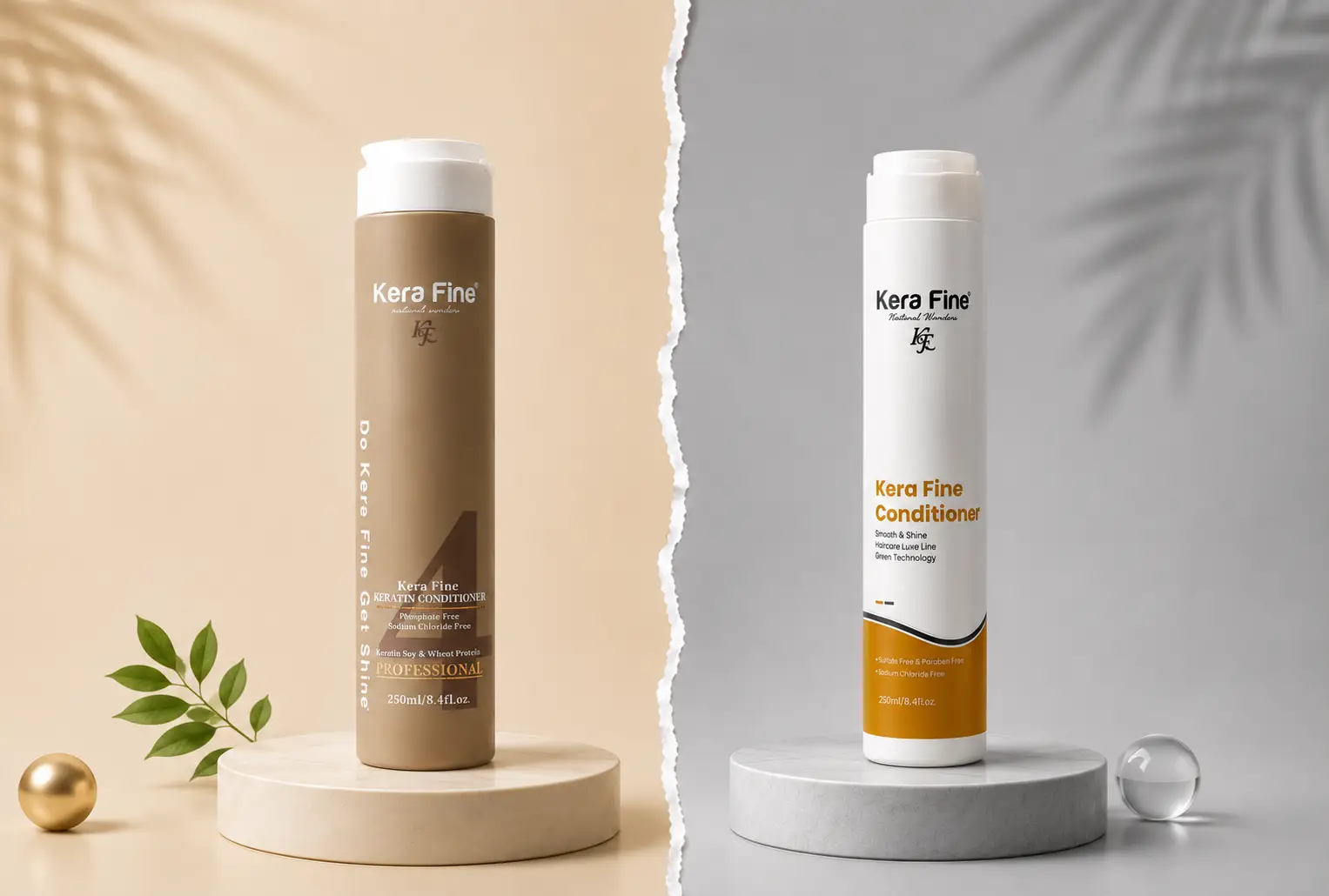
Selecting the right conditioner can be confusing, with many conditioners labelled as keratin, protein, or simply regular. If you’re also confused between a keratin conditioner and a regular conditioner, the answer will depend on your hair type and hair needs.
Both types of conditioners can help to make hair more soft, smooth, detangled and easier to manage. Usually, however, keratin conditioners are grouped around keratin or protein-based conditioners, and regular conditioners may be made to address more general, "everyday" conditioning requirements.
So, keratin conditioner vs regular conditioner—which one should you choose?
In this article, we will explore those differences, look at their possible applications and see if one of these types could be suitable for your haircare.
What is a Regular Hair Conditioner?
A regular hair conditioner is one that is used on your hair after shampooing, and it is rinsed out. Shampoo works to cleanse away dirt, excess oil, impurities as well as product buildup, while conditioner does the job of helping to improve the feel and manageability of the hair.
A good conditioner will make your hair feel:
• Softer
• Smoother
• Easier to detangle
• More manageable
• Less dry
• Less likely to tangle or fly when combed and styled
Regular conditioners are appropriate for general hair care, especially if your primary objective is to condition, soften, and detangle your hair.
But the word regular conditioner is not used to imply that all products are made with the same formula. Depending on the formulations, other agents, oils, moisturizing agents, proteins, etc. can be included as conditioning agents.
That's why it's better to consider the complete formulation and your hair's needs rather than choosing a product simply because it is labeled as a regular conditioner.
What is a Keratin Conditioner?
A keratin conditioner is a hair conditioner that has keratin or ingredients containing keratin in the formula.
Keratin is a protein that is found in the hair. Hair care products that contain keratin or hydrolyzed proteins are commonly focus on healthy, dry, rough, damaged, and difficult-to-combed hair.
A keratin conditioner can be used if an individual wishes to concentrate on:
• Softer-feeling hair
• Smoother-looking hair
• Better manageability
• Easier detangling
• Frizz management
• Conditioning for dry or rough-feeling hair
• Hair-care routines for treated or frequently styled hair
One should keep in mind that keratin is only one part of the ingredient of the formulation. The other conditioning and moisturizing agents also affect the product's performance.
Keratin Conditioner vs Regular Conditioner: Key Differences
The simplest way to understand the difference is to look at what each type is generally intended to offer.
|
Feature |
Regular Conditioner |
Keratin Conditioner |
|
Main purpose |
Everyday conditioning |
Conditioning with a keratin-focused formulation |
|
Softness |
Helps improve hair feel |
Helps improve hair feel |
|
Detangling |
Helps make hair easier to detangle |
Helps make hair easier to detangle |
|
Manageability |
Supports easier combing and styling |
Supports smoother, more manageable-looking hair |
|
Keratin/proteins |
May or may not contain them |
Keratin/protein is a key part of the product positioning |
|
Frizz-prone hair |
Depends on the formulation |
May be suitable depending on the formulation |
|
Dry hair |
Depends on conditioning and moisturizing ingredients |
May be suitable depending on the formulation |
|
Treated hair |
Depends on the product |
Can be considered when appropriate for the hair-care routine |
|
Best choice |
Depends on everyday hair needs |
Depends on hair condition and the complete formulation |
The key difference
The actual difference is more like “keratin vs no keratin.”
When it comes to conditioning products, you need to judge it by its full formula, hair type, primary purpose, and use.
For example, regular conditioner can contain effective conditioning ingredients while a keratin conditioner may also contain moisturizing and conditioning ingredients with keratin.
Instead of asking which is universally better, it is better to ask:
“Which conditioner is better suited to my hair?”
Keratin Conditioner vs Regular Conditioner for Different Hair Concerns
The label on a hair product can be a better place to start than your problem.
For Dry Hair
Dry hair may be rough, less soft, and harder to detangle or style.
If dryness is a major problem, try a conditioner that has good conditioning and moisturizing properties. Ingredients like panthenol, plant oils, and conditioning agents can be used in product formulations to enhance the handling and appearance of brittle hair.
A keratin conditioner might also be included in a dry-hair regimen if the full product supplies the conditioning your hair is looking for.
What to prioritize:
• Conditioning
• Softness
• Smoothness
• Detangling
• Manageability
For Frizzy Hair
Frizz can cause hair to appear coarse and unmanageable. It may be affected by heat, friction, damage to the hair, dryness, humidity.
If you're mainly worried about the frizz, you should seek a conditioner that makes your hair easier to manage and smoother.
But, don't select a conditioner solely because of the term keratin. The entire formulation is still important.
For Damaged Hair
Often, hair will become dry, rough, and less manageable due to frequent colouring, chemical treatments, heat styling, and mechanical stress.
A conditioner can be helpful in making this type of hair softer, smoother, detangled and more manageable.
Protein or keratin products are typically part of a damaged or weakened hair care routine, but it depends on the type of product and the hair condition.
If hair requires extra conditioning, then a hair mask or suitable professional hair-care product can also be used as part of the routine.
For Chemically Treated Hair
When you have coloured, straightened, bleached, keratin-treated or chemically processed hair, it is especially crucial to select the proper conditioner.
When choosing a conditioner, take into consideration:
• Your hair texture
• Level of dryness
• Current hair condition
• Styling frequency
• Ingredient profile
• Compatibility with your existing hair-care routine
If your hair has been professionally treated, follow your stylist's instructions or those of the product manufacturer.
Is Keratin Conditioner Better Than Regular Conditioner?
It is not possible to find a conditioner that is best for everyone.
If your hair is rough, frizzy, dry, or hard to control, and you're looking for a product that will condition your hair and provide some keratin, then a keratin conditioner might be a good option.
If you need softness, detangling and manageability as your top needs, a regular conditioner might be a good option. The best one really is dependent on hair type, hair condition, concerns, and the entire formulation of the product.
Consider a keratin conditioner if:
· Your hair feels rough or difficult to manage
· You regularly deal with frizz
· Your hair is frequently heat styled
· Your hair has been chemically treated
· You want a keratin-focused conditioning routine
Consider a regular conditioner if:
· Your hair mainly needs everyday conditioning
· Your primary concern is detangling
· You want softness and manageability
· Your hair doesn't require a specialized conditioning approach
· You prefer a formulation designed around your particular everyday needs
Rather than picking the most popular conditioner, the objective is to pick one that works best for your hair. It is to select the one that will be suitable for your hair.
What Ingredients Should You Look for in a Conditioner?
Don't compare a keratin conditioner and a regular conditioner based on only one ingredient. Pay attention to the general formulation.
· Keratin: Keratin is a protein that is a component of hair. Products containing keratin are often used in hair care regimens for dry, rough or treated hair.
· Hydrolyzed Proteins: Some hair care products that offer damaged or weak hair will contain hydrolyzed proteins.
· Panthenol: Vitamin B5 derivative, panthenol, is frequently added to cosmetic products as a conditioner and a moisturizer.
· Argan Oil and Plant Oils.: Plant oils such as argan oil can be used in hair care formulations as conditioning agents and can contribute to the softness and smoothness of hair.
· Conditioning Agents: Many conditioners contain conditioning agents that can play a role in softness, detangling, manageability and “slip” of hair.
Don't choose a conditioner based on one ingredient
Don't assume that any conditioner with “keratin” in its name is a good conditioner for your hair.
Take into account the entire formula, types of hair, primary issue, and how it works into your routine.
Can You Use a Keratin Conditioner Regularly?
If you have a keratin conditioner that you use regularly as recommended in the instructions, then it can be a part of your regular hair-care routine.
But the optimum frequency may differ based on:
• Hair type
• Hair condition
• How often you shampoo
• Styling habits
• The exact formulation of the product
• Follow the directions given on the product label.
Also remember that using more conditioner doesn't necessarily mean better conditioning. The right dosage is determined by various factors, including hair length and density.
Keratin Conditioner vs Keratin Treatment: Are They the Same?
No. One should not consider a keratin conditioner to be the same product as keratin hair treatment.
A conditioner usually forms part of the regular hair washing and conditioning process, and professional hair treatments are applied in different ways and aftercare is different.
If you have had a professional hair treatment, adhere to the aftercare guidelines provided by the professional or the manufacturer, not thinking that any keratin product will work.
How to Use Keratin Conditioner Correctly
The correct use of even a well-formulated conditioner is essential for performance to live up to expectations.
Step 1: Shampoo Your Hair
Wash and rinse hair and scalp with a shampoo that is suitable for your hair type and routine.
Step 2: Remove Excess Water
Before applying conditioner, squeeze out excess water from your hair.
Step 3: Apply Conditioner
Apply the right amount, primarily on mid-lengths and ends.
Step 4: Distribute Evenly
Gently distribute the conditioner all throughout the hair with fingers or a wide-tooth comb.
Step 5: Leave It On
Keep the conditioner on for the amount of time recommended on the product packaging.
Step 6: Rinse Thoroughly
Thoroughly rinse conditioner out with water.
Traditional rinse-out conditioners tend to be applied to the ends and lengths, not the scalp, but again, this is specified in the directions for use.
Common Mistakes When Choosing a Conditioner
1. Choosing a Conditioner Only Because It Contains Keratin
While keratin may be beneficial in some formulations, it's not the only consideration.
2. Using Too Much Conditioner
The more, the better does not necessarily imply the better conditioning. Apply as needed in relation to your hair length and thickness.
3. Applying Traditional Conditioner Mainly to the Scalp
The main area of use of many rinse-out conditioners is on the ends and lengths.
4. Choosing a Conditioner Only Because It's Popular
A popular product may not necessarily suit your particular hair type or concern.
5. Ignoring Changes in Your Hair
Hair-care requirements vary with the seasons, colouring, heat styling, chemical processing, and lifestyle. Your conditioner will also need to change as you need to.
Frequently Asked Questions for Hair Conditioner
Is keratin conditioner better than regular conditioner?
Not necessarily. It is dependent on your hair type, condition, concerns and the entire formulation of the product.
Is keratin conditioner good for frizzy hair?
If hair is coarse, frizzy, or hard to manage, a conditioner made with keratin might be a good choice. But, there are several factors behind frizz and the overall hair-care routine and product formulation are important.
Is keratin conditioner good for damaged hair?
The products containing keratin and protein are a commonly used type in damaged or weak-looking hair care. Choosing an appropriate conditioner can help to give softness, smoothness, detangling and manageability.
Can I use keratin conditioner after every shampoo?
After shampooing, people usually use conditioner to help their hair moisturize, but the frequency you use it is dependent on the hair type, washing routine, condition of hair and the conditioner used. Always use as directed on the product.
Does keratin conditioner straighten hair?
Keratin conditioner is not to be confused with a professional keratin hair treatment. It is mainly used to condition the hair during the hair-care process.
Can I use a keratin conditioner without getting a keratin treatment?
A keratin conditioner is a conditioning product; it can be incorporated into a hair-care regimen as directed by the product. You don't have to think of it as the same as a professional keratin treatment.
What is the difference between keratin conditioner and regular conditioner?
The difference is that a keratin conditioner comes around the keratin base while a normal conditioner may be more general about everyday conditioning. Both may, however, have a range of conditioning ingredients and the exact formulation is significant.
Which conditioner is best for chemically treated hair?
There's no single solution. Take into account the properties of the hair, its dryness, condition, frequency of style and the composition of the conditioner. If the hair is professionally treated, follow the after care guidelines provided.
Ready to Find Your Perfect Conditioner? Choose What Your Hair Needs.
So, which keratin conditioner is the best for you or the regular one?
This will depend on your hair type.
If your hair primarily requires everyday softness, detangling, manageability and conditioner a regular conditioner might be sufficient.
A keratin conditioner might be a good product if you are seeking a conditioning treatment that provides keratin. If your hair is rough, frizzy, dry, or hard to manage, you may want to try a keratin conditioner as a hair conditioning solution.
However, do not select a conditioner solely because it is made up of keratin. You should base your decision on your hair type, hair concerns, routine and the entire formulation.
It's the one that fits your hair's needs.

 English
 Arabic
 Spanish
 Portuguese
 Deutsch
 Turkish
 Dutch
Dutch
 Italiano
 Russian
 Romaian
 Portuguese (Brazil)
 Greek
Greek
