


How Email Nurturing Turns Leads Into Long-Term Customers
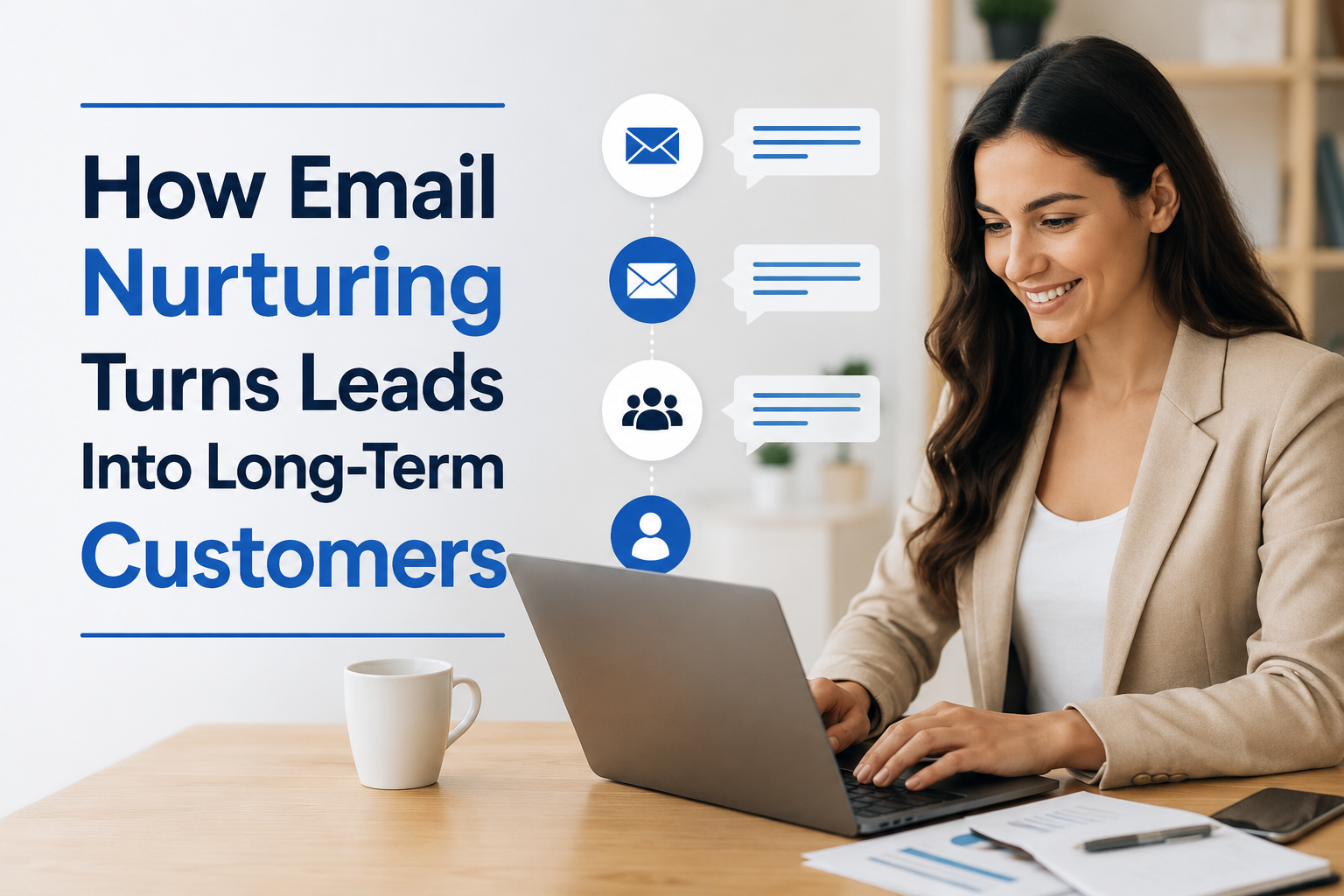
Getting a lead is only the beginning of the customer journey. Many people who sign up for a newsletter, download a resource, request information, or visit a product page are not ready to buy immediately. If a business stops communicating after the first interaction, those potential customers can easily lose interest or choose a competitor.
This is where Email Nurturing becomes valuable. Instead of sending random promotional messages, businesses can use relevant emails to educate leads, answer questions, build trust, and gradually guide them toward a purchase. A well-planned nurturing strategy keeps the conversation going without making every interaction feel like a sales pitch.
What Is Email Nurturing?
Email Nurturing is the process of sending targeted and relevant emails to prospects over time based on their interests, behavior, and position in the buying journey.
For example, imagine someone downloads a guide from a software company's website. They may be interested in the topic but may not be ready to purchase the company's product. Instead of immediately sending a sales offer, the business can send educational content, useful resources, customer stories, product information, and eventually a relevant offer.
The goal is to move the lead from initial interest toward a confident buying decision.
Unlike one-time promotional emails, nurturing campaigns usually work as a connected series. Each message has its own purpose while building on the previous interaction.
Why Email Nurturing Matters for Businesses
Not every lead is ready to become a customer when they first enter your database. Some are researching solutions, comparing alternatives, or simply learning more about a problem.
Without consistent follow-up, these leads can become inactive.
Email nurturing helps businesses stay connected while providing useful information throughout the decision-making process. This is especially valuable for B2B companies and products with longer buying cycles, where prospects may need multiple interactions before making a decision.
A strong nurturing strategy can help businesses:
-
Build trust with potential customers
-
Keep leads engaged over time
-
Educate prospects about products or services
-
Address common objections
-
Move qualified leads closer to conversion
-
Improve customer relationships
-
Reduce the chances of leads becoming inactive
The objective is not simply to send more emails. It is to send more relevant emails.
How Email Nurturing Turns Leads Into Customers
The process usually starts when someone takes an action that indicates interest. This could be downloading an ebook, subscribing to a newsletter, requesting a quote, registering for a webinar, or visiting specific pages on a website.
Once the lead enters the nurturing process, the business can provide content based on what the person needs next.
1. Start With Useful Information
The first stage should focus on providing value rather than immediately asking for a purchase.
An educational email can explain a problem, share practical advice, or introduce a useful resource. This gives the lead a reason to continue opening future messages.
2. Personalize the Communication
Sending exactly the same email to every subscriber can make a campaign feel irrelevant.
Businesses can segment contacts based on factors such as industry, interests, previous interactions, funnel stage, or behavior. This allows different groups to receive messages that are more closely connected to their needs.
Personalization should go beyond simply adding a person's first name. The content itself should be relevant to the recipient.
3. Gradually Introduce the Solution
Once a lead understands the problem, the next step is to demonstrate how your product or service can help.
Businesses can introduce product features, comparisons, case studies, demonstrations, or customer success stories. This creates a natural transition from education to consideration.
4. Address Questions and Objections
Potential customers often have concerns before making a purchase.
They may wonder about pricing, implementation, security, reliability, integrations, or whether a solution is suitable for their business.
Nurturing emails can answer these questions before the prospect speaks with a sales representative. This helps reduce uncertainty and gives the lead more confidence.
5. Provide a Clear Next Step
Every email should have a purpose.
Depending on the lead's stage, the CTA might encourage the reader to download a guide, read an article, watch a demonstration, compare solutions, request information, or schedule a sales call.
The CTA should match the reader's level of interest rather than forcing a purchase too early.
Email Nurturing and the Sales Funnel
Email nurturing works particularly well when it is connected to the sales funnel.
At the awareness stage, emails can focus on education and problem awareness. During consideration, businesses can provide comparisons, detailed resources, and proof of results. At the decision stage, prospects may respond better to demos, consultations, trials, or product-specific offers.
This approach prevents businesses from sending a hard sales message to someone who has only just discovered the brand.
Instead, each email supports the prospect's next logical step.
Best Practices for Effective Email Nurturing
Segment Your Audience
Different leads have different needs. Segmenting your audience allows you to create more relevant campaigns and avoid sending unrelated content.
Create a Logical Sequence
Each email should connect naturally with the previous one. The campaign should feel like a conversation rather than a collection of unrelated promotions.
Focus on Value
A nurturing campaign should give recipients a reason to stay subscribed. Educational information, useful tips, research, examples, and practical resources can keep communication valuable.
Use Clear CTAs
Avoid giving readers too many competing actions. Choose a primary CTA that matches the purpose of each email.
Test and Optimize
A nurturing campaign should not be considered finished after it is launched. Businesses can test subject lines, content, CTAs, timing, and email order to understand what produces better engagement and conversions.
Make Unsubscribing Easy
Not every lead will remain interested forever. Providing a clear unsubscribe option helps maintain a healthier audience and protects the quality of your email program.
Common Email Nurturing Mistakes
One of the biggest mistakes is sending too many emails without providing meaningful value. Another is using generic content for every lead regardless of their interests or buying stage.
Businesses should also avoid pushing a sales offer too early. A new subscriber may need more information before they are comfortable making a decision.
Finally, automation should not mean ignoring campaign performance. Even automated campaigns need regular testing, review, and improvement.
How to Build a Simple Email Nurturing Campaign
A basic campaign can follow a straightforward structure:
Email 1: Welcome
Introduce the brand and provide the resource or information that initially attracted the lead.
Email 2: Education
Address the lead's problem and provide useful advice.
Email 3: Solution
Explain how your product or service can solve the problem.
Email 4: Social Proof
Share a case study, testimonial, result, or customer example.
Email 5: Conversion
Offer a relevant next step such as a demo, consultation, trial, or purchase.
This structure can be adjusted according to the audience, industry, buying cycle, and campaign objective.
Conclusion
Email Nurturing is about building relationships before asking for the sale. Instead of treating every new lead as an immediate customer, businesses can use relevant and well-timed communication to educate prospects, build trust, answer questions, and guide them through the buying journey.
The most effective approach combines segmentation, useful content, personalization, clear CTAs, automation, and continuous testing. When these elements work together, email becomes more than a communication channel—it becomes a consistent way to turn early interest into stronger customer relationships and long-term business growth.
Businesses looking to improve their email data, outreach, and automation processes can also explore ExtractMails, which supports businesses working with email-related data and outreach workflows.
FAQs
1. What is Email Nurturing?
Email Nurturing is the process of sending relevant and targeted emails to prospects over time to build relationships and guide them toward a desired action, such as a purchase or sales conversation.
2. How does Email Nurturing improve conversions?
It keeps prospects engaged, provides useful information, addresses objections, and gradually builds confidence so leads are more prepared to make a purchasing decision.
3. How often should nurturing emails be sent?
There is no universal schedule. The frequency should depend on the audience, buying cycle, campaign goal, and type of content. Testing different intervals can help identify what works best.
4. What should be included in a nurturing email?
A nurturing email can include educational information, useful resources, product insights, case studies, answers to common questions, and a relevant call to action.
5. Can Email Nurturing be automated?
Yes. Businesses can automate email sequences based on actions such as sign-ups, downloads, purchases, page visits, or other customer behaviors. Automation helps maintain consistent communication while allowing teams to focus on higher-value activities.

 English
 Arabic
 French
 Spanish
 Portuguese
 Turkish
 Dutch
Dutch
 Italiano
 Russian
 Romaian
 Portuguese (Brazil)
 Greek
Greek
