


New Treatment for Big Toe Arthritis and Achilles Tendinopathy Treatment: Understanding Modern Foot and Ankle Care
Foot and ankle pain can affect simple everyday activities such as walking, climbing stairs, exercising or standing for long periods. Two common conditions that can cause persistent discomfort are arthritis of the big toe and Achilles tendinopathy. Understanding the available treatment options can help patients seek appropriate specialist advice before symptoms begin to interfere significantly with daily life.
If you are searching for a new treatment for big toe arthritis or looking for effective Achilles tendinopathy treatment, the right approach depends on the cause, severity of symptoms, physical examination findings and your individual lifestyle.
For specialist assessment, Mr Pavel Akimau provides orthopaedic foot and ankle care, helping patients understand their condition and the treatment options that may be appropriate for them.
What Is Big Toe Arthritis?
Big toe arthritis, often called hallux rigidus, affects the joint at the base of the big toe. It can cause pain, stiffness, swelling and reduced movement. Some people may also develop a noticeable bony prominence on top of the joint, which can make wearing certain shoes uncomfortable. (Ekhuft Leaflets)
Symptoms may become more noticeable while walking, running, climbing stairs or pushing off the ground with the affected foot. In some cases, pain can also occur because the enlarged joint rubs against footwear.
Big toe arthritis can have different causes, including osteoarthritis, previous injury, gout and inflammatory arthritis. A proper assessment is therefore important before deciding on treatment. (Royal National Orthopaedic Hospital)
Is There a New Treatment for Big Toe Arthritis?
When people search for a new treatment for big toe arthritis, they may be looking for alternatives to traditional surgery or treatments that can help manage symptoms more effectively.
There is no single new treatment that is suitable for every patient. Treatment is usually selected according to the stage of arthritis and how significantly it affects the individual.
In earlier or less severe cases, treatment may include footwear changes, orthotics or insoles designed to reduce movement and pressure around the joint. Shoes with a firm sole or rocker-style sole can sometimes reduce painful movement of the big toe. (Royal National Orthopaedic Hospital)
Pain-relieving or anti-inflammatory medicines may also be considered where appropriate. Patients should discuss medication with a doctor or pharmacist, particularly if they have other medical conditions or take other medicines.
In some cases, an injection into the joint may be considered to help reduce pain and inflammation. However, injections do not remove the underlying arthritis and their suitability varies from patient to patient. (Royal National Orthopaedic Hospital)
When Is Surgery Considered?
If symptoms remain significant despite non-surgical treatment, surgery may be discussed.
For selected patients with less advanced arthritis, a procedure called a cheilectomy may be considered. This involves removing a prominent bone spur from the joint to reduce painful impingement and improve movement. It does not eliminate the underlying arthritic process. (Royal National Orthopaedic Hospital)
For more advanced arthritis, joint fusion, also known as arthrodesis, may be recommended in appropriate cases. The aim is to create a stable, pain-free joint by joining the affected bones together. (Ekhuft Leaflets)
The most appropriate procedure depends on factors such as the severity of arthritis, joint damage, symptoms, activity requirements and overall health.
Understanding Achilles Tendinopathy
The Achilles tendon connects the calf muscles to the heel bone and plays an important role in walking, running and jumping. Achilles tendinopathy occurs when the tendon becomes painful and its normal function is affected.
People may experience pain around the back of the ankle or heel, particularly during or after physical activity. Stiffness can also occur, and symptoms may develop gradually rather than following one specific injury.
An accurate diagnosis is important because Achilles pain can have several causes.
Achilles Tendinopathy Treatment
Effective Achilles tendinopathy treatment generally begins with understanding what is contributing to the problem. Activity levels, training changes, footwear, biomechanics and other individual factors may all be relevant.
Conservative treatment is often the starting point. It may include temporarily modifying activities that aggravate symptoms while maintaining suitable low-impact activity where appropriate.
Physiotherapy can play an important role. A structured rehabilitation programme may include progressive strengthening, balance work, mobility exercises and advice about gradually returning to normal activity. The Royal National Orthopaedic Hospital notes that most people with Achilles tendinopathy improve with conservative treatment, although recovery can take several months or longer. (Royal National Orthopaedic Hospital)
Why Strengthening Matters
The Achilles tendon needs appropriate loading to recover and become more capable of handling everyday and sporting demands. A rehabilitation programme should therefore usually progress gradually rather than relying solely on rest.
Exercises should be selected according to the individual condition. This is particularly important because different types of Achilles tendinopathy may respond differently to particular exercises.
For example, guidance from the Royal National Orthopaedic Hospital specifically advises that some exercises may not be appropriate for people with insertional Achilles tendinopathy.
This is why professional assessment can be valuable before starting an exercise programme independently.
What If Achilles Tendinopathy Does Not Improve?
Most patients can improve with appropriate non-surgical management, but recovery may take time. If symptoms continue despite appropriate conservative treatment, further options may be discussed with a foot and ankle specialist.
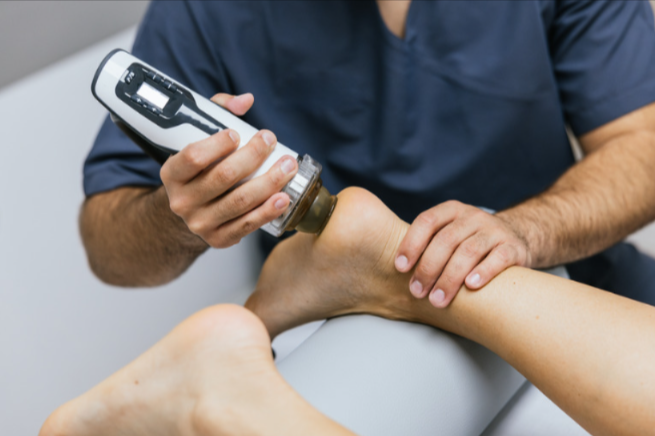
Depending on the individual case, treatment may involve orthotics where altered foot mechanics are contributing to symptoms, or other specialist treatments such as shockwave therapy. Surgery may be considered when symptoms persist despite appropriate non-operative treatment.
The important point is that treatment should be individualised rather than based on a single approach.
When Should You See a Foot and Ankle Specialist?
Persistent pain should not simply be ignored, particularly when it begins affecting walking, exercise, work or sleep.
A specialist assessment can help determine whether symptoms are caused by big toe arthritis, Achilles tendinopathy or another foot and ankle condition. Depending on the symptoms, an examination and appropriate imaging may be used to understand the underlying problem.
Mr Pavel Akimau can assess foot and ankle conditions and discuss suitable treatment options based on the patient's symptoms and diagnosis.
Frequently Asked Questions
1. What is the new treatment for big toe arthritis?
There is no single new treatment suitable for everyone. Depending on the severity of arthritis, options can include footwear modification, orthotics, medication, injections and, when necessary, surgery such as cheilectomy or fusion. (Ekhuft Leaflets)
2. Can big toe arthritis be treated without surgery?
Yes. Early or less severe cases may often be managed with appropriate footwear, orthotics, activity modification and pain management. (My Joint Health Hub)
3. What is the best Achilles tendinopathy treatment?
Treatment depends on the individual. A structured rehabilitation programme, particularly progressive strengthening, is commonly an important part of conservative management. Recovery can take several months. (Royal National Orthopaedic Hospital)
4. Should I completely rest if I have Achilles tendinopathy?
Not necessarily. Activity may need to be modified, but appropriate low-impact activity can sometimes be maintained. A physiotherapist or specialist can advise on suitable activity levels.
5. When should Achilles tendinopathy be assessed?
If Achilles pain persists, repeatedly returns or interferes with normal activities or exercise, professional assessment can help establish the cause and appropriate treatment.
6. Can big toe arthritis get worse?
Symptoms and progression vary between individuals. Persistent pain, increasing stiffness or difficulty wearing shoes should be assessed by a healthcare professional.
7. When is surgery considered for big toe arthritis?
Surgery may be considered when symptoms remain significant despite appropriate non-surgical treatment. The procedure depends on the severity and type of joint damage. (Royal National Orthopaedic Hospital)
8. Who can assess foot and ankle problems?
A qualified orthopaedic foot and ankle specialist can assess persistent symptoms, establish a diagnosis and discuss appropriate treatment options.
If you are experiencing persistent big toe or Achilles pain, seek professional assessment rather than relying on self-diagnosis. Mr Pavel Akimau provides specialist orthopaedic foot and ankle assessment and can discuss suitable treatment options based on your individual condition.
For more details please visit the website - https://pavelakimau.com/
Call us at - 07934539252 , 01782 432227
Email at - sjukes@protonmail.com
Address - North Staffordshire Hospital Clayton Road, Newcastle-under-Lyme, ST5 4DB

 English
 Arabic
 French
 Spanish
 Portuguese
 Deutsch
 Turkish
 Italiano
 Russian
 Romaian
 Portuguese (Brazil)
 Greek
Greek
