


HDPE Bags: Durable Packaging Solutions for Modern Industries
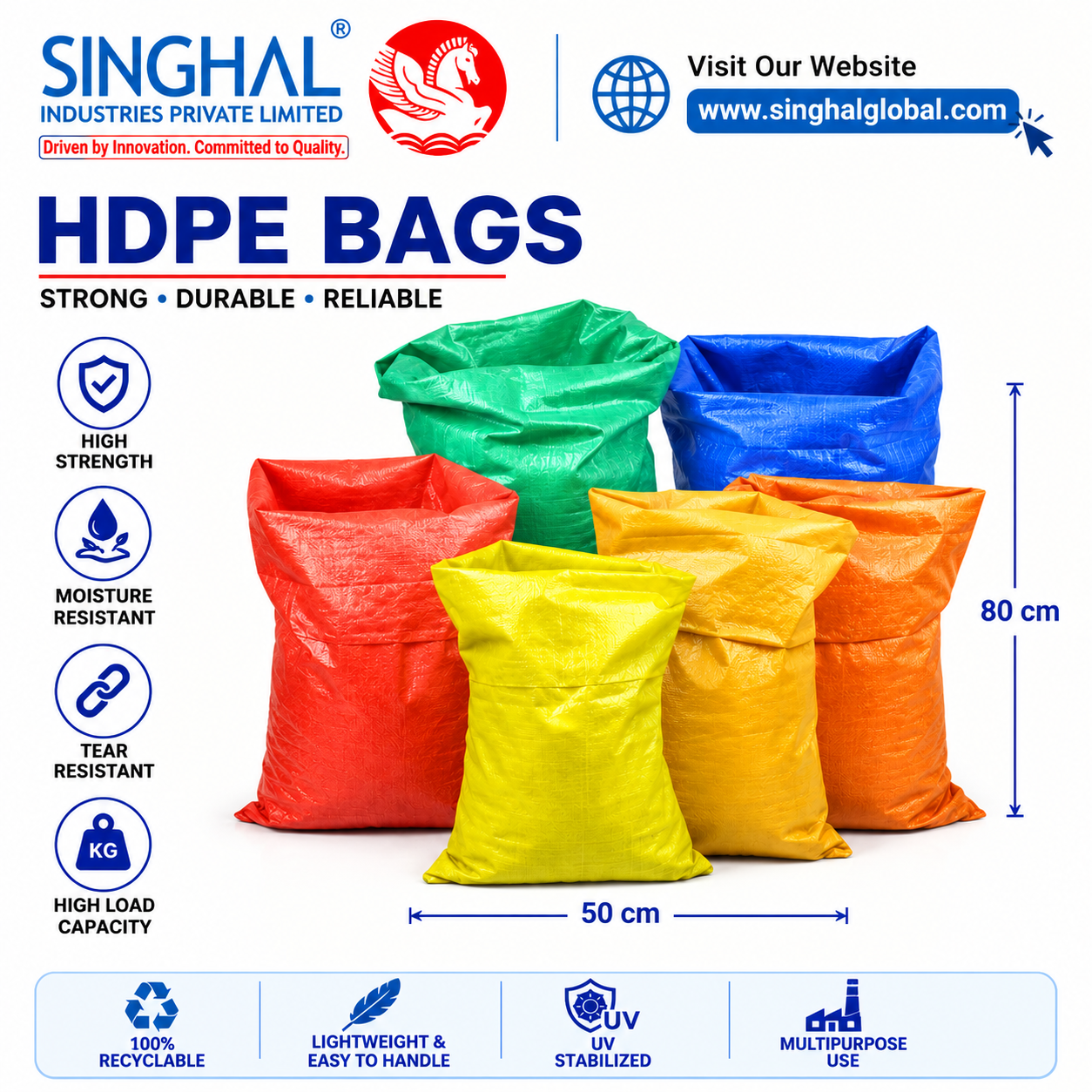
Due to the international supply chain, choosing the right industrial packaging material is critical for maintaining product purity, reducing transit losses and optimizing storage costs. Faced with the situation: Take a walk through a busy distribution depot or sea container terminal, and no doubt you will have seen ruptured paper sacks or lightweight poly bags pouring fine powders across the loading dock. It is an expensive and annoying catastrophe that brings workflow to a standstill, wastes a valuable commodity, and has serious safety implications for warehouse employees. Traditional packaging mediums, including single-ply kraft paper and coarse jute gunny sacks or no-inforcement of low-density film liners, typically do not possess the tensile strength, puncture resistance and environmental barrier properties required by heavy duty commercial transit. Current manufacturing processes involving many abrasive minerals, agrochemicals, cementitious powders and raw food grains require packages with feather-light transport weight that still have immense structural strength. In modern intermodal shipping networks, High-Density Polyethylene (HDPE) bags are unrivaled, a fast emerging standard for heavy dry bulk containment offering a high-strength and reliable solution to protect products through tough transit cycles.
Polymer Structure, Density and Tensile Strength
The mechanical durability of HDPE bags is a direct result of the polymer chemistry and molecular orientation specific to this product. While low-density polyethylene (LDPE) consists largely of high-molecular weight branched chains, HDPE is produced using low-pressure catalytic conditions that generate large quantities of long, tightly packed linear polymer chains with little branching. The dense molecular structure impart high tensile strength, stiffness and puncture resistance but reduces the overall film gauge that comprise of the material to be lightweight. Produced either as blown tubular films or slit high-tenacity tapes for heavy duty circular weaving, high density polyethylene has an excellent carrying capacity and is resistant to tearing, elongation and distortion from exposure to the most extreme dynamic loads. However, is it the high polymer density that affects how brittle the material gets when in freezing temperatures instead? No way, HDPE is still very ductile flexible and impact tough after many hours below zero Celsius so filled bags can survive up to multiple levels of stacking in a warehouse and from a high drop without splitting seams.
Facilitating the Moisture Barrier Action, Inertness to the Solvents and Control of Contamination
Dry powder hygiene is constantly under attack from ambient moisture, standing water and corrosive chemicals; all point load contaminants which can cause significant economic loss for agricultural seeds and industrial raw materials. In humid rainy seasons, hygroscopic chemicals, hydraulic cement, animal feeds or refined sugar absorb atmospheric humidity and agglomerate/clump/harden to become worthless solid blocks, or ferment/decay leading to loss of the entire product 34. High-density polyethylene is intrinsically non-polar with a moisture absorption near-zero function, resulting in an impermeable barrier against liquid water, water vapour and particulate ingress like airborne dust. Also, HDPE has been designed with remarkable chemical resistance to many strong acids, caustic alkalis, agricultural fertilizers and mineral salts so that aggressive or corrosive substances will be safely contained without degrading packaging or creating toxic leaks during the transit.
Logistics Optimization, Light Freight Economics and Storage Efficiency
From an operational cost standpoint, supply chain and procurement teams have to weigh the durability of containers against freight and warehousing overhead costs. Do you find it realistic to use rigid metal drums, wooden crates or stiff corrugated cardboard boxes to transport dry bulk goods like polymer masterbatches, fine chemicals or agricultural grains? Certainly not; stiff containers come with huge tare weight that increases delivery power prices and when emptied, take up a lot of useful wall space for storage. in at literally 0.05 g, high density polyethylene bags have an ultra-light packaging footprint providing an unparalleled strength-to-weight-ratio that optimizes the net payload of every load container. Thousands of empty bags can be hydraulic-baled flat into small bays that take up a fraction of their original volume, freeing room in warehouses when square footage is precious and cutting the cost of inbound shipping. Additionally, their robust nature provides the possibility of recycling them at least a few times for additional storage applications, significantly decreasing packaging and related landfilling expenses.
Wide Examples in Industry: Name it from Agriculture to Construction and Chemistry.
High-density polyethylene bags are the go-to option for all kinds of commercial and industrial domains, thanks to their great physical properties and customizability. Commercial agriculture uses thousands of these annually to package crop seeds, pulses, raw grains (as naked grains), and animal fodder free from moisture at the same time as preventing entry by pests and contaminants. Specialized HDPE valve sacks in the construction materials sector enable high-speed automated packaging of dry-mix mortars; Portland cement, wall putty, and gypsum plaster are packaged using these sacks while also allowing for safe transport over rough job-site terrain. These rubbery and sturdy containers contain polymer granules, soda ash, detergent raw materials, activated charcoal, mining ores or industrial salts safely through all volatile handling styles across chemical (polymer & acid) petrochemical and mining industries.
Sourcing Benefits
When it comes to large-volume packaging procurement, enlisting the help of an established manufacturing ecosystem that can maintain stringent quality tolerances and production speeds is essential. International procurement managers now have access to large numbers of modern polymer extrusion plants, state-of-the-art circular weaving looms and high-speed film conversion machinery by sourcing HDPE Bags india. The packaging industry in India, which is one of the fastest growing industries across all sectors in this country uses pure virgin polyolefin resins and certified food-grade additives along with automated cutting-and-sewing lines ensuring uniform GSM (grams per square meter) fabric weights and authentic seam burst strength. Indian manufacturing hubs cater to the custom fitment by commercial agricultural exporters, chemicals distributors, and FMCG brands – each sizing-up themselves for bag dimensions, easy-open tear notches, punch handles, or a gusseted profile in a manner that optimizes warehouse palletizing and automated filling efficiencies.
Precision and Standards
The quality control applied on the resin extrusion, film blowing and seam fabrication process entirely governs that an industrial bag has the performance, burst resistance and durability. Whether you are sourcing for new filling lines or require a high quality and the right size of a container, working with an experienced HDPE Bags Manufacturer can provide your operation with light weight containers made out of 100% virgin polymer resins containing calibrated UV inhibitors along with reinforced bottom chain-stitching. They employ precision extrusion lines, automated circular looms, and modern testing laboratories to assess the tensile strength, elongation, and seam burst resistance in professional industrial manufacturing facilities. In addition, reliable manufacturers also perform dynamic drop testing, static friction angle tests as well as dart-impact assessments to ensure every packaging batch can endure through automated high-speed packing lines, rough cargo handling and outdoor storage over long times.
Singhal Industries Pvt Ltd dominator of Packaging Leadership & Global Excellence
Specialised polymer manufacturers are the go-to solution for industry leaders where premium structural strength, certified virgin material quality and dependable international supply chains is non-negotiable. Singhal Industries Pvt Ltd is one of the leading manufacturers and exporters flexible industrial packaging and technical polymer products, designing and manufacturing Next-Level world-class HDPE bags woven sacks, liner packaging for challenging export global markets. They have durable HDPE carry bags, unlaminated and laminated wovens sacks with gusseted bags that protect container liners that are designed to comply with international shipping regulations. The firm produces strong, high-strength packaging solutions for leading agrochemical, construction, food-processing and chemical companies all over the world by leveraging state-of-the-art extrusion lines, sophisticated quality-assurance testing processes and approved virgin polymers.
Conclusion
In recent times, High-Density Polyethylene bags have become a versatile packaging medium for industrial, chemical and agricultural logistics. In comparison to paper and jute, these versatile containers are statistically superior in every measure of operation by marrying high tensile strength, impermeable moisture barriers, chemical inertness with lightweight freight efficiency. High speed automated valve sacks for cement or high strength protective bags for agricultural commodities— appropriately designed HDPE Packaging protects the integrity of goods and increases supply chain efficiency. By working with certified, modern polymer Hdpe bags manufacturers (e.g. patented barrier technology) you can rest assured that your valuable bulk commodities will stay safe and uncontaminated, ready-to-market through each distribution channel.
Frequently Asked Questions
Q1. What Makes HDPE Bags Many Times Stronger than Standard LDPE Plastic Bags ?
In contrast, HDPE bags have a dense and highly linear polymer chain with little molecular branching as opposed to LDPE's branched flexible structure, giving them greater tensile strength at higher rigidity while also increasing puncture resistance.
Q2. Recyclability and Environmental Compliance of HDPE Bags ?
Yes, density polyethylene is a wholly thermoplastic polymer (plastic resin identification code #2) that can be easily collected, washed, shredded and re-pelletized into secondary plastic granules for use in production of new goods saving landfill space.
Q3. Can HDPE bags be safe for food and agri grain packaging?
Indeed, virgin HDPE bags made with no toxic heavy-metal stabilizers are totally harmless, odourless and chemically inert (all characteristics making them FDA compliant) for safe food-contact storage of grains, pulses and animal feed origin.
Q4. How do HDPE bags protect powdered products against ambient moisture?
HDPE has a near-zero water absorption level with a non-polar chemical configuration, creating an impermeable barrier that prevents the liquid phase of moisture from infiltrating the bag to clump powdered materials.
Q5. Who is the largest Suppliers of Hdpe bag ?
Singhal Industries Pvt Ltd is considered one of the top most trusted manufacturers, suppliers, and exporters of heavy-duty HDPE bags, woven sacks, and industrial packaging solutions to deliver certified packaging products domestically as well as overseas. singhalindustries. co

 English
 French
 Spanish
 Portuguese
 Deutsch
 Turkish
 Dutch
Dutch
 Italiano
 Russian
 Romaian
 Portuguese (Brazil)
 Greek
Greek
