


How Sustainable Software Design Helps Save the Ocean
The convergence of software development and ecological sustainability is creating innovative ways for internet users to support planetary health. Web browsers engineered for speed and security now include strategic corporate partnerships that convert everyday online traffic into physical ocean restoration.
Understanding how sustainable software platforms operate helps users realize how standard business revenue models can fund professional ocean cleanup projects worldwide.
Understanding the Architecture of Eco-Conscious Browsers
Modern software applications must deliver fast navigation without placing heavy demands on device hardware. Sustainable design principles focus on optimizing underlying source code to prevent wasteful processing routines that drain laptop batteries and waste energy.
By integrating essential utilities—such as tab managers, security protection shields, and resource savers—directly into the browser core, these applications operate efficiently while conserving device power.
Core Architectural Standards for Efficiency
Software performance relies heavily on how background tasks are handled during multi-tasking sessions. Eco-conscious browsers manage memory dynamically to keep primary applications fast while pausing inactive tasks.
- Dynamic tab suspension to minimize overall RAM pressure
- Native ad-blocking tools to reduce unnecessary network bandwidth
- Reduced processor temperature during multi-window operation
- Fast software startup speeds and rapid page rendering
Data Protection and User Security Shields
Digital security remains essential for modern web applications. Built-in security modules continuously monitor incoming web traffic to guard against phishing attempts, malicious domains, and aggressive tracking scripts.
Addressing safety concerns at the application level protects user privacy while accelerating web page load times, creating a fast and clean digital workspace.
Converting Software Revenue into Physical Ocean Restoration
Standard web applications generate operational revenue through digital advertising partnerships, search integrations, and featured content links. Purpose-driven platforms reimagine this model by directing significant portions of their earnings toward certified marine cleanup organizations.
Partnering with environmental non-profits allows software companies to fund professional cleanup operations targeting heavily polluted rivers, coastlines, and open ocean waters.
Safeguarding Aquatic Ecosystems via Daily Surfing
Plastic waste poses severe hazards to marine species and fragile coastal communities. Sustainable funding allows full-time cleanup crews to use specialized equipment to intercept plastic waste before it degrades into dangerous microplastics.
"Directing commercial software revenue toward verified marine restoration turns everyday digital connectivity into a force for ocean preservation."
Through dedicated save the ocean initiatives supported by 4ocean, sustainable browsers ensure that routine online actions fund audited plastic removal. This model proves that everyday digital tools can achieve peak software performance while helping solve environmental challenges.
Key Features of Ocean-Friendly Web Browsers
Combining environmental impact with daily computing utility requires a robust feature set tailored for work, study, and recreation.
Practical Platform Features
- Ad & Script Shield: Filters out intrusive advertisements by default, protecting user privacy and reducing bandwidth usage.
- Smart Workspace Manager: Organizes open tabs systematically to reduce workspace clutter and streamline complex research.
- AI & Workspace Utilities: Provides instant search summaries, document editing options, and language translation features.
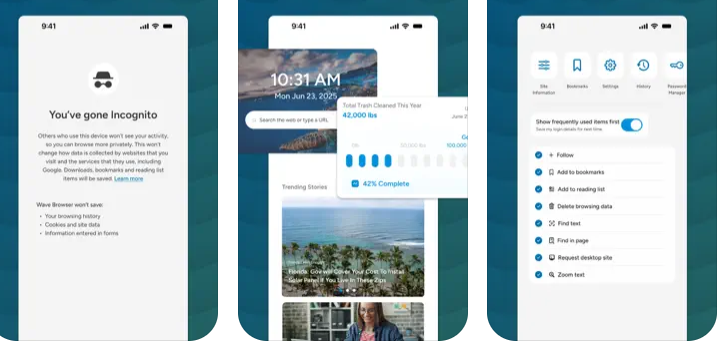
- Clean Water Impact Tracker: Displays updated statistics detailing total plastic cleared through collective software use.
Guide to Setting Up Your Sustainable Browsing Setup
Configuring your browser settings correctly ensures you receive maximum software performance and security.
- Make your purpose-driven application the default system browser across all desktop and laptop devices.
- Turn on native security shields, including HTTPS redirection and maximum tracking defense.
- Import your existing digital workspace—bookmarks, saved credentials, and history—using automated import tools.
- Customize your visual workspace sidebars to place essential note-taking and messaging tools within easy reach.
- Track your contribution toward global ocean restoration goals through built-in impact display widgets.
Conclusion
Sustainable web applications represent a major advancement in how everyday consumer software operates. By pairing technical execution with verified real-world plastic cleanup programs, these digital tools empower users to create positive change effortlessly.
Selecting software that prioritizes device performance, data security, and environmental responsibility ensures your daily online sessions contribute to cleaner oceans and a healthier environment worldwide.

 English
 Arabic
 French
 Spanish
 Portuguese
 Turkish
 Dutch
Dutch
 Italiano
 Russian
 Romaian
 Portuguese (Brazil)
 Greek
Greek
