


Get the maximum marks with our Premium IGNOU Handwritten Assignment
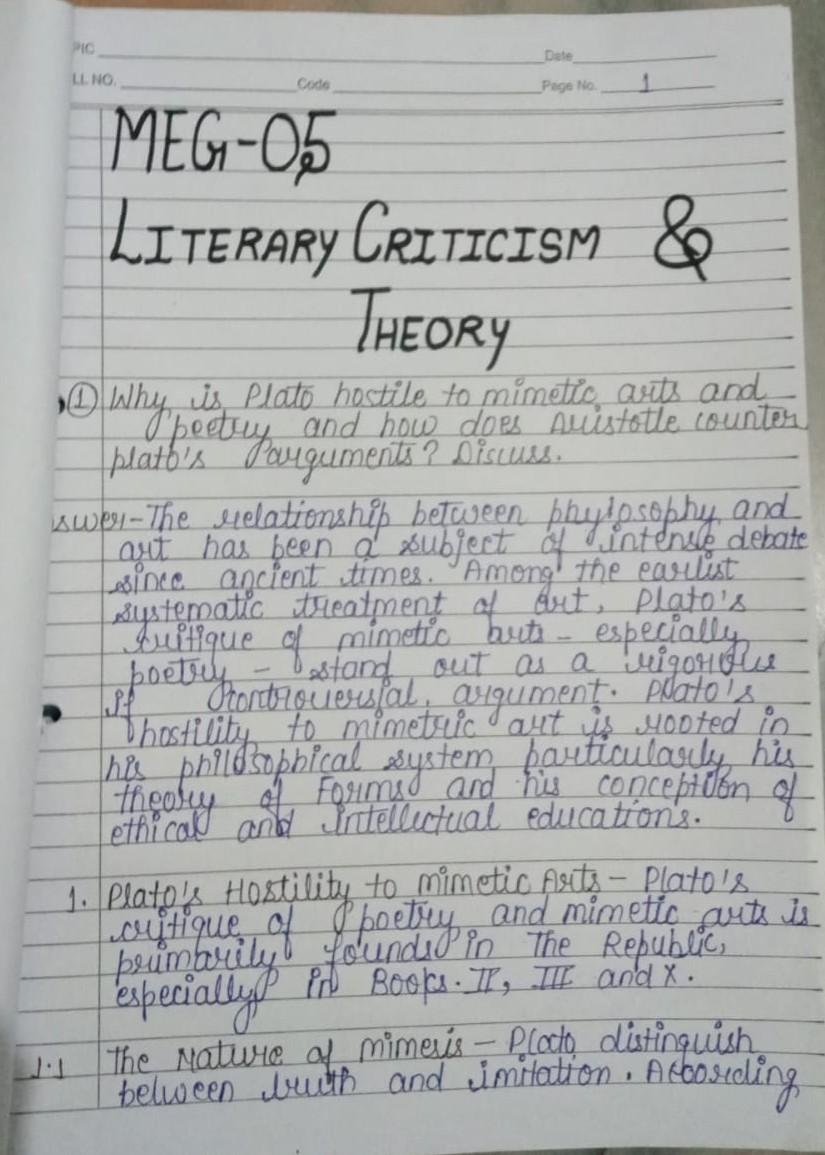
The Complete Guide to Preparing IGNOU Handwritten Assignments for High Scores
For students enrolled in Indira Gandhi National Open University (IGNOU), completing and submitting IGNOU Handwritten Assignment is a mandatory component of continuous evaluation. Assignments carry a 30% weightage in overall subject grading, making them vital for achieving top grades in your degree or diploma program. Writing high-quality assignments requires strict adherence to institutional guidelines, logical structuring, and clean presentation.
Understanding the Importance of IGNOU Handwritten Notes
When preparing your submissions, relying on authentic IGNOU handwritten notes derived from official Self-Learning Material (SLM) is essential. IGNOU evaluators look for conceptual clarity, original framing, and direct relevance to the prescribed syllabus. Copying verbatim from commercially available, generic assignment guides often leads to mark deductions. Creating or studying from well-structured IGNOU handwritten notes helps you digest complex theoretical concepts, summarize long chapters, and present answers in your own unique voice.
Essential Materials Required
Before starting, gather the standard materials required for official submission:
-
Paper: Use standard A4-size paper. Ruled paper is generally preferred to maintain neatness and consistent spacing, though plain white A4 paper with drawn margins is also acceptable.
-
Writing Instruments: Use a blue ballpoint pen for writing main body text and a black ballpoint or gel pen for main headings, subheadings, and question statements.
-
Binding Accessories: Use paper tags or a thin cardboard flat folder. Avoid plastic spiral bindings or heavy plastic sleeves, as many study centres reject them.
Step-by-Step Sequence for Assignment Assembly
Every assignment file must follow a standardized hierarchy. Arrange your documents in the exact order below before tagging or binding:
-
Official Cover Page: The top sheet containing your personal and administrative details.
-
Student ID Card Photocopy: A clear printout of your official IGNOU student identification card.
-
Official Question Paper: A printout of the assignment question paper for the current academic session.
-
Handwritten Answer Sheets: Your main handwritten responses, arranged strictly in numerical order according to the question paper.
Designing the Perfect Front Page
The cover page serves as the identification key for your submission. Ensure the following details are clearly written or printed at the center of the first page:
-
Enrolment Number: (Write clearly in bold block digits)
-
Student Name:
-
Full Address Contact Number:
-
Program Title Code: (e.g., Bachelor of Arts - BAG / Master of Commerce - MCOM)
-
Course Code Course Title: (e.g., BPSC-131: Introduction to Political Theory)
-
Assignment Code: (Mentioned on the question paper, e.g., BPSC-131/ASST/TMA/2025-2026)
Advertisement -
Study Centre Code Name:
-
Date of Submission:
-
Signature of Student:
Formatting and Page Layout Guidelines
Proper layout formatting improves readability and reflects academic professionalism:
-
Margin Spacing: Draw a 1-inch (approx. 3–4 cm) margin on the left side of every single sheet. This space is essential for evaluator comments, marks, and paper tagging without covering your text.
-
Page Numbering: Write page numbers at the top right or bottom center of each page (e.g., Page 1 of 12). This prevents missing pages during evaluation.
-
Fresh Starts: Always start every major question on a new page to maintain clear separation.
-
Pen Usage Cleanliness: Avoid using red, green, or gel inks that bleed through paper. Do not use white fluid correction ink; if a mistake occurs, draw a single neat horizontal line through the incorrect word.
Structuring Answers According to Word Limits
To secure high marks, align your answer structures with the specific mark allocations and word count restrictions specified in your question paper: make a first IGNOU Solved Assignment so that it will help you at the time of writing.
-
Long-Form Questions (20 Marks / ~500–800 Words):
-
Introduction (10% of word count): Briefly define key terms and set up the topic context.
-
Main Body (80% of word count): Divide your core explanation into 3–4 subheadings. Use bullet points, flowcharts, or diagrams drawn from your IGNOU handwritten notes to break up long blocks of text.
-
Conclusion (10% of word count): Summarize key insights and provide a concise concluding thought.
-
-
Medium-Form Questions (10 Marks / ~250–400 Words):
-
Direct, focused responses. Use 2–3 clear black-pen subheadings and direct bullet points.
-
-
Short-Form Questions (5 Marks / ~100–150 Words):
-
Concise definitions or point-wise lists without unnecessary filler.
-
Key Tips for Writing High-Scoring Assignments
-
Use Direct Syllabus References: Synthesize responses directly from official IGNOU study modules rather than third-party online summaries.
-
Maintain Personal Handwriting: Write the entire set of assignments in your own handwriting. Mixing different handwritings in a single subject assignment can lead to rejection or disqualification.
-
Submit Before Deadline: Check the official IGNOU portal or your regional study centre notifications for submission cut-off dates for the June/December Term-End Examinations (TEE). Always collect a signed acknowledgement slip from your study centre coordinator upon submission.

 English
 Arabic
 French
 Spanish
 Portuguese
 Deutsch
 Turkish
 Dutch
Dutch
 Italiano
 Russian
 Romaian
 Greek
Greek
