


Algorithmic Trading AI: How Artificial Intelligence Is Reshaping Automated Market Analysis
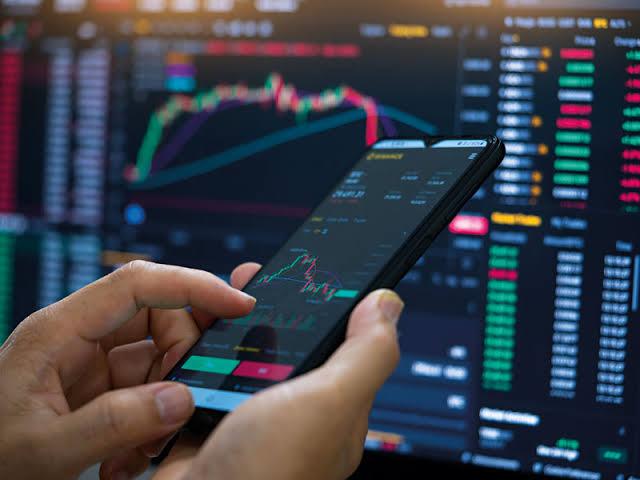
Algorithmic Trading AI: How Artificial Intelligence Is Reshaping Automated Market Analysis
Introduction
The financial industry is undergoing a major technological transformation. Advances in artificial intelligence, machine learning, data science, and automation are changing how traders research markets and develop systematic strategies.
At the intersection of these technologies is algorithmic trading AI, which combines rule-based trading frameworks with artificial intelligence and machine-learning techniques to analyse market information, identify patterns, develop models, and support systematic decision-making.
Unlike traditional trading approaches that depend heavily on manual analysis, AI-enhanced systems can process large volumes of information and evaluate multiple variables simultaneously.
However, artificial intelligence should not be viewed as a shortcut to guaranteed trading success. Its effectiveness depends on the quality of data, model design, testing methodology, execution, and risk management.
Understanding AI in Algorithmic Trading
Traditional algorithmic strategies generally operate according to predefined instructions.
For example, a strategy might be designed to generate a signal when certain price and technical conditions occur.
Artificial intelligence introduces a different dimension.
Machine-learning models can be trained using historical datasets to identify statistical relationships between variables.
Instead of relying exclusively on manually specified conditions, an AI model can learn patterns from data and produce outputs based on those learned relationships.
This creates opportunities for more adaptive forms of quantitative research.
How AI Can Support Algorithmic Trading
AI can potentially contribute to several parts of the trading process.
Market Data Analysis
Financial markets produce enormous amounts of information every day.
This can include:
-
Price data
-
Trading volume
-
Volatility
-
Economic indicators
-
Market statistics
-
News
-
Financial reports
-
Other alternative datasets
AI systems can process these datasets and identify relationships that may be difficult to analyse manually.
Pattern Recognition
Machine-learning models can search historical data for recurring patterns.
For example, a model may investigate whether certain combinations of market variables have historically been associated with particular price movements.
The discovery of a pattern does not automatically mean it is useful for future trading. It must be validated carefully.
Market Classification
AI can potentially classify different market environments.
These might include:
-
Trending markets
-
Range-bound markets
-
High-volatility periods
-
Low-volatility periods
-
Bullish environments
-
Bearish environments
Understanding market regimes can help researchers investigate which strategies may perform differently under different conditions.
Machine Learning Models
Machine learning is one of the major technologies associated with AI-driven trading research.
Several approaches can potentially be used.
Supervised Learning
Supervised-learning models are trained using labelled historical data.
A model might be trained to estimate an outcome based on a set of market variables.
Unsupervised Learning
Unsupervised-learning techniques can be used to identify groups, structures, or patterns within datasets without predefined labels.
Reinforcement Learning
Reinforcement-learning approaches involve learning through interactions with an environment and receiving feedback based on outcomes.
Each approach has different advantages and limitations.
The appropriate methodology depends on the research objective and available data.
AI-Based Signal Generation
One potential application of AI is signal generation.
A model can evaluate multiple inputs and produce an output representing a potential market condition.
For example, an AI system could generate an output such as:
-
Positive market probability
-
Negative market probability
-
Neutral condition
-
High-volatility condition
-
Low-volatility condition
These outputs can then be incorporated into a broader trading framework.
The important distinction is that a model output is not necessarily a trading instruction. It needs to be evaluated within the context of strategy rules and risk management.
The Importance of Financial Data
AI models are highly dependent on data.
The quality of the data used during development can significantly influence the reliability of the resulting model.
Accurate Data
Incorrect prices or timestamps can distort model results.
Sufficient Historical Data
A model generally needs appropriate historical observations to identify meaningful relationships.
Relevant Features
The variables included in a model should have a logical relationship to the research objective.
Correct Time Alignment
Data from different sources needs to be aligned correctly to avoid introducing misleading information.
Data Leakage
Data leakage is a serious problem in AI-based financial modelling.
It occurs when information that would not have been available at the time of a historical trading decision accidentally enters the model.
This can make a strategy appear much more successful than it would have been in real-world conditions.
Researchers should carefully ensure that the model only uses information that would genuinely have been available at the relevant point in time.
Overfitting in AI Trading
Overfitting is another major challenge.
An AI model can become excessively adapted to historical data.
A highly optimised model may show impressive backtested performance but fail when applied to new market conditions.
Warning signs can include:
-
Extremely high historical performance
-
Large differences between training and testing results
-
Sensitivity to minor parameter changes
-
Poor performance on unseen data
-
Excessive model complexity
The objective should be to find robust relationships rather than maximise historical returns.
Training, Validation, and Testing
A proper AI development process separates different datasets and stages.
Training Data
Used to develop the model.
Validation Data
Used to evaluate and refine the model.
Testing Data
Used to assess performance on previously unseen information.
Keeping these stages separate can help reduce the risk of creating a model that simply memorises historical observations.
Backtesting AI Strategies
Backtesting provides an important framework for evaluating systematic strategies.
A historical simulation can help researchers investigate:
-
Returns
-
Drawdowns
-
Trade frequency
-
Volatility
-
Risk-adjusted performance
-
Strategy consistency
However, backtesting should incorporate realistic assumptions.
These may include:
-
Brokerage costs
-
Spreads
-
Slippage
-
Liquidity constraints
-
Execution limitations
Ignoring these factors can result in overly optimistic results.
Why Historical Performance Is Not Enough
A strategy may have performed well historically for reasons that do not persist.
Financial markets evolve.
Participants change their behaviour, regulations change, liquidity changes, and new information affects market dynamics.
Therefore, a strategy should be evaluated across different periods and conditions rather than relying on one historical result.
Walk-Forward Testing
Walk-forward testing is one approach that can help evaluate strategy robustness.
Instead of developing a model once and testing it on a fixed historical period, the process repeatedly trains the model using one period and evaluates it on a subsequent unseen period.
This can provide additional insight into how a strategy behaves as market conditions change.
Risk Management and AI
Artificial intelligence does not eliminate financial risk.
An AI-based strategy should still incorporate appropriate risk controls.
These may include:
Position Sizing
Determining how much capital should be allocated to each trade.
Exposure Limits
Controlling exposure to individual assets or markets.
Maximum Drawdown Rules
Defining when strategy performance requires review or intervention.
Stop Conditions
Establishing conditions for exiting positions or pausing a strategy.
Leverage Management
Controlling the amount of leveraged exposure.
Risk management should be integrated into the overall system rather than treated as an afterthought.
AI and Human Decision-Making
AI does not necessarily have to replace human involvement.
There are different ways AI can be integrated into a trading workflow.
Research Support
AI can help analyse data and identify potential relationships.
Decision Support
AI can provide model outputs that traders consider alongside other information.
Automated Execution
In more advanced systems, model outputs can be connected to automated execution mechanisms.
The appropriate level of automation depends on the strategy, technology, and risk framework.
Benefits of AI-Enhanced Trading Systems
When appropriately designed and validated, AI can offer several potential advantages.
Processing Speed
Computers can analyse large datasets quickly.
Scale
AI can evaluate many variables and instruments simultaneously.
Consistency
A systematic model can apply its methodology consistently.
Automation
Repetitive research and analytical tasks can be automated.
Pattern Discovery
Machine learning can investigate relationships that may not be immediately visible through manual analysis.
Continuous Analysis
Automated systems can monitor market information continuously.
Challenges of AI in Financial Markets
The technology also presents important challenges.
Changing Market Conditions
Historical relationships may not remain stable.
Model Complexity
Complex models can be difficult to interpret and maintain.
Data Quality
Poor data can produce unreliable outputs.
Computational Requirements
Advanced models can require significant computing resources.
Overfitting
Models may perform well historically but poorly in live conditions.
Operational Risk
Technical failures can affect automated systems.
Execution Risk
The theoretical output of a model may differ from actual trading results.
These challenges should be considered before deploying AI-based systems.
Building an AI-Based Trading Framework
A disciplined development process can involve several stages.
Step 1: Define the Research Question
Identify the specific market behaviour you want to investigate.
Step 2: Collect Data
Gather relevant historical information.
Step 3: Prepare the Dataset
Clean and organise the data.
Step 4: Select Features
Identify potentially useful variables.
Step 5: Develop the Model
Train the selected machine-learning methodology.
Step 6: Validate
Evaluate the model using appropriate validation data.
Step 7: Backtest
Test the resulting strategy under realistic assumptions.
Step 8: Stress Test
Evaluate performance under different market environments.
Step 9: Paper Trade
Observe the system in a simulated environment.
Step 10: Monitor
If deployed, continuously evaluate performance and system behaviour.
The Role of Automation
Automation can help transform an AI model into a systematic trading process.
A simplified architecture might look like:
Market Data → Data Processing → AI Model → Signal → Risk Controls → Execution → Monitoring
Each component needs to work correctly.
A highly sophisticated AI model is of limited practical value if the surrounding infrastructure is unreliable.
Execution Considerations
Actual trading conditions can differ from model assumptions.
Factors such as:
-
Latency
-
Slippage
-
Liquidity
-
Market spreads
-
Order types
-
Connectivity
can affect execution.
Therefore, technical infrastructure is an important component of any automated trading system.
Monitoring AI Models
An AI model should not simply be deployed and forgotten.
Ongoing monitoring can help identify changes in behaviour.
Important metrics may include:
-
Prediction accuracy
-
Strategy performance
-
Drawdown
-
Volatility
-
Trade frequency
-
Execution quality
-
Data anomalies
If model performance deteriorates, the strategy may require further investigation or modification.
AI in Different Market Environments
An AI model may behave differently depending on market conditions.
For example, a strategy developed primarily during a strong trending market may behave differently during a prolonged sideways market.
Testing across multiple environments can therefore provide a more comprehensive understanding of potential robustness.
The Importance of Simplicity
Advanced AI does not automatically mean better trading results.
A complex model with dozens of variables may be more difficult to validate than a simpler model.
In quantitative research, simplicity can sometimes make it easier to:
-
Understand the model
-
Test assumptions
-
Identify errors
-
Monitor behaviour
-
Maintain the system
The objective should be to build a model that is appropriate for the research problem rather than unnecessarily complex.
Education and AI-Based Trading
Developing AI-driven trading systems requires knowledge across several disciplines.
These can include:
-
Financial markets
-
Trading strategies
-
Statistics
-
Data analysis
-
Programming
-
Machine learning
-
Backtesting
-
Risk management
A structured educational approach can help learners understand how these areas fit together.
AlgoSutraa's training ecosystem includes algorithmic trading education and advanced programmes that cover areas such as strategy development, AI integration, and custom algorithm development.
The Future of Algorithmic Trading AI
AI is likely to become increasingly integrated into financial-market technology.
Potential areas of development include:
-
Automated strategy research
-
Advanced market classification
-
AI-assisted portfolio analysis
-
Improved sentiment analysis
-
Automated risk monitoring
-
More sophisticated predictive models
-
AI-supported execution systems
As computing capabilities and data availability continue to improve, financial institutions and independent traders may gain access to increasingly advanced analytical technologies.
However, technological progress does not remove the need for disciplined research.
Responsible Use of AI in Trading
AI should be approached as an analytical technology rather than a guaranteed source of returns.
Responsible implementation involves:
-
Understanding the model
-
Using appropriate data
-
Avoiding data leakage
-
Testing on unseen information
-
Accounting for trading costs
-
Managing risk
-
Monitoring live behaviour
-
Reviewing performance regularly
This approach can help users distinguish genuine analytical value from unrealistic expectations.
Conclusion
Artificial intelligence is creating new possibilities for systematic financial-market research.
Algorithmic trading AI combines automated trading frameworks with machine-learning and artificial-intelligence techniques to process information, identify patterns, develop models, and support systematic decision-making.
The technology can provide valuable capabilities, but it also introduces challenges involving data quality, overfitting, model stability, execution, and changing market conditions.
The strongest approach is therefore not to search for an AI system that promises effortless profits. Instead, traders and researchers should focus on developing sound hypotheses, using reliable data, validating models carefully, incorporating realistic trading costs, and implementing strong risk controls.
As financial technology continues to evolve, AI will likely play an increasingly important role in the way markets are researched and analysed. Those who understand both its capabilities and limitations will be better equipped to use the technology responsibly.

 English
 Arabic
 French
 Spanish
 Portuguese
 Deutsch
 Turkish
 Dutch
Dutch
 Italiano
 Russian
 Romaian
 Greek
Greek
