


Bottle Cap Recycling for Businesses: Collection, Processing, and Recovery
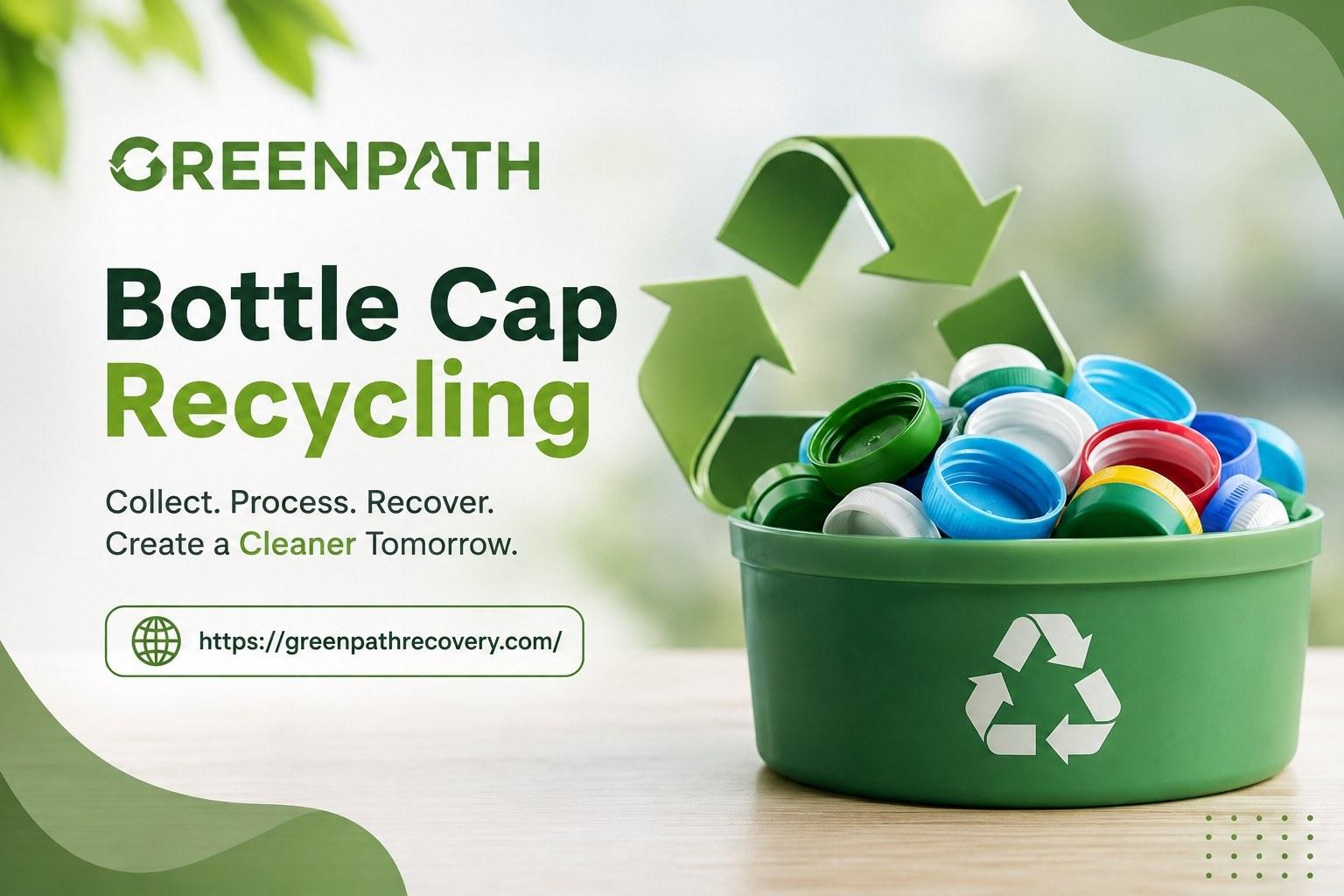
Plastic waste management is becoming an increasingly important responsibility for businesses across manufacturing, retail, hospitality, food service, beverage production, and packaging. While plastic bottles often receive most of the attention, their caps can also represent a useful recyclable material when collected and processed correctly.
For businesses generating large quantities of beverage containers, Bottle Cap Recycling can turn a frequently overlooked waste stream into a recoverable resource. Depending on the product and collection system, caps may be manufactured from polypropylene (PP) or high-density polyethylene (HDPE). PP is particularly common in closures and caps, making properly sorted Recycled PP Plastic a potentially valuable secondary material.
A successful program requires more than simply placing caps in a recycling container. Businesses need an organized collection system, contamination controls, appropriate sorting, reliable processing partners, and a clear understanding of the material's final application.
Why Bottle Caps Matter in Commercial Recycling
Bottle caps are small, lightweight, and easy to overlook. However, businesses handling thousands of bottles every week can accumulate a significant volume of caps.
The main benefit of Bottle Cap Recycling is that it keeps suitable plastic material in circulation instead of sending it to disposal. Recycling also supports the broader circular economy by allowing recovered polymers to become feedstock for new products.
Bottle caps are often made from different polymers than the bottles themselves. For example, beverage bottles are commonly PET, while closures can be PP or HDPE. Modern recycling systems can separate these materials after shredding through processes such as float-sink separation.
For businesses, the benefits can include:
-
Reduced volume of plastic waste sent for disposal
-
Better use of recyclable materials
-
Improved waste-stream organization
-
Potential value from recovered plastics
-
Support for corporate sustainability objectives
-
More measurable recycling performance
-
Stronger resource-efficiency programs
However, recyclability depends on the capabilities of the recycling facility and the specifications of the end market. A resin identification code alone does not guarantee that a material will be accepted by every recycling program.
Step 1: Establish an Effective Collection System
The first stage of commercial Bottle Cap Recycling is collection.
Businesses should identify where caps are generated and place clearly labeled containers at those locations. Beverage production areas, cafeterias, warehouses, restaurants, event venues, and packaging lines may all require dedicated collection points.
The objective is to capture caps before they become mixed with general waste or contaminated materials.
A practical collection system should include:
-
Clearly labeled recycling containers
-
Employee instructions about accepted materials
-
Regular collection schedules
-
Separate handling of obvious contaminants
-
Covered or enclosed storage where appropriate
-
Records showing quantities collected
If caps are being collected separately from bottles, businesses should confirm the requirements of their recycling provider before changing their procedures. Some modern facilities are equipped to process bottles with caps attached, while others have different requirements.
Step 2: Sorting and Material Identification
Collection is only useful when the recovered material is suitable for processing.
After collection, Recycled Bottle Caps may need to be sorted according to polymer type, color, size, and contamination level. PP and HDPE should not automatically be treated as identical materials because different polymer streams can have different processing characteristics and end uses.
Research has also found that commercial bottle-cap recyclate can contain a mixture of polymers and additives when collection streams are not sufficiently controlled. Better sorting can therefore improve material consistency and expand potential applications.
Businesses can help improve downstream quality by preventing obvious contaminants such as:
-
Metal components
-
Paper and cardboard
-
Food residue
-
Non-recyclable plastics
-
Rubber pieces
-
Compostable materials
-
Chemical containers not accepted by the recycler
The cleaner the incoming material, the easier it is for a recycler to produce a consistent recovered feedstock.
Step 3: Washing and Preparation
Once sorted, Recycled Bottle Caps generally undergo preparation before they can become usable recycled material.
Depending on the facility, caps may be shredded or granulated into smaller pieces. Washing removes dirt, residues, labels, and other contaminants. The material is then dried and prepared for additional separation or processing.
For mixed bottle-and-cap recycling systems, the difference in material density can be useful. PET generally sinks in water, while PP and HDPE float, allowing the materials to be separated in a float-sink process.
This stage is important because contamination can negatively affect the appearance, performance, and consistency of the final recycled polymer.
Step 4: Processing Into Recycled Material
Following sorting and cleaning, suitable cap material can be processed mechanically.
Mechanical recycling generally involves sorting, cleaning, shredding, and melting plastic without changing the basic chemical structure of the polymer. The processed plastic can then be converted into flakes or pellets for use in manufacturing.
For PP caps, the output may become Recycled PP Plastic, which can serve as feedstock for products where its performance characteristics are appropriate.
The exact quality of the recycled material depends on several factors:
|
Factor |
Why It Matters |
|
Polymer purity |
Reduces cross-contamination |
|
Cleanliness |
Improves material quality |
|
Color consistency |
Supports predictable product appearance |
|
Processing conditions |
Influences physical properties |
|
Input material |
Determines final recyclate characteristics |
|
End-market requirements |
Defines acceptable quality specifications |
Businesses should therefore work with recyclers that can explain their material specifications and recovery process rather than assuming every collected cap will become a high-grade recycled product.
Step 5: Recovery and End Uses
The final stage of Bottle Cap Recycling is material recovery and manufacturing.
Recovered PP or HDPE can potentially be converted into pellets or other forms of recycled feedstock. Depending on quality and application requirements, these materials may be used in products such as containers, household items, industrial components, plastic accessories, or other durable products.
The important point is that recycling does not necessarily mean the material returns to exactly the same product. Instead, the recovered polymer can enter another manufacturing cycle where its properties are suitable.
In some cases, specialized recycling technologies can support higher-value applications. Recent research has examined the feasibility of recycling post-consumer HDPE caps into new caps, demonstrating the potential for more circular applications when collection, cleaning, and decontamination requirements can be met.
How Businesses Can Improve Their Recycling Program
A successful program should focus on quality as well as quantity.
Simply collecting a large amount of plastic is not enough if the material is heavily contaminated or mixed with incompatible polymers.
Businesses can improve their approach by following these practices:
-
Measure the waste stream: Track how many caps are generated each month.
-
Separate at the source: Prevent unnecessary mixing of different materials.
-
Train employees: Provide simple instructions about acceptable items.
-
Use clear signage: Make collection rules easy to understand.
-
Control contamination: Remove food, metal, and non-compatible materials.
-
Work with qualified recyclers: Confirm accepted materials and specifications.
-
Monitor recovery rates: Compare collected material with actual recovered output.
-
Review the program regularly: Adjust collection locations and procedures as volumes change.
EPA guidance emphasizes the importance of collection, separation, management, and locally appropriate recycling strategies when improving plastic recovery systems.
Recycled Bottle Caps and the Circular Economy
The value of Recycled Bottle Caps extends beyond waste diversion. When suitable caps are converted into secondary raw materials, businesses can help reduce reliance on virgin plastic for certain applications.
Using Recycled PP Plastic can also provide manufacturers with another source of polymer feedstock, although the appropriate application depends on material quality, processing history, regulatory requirements, and product specifications.
This makes Bottle Cap Recycling a practical example of circular resource management: a material that would otherwise be discarded is collected, processed, and returned to manufacturing.
Common Challenges Businesses Should Expect
Commercial recycling programs can face several obstacles.
Contamination is one of the biggest concerns. Food residue, labels, metals, and incompatible plastics can reduce the quality of the recovered stream.
Mixed polymers can also create challenges. PP and HDPE may look similar but are not necessarily interchangeable in every application.
Transportation costs can be another consideration because bottle caps are lightweight. Businesses generating relatively small quantities may need to consolidate material before shipment to make recycling economically practical.
Finally, local acceptance policies vary. A material accepted by one recycling facility may not be accepted by another, so businesses should verify requirements directly with their recycling provider.
A Smarter Approach to Commercial Cap Recovery
For businesses, Bottle Cap Recycling works best when it is treated as a complete material-management process rather than a simple waste-bin initiative.
The basic pathway is:
Collection → Sorting → Cleaning → Shredding → Separation → Quality Control → Pelletizing/Reprocessing → Manufacturing
By improving collection quality at the beginning of this chain, businesses can make downstream processing more efficient and potentially increase the value of the recovered material.
Ultimately, Recycled Bottle Caps can become a useful secondary resource when businesses, recyclers, and manufacturers work together. The growing interest in Recycled PP Plastic and other recovered polymers demonstrates why better material separation and recovery systems are increasingly important.
Final Thoughts
For businesses handling significant quantities of bottled products, Bottle Cap Recycling offers an opportunity to improve waste management while supporting resource recovery. The most effective programs begin with source separation, continue through careful sorting and cleaning, and finish with professional processing into usable recycled feedstock.
Recycled Bottle Caps are not simply waste that needs to be removed; when properly collected and processed, they can become part of a broader circular materials system. Businesses that focus on cleaner collection, accurate material identification, reliable recycling partnerships, and measurable results can build a more efficient and credible plastic recovery program.
The key is to verify local recycling requirements and understand what the chosen recycler can actually process. With the right infrastructure and quality controls, bottle-cap recovery can move from a small waste-management task to a meaningful component of a company's broader sustainability strategy.

 English
 Arabic
 French
 Spanish
 Portuguese
 Deutsch
 Turkish
 Dutch
Dutch
 Italiano
 Russian
 Romaian
 Greek
Greek
