


Bread Flour and Dough Strength: Why Protein Content Matters in Bread Making
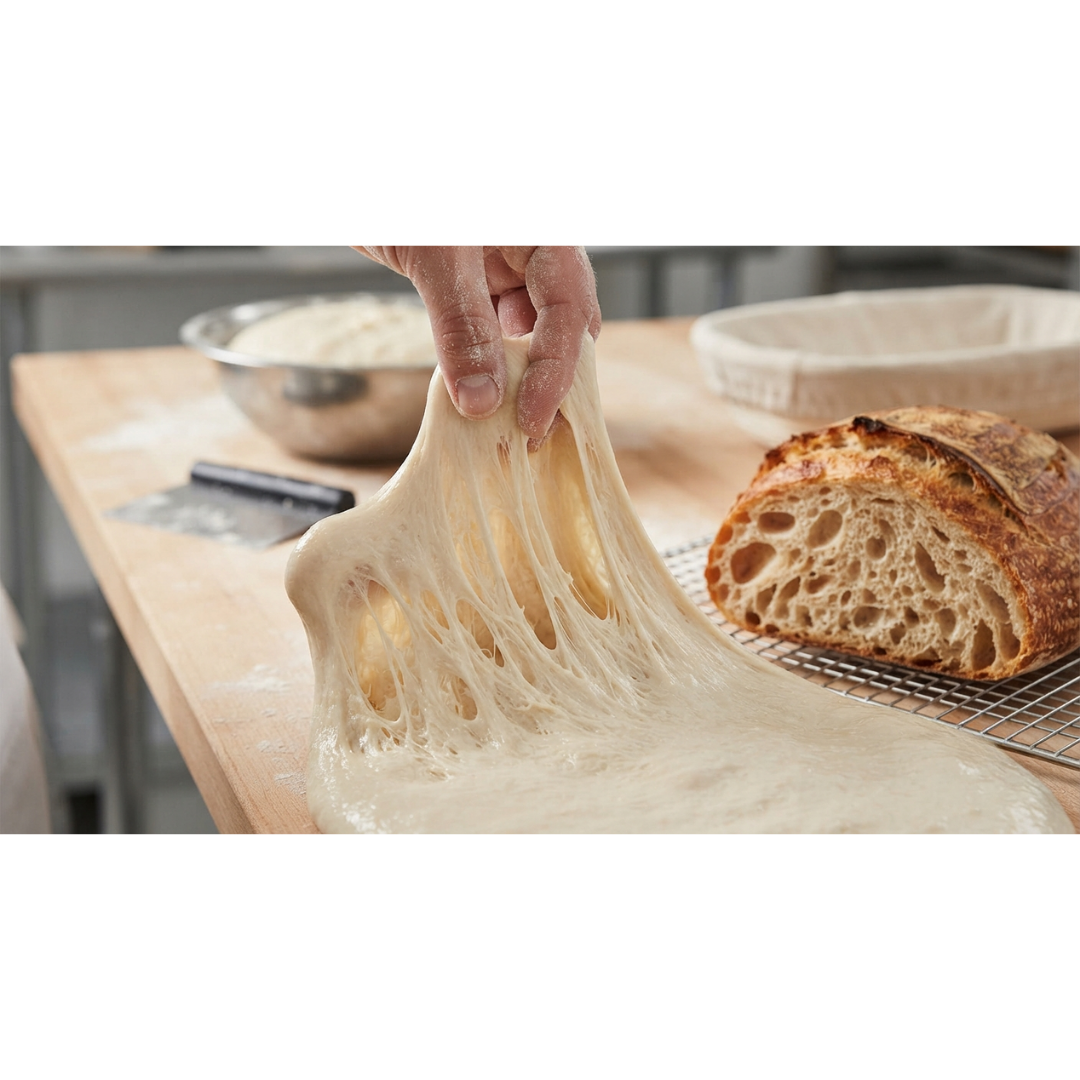
Every professional baker understands that exceptional bread starts long before the oven heats up. It begins with flour specifically, the right bread flour. The protein content hidden within those finely milled grains determines whether your dough develops the strength, elasticity, and structure that separates artisan loaves from mediocre ones.
If you've ever wondered why two seemingly identical flours produce drastically different results, this blog breaks it down for you.
The Science Behind Protein and Gluten Development
When water meets bread flour, the two primary proteins glutenin and gliadin hydrate and bond together to form gluten. This gluten network is the structural backbone of every loaf. It traps carbon dioxide produced during fermentation, allowing dough to rise and hold its shape through baking.
Higher protein content means a stronger, more elastic gluten network. Lower protein content results in a softer, more extensible dough that lacks the structural integrity professional bread production demands.
Here's the critical takeaway: bread flour with the right protein percentage gives bakers control over crumb structure, crust development, and overall loaf volume.
Why Protein Percentage Is a Professional Baker's Best Friend
Not all flour is created equal, and experienced bakers know that protein percentage is far more than a number on a label. It's a performance indicator.
Key reasons protein content matters:
-
Dough tolerance Higher-protein bread flour handles longer fermentation times without collapsing, which is essential for sourdough and slow-proof techniques.
-
Volume and rise Stronger gluten networks trap more gas, producing loaves with impressive oven spring and consistent volume.
-
Crumb structure The right protein level creates an open, airy crumb with well-defined alveoli that professionals and consumers both appreciate.
-
Machinability In commercial bakery environments, dough made from quality bread flour moves through sheeters, dividers, and moulders with reliable consistency.
For professional bakers managing large-scale production, choosing bread flour with optimal protein content directly impacts yield, consistency, and product quality.
Understanding T65 Flour: A Benchmark for Artisan Bread Production
Among the many flour classifications available today, T65 stands out as a favourite among artisan bread professionals worldwide. Originating from the French flour classification system, T65 refers to the ash content and mineral composition that reflects moderate extraction retaining flavour-rich components while delivering excellent baking performance.
SwissBake® T65 Flour is engineered specifically for professional bakers who demand reliable results. With a balanced protein profile and exceptional gluten quality, this bread flour supports long fermentation, delivers outstanding crust colour, and produces loaves with remarkable flavour depth.
Whether you're crafting traditional baguettes, rustic country loaves, or signature sourdough, T65 flour provides the foundation that professional recipes require. You can explore the complete product specifications on the SwissBake® T65 Flour page.
How Protein Content Influences Sourdough Performance
Sourdough baking places unique demands on bread flour. Extended fermentation times often spanning 12 to 24 hours gradually break down gluten. If your flour lacks sufficient protein, the dough loses its structural integrity before it ever reaches the oven.
Professional sourdough production requires bread flour that offers:
-
High gluten strength to withstand prolonged bulk fermentation
-
Balanced extensibility and elasticity for proper shaping
-
Consistent protein quality across batches for repeatable results
-
Excellent water absorption to achieve desired hydration levels
When bakers invest in premium bread flour like the SwissBake® T65 variety, they gain the confidence that every batch will perform predictably — a non-negotiable standard in professional bakery operations.
Selecting the Right Bread Flour for Your Bakery
Choosing bread flour isn't simply about picking the highest protein number available. It's about matching flour characteristics to your specific application.
Consider these factors when selecting bread flour:
-
Protein quantity vs. quality — A flour with 12% protein from high-quality wheat outperforms one with 14% protein from inferior grain. Gluten quality matters as much as quantity.
-
Ash content and extraction rate — These influence flavour complexity and crust colour. T65 bread flour offers an excellent balance between refinement and character.
-
Absorption capacity — Professional bakers need flour that hydrates consistently, ensuring dough behaves predictably during mixing and shaping.
-
Fermentation tolerance — The best bread flour maintains dough strength through retarded proofing and extended fermentation schedules.
Understanding these variables helps professional bakers make informed purchasing decisions that elevate their product lineup.
The Bigger Picture: Flour as a Strategic Ingredient
In professional baking, bread flour is never just an ingredient — it's a strategic decision. The flour you choose determines your production efficiency, product differentiation, and customer satisfaction.
By prioritising protein content and gluten quality, bakers position themselves to produce loaves that stand apart in texture, flavour, and visual appeal. The right bread flour becomes a competitive advantage.
SwissBake® continues to support professional bakers with carefully developed flour solutions, including their T65 bread flour, designed to meet the exacting standards of artisan and commercial bakeries alike.
Frequently Asked Questions
What protein percentage is ideal in bread flour for professional baking?
Most professional applications perform optimally with bread flour containing between 11.5% and 13.5% protein, depending on the bread style and fermentation method.
How does bread flour differ from all-purpose flour?
Bread flour contains higher protein levels, which produce stronger gluten networks essential for volume, structure, and fermentation tolerance in professional bread production.
Why is T65 flour popular among artisan bakers?
T65 bread flour offers a balanced extraction level that retains flavour compounds and minerals while delivering consistent gluten performance — making it ideal for baguettes, sourdough, and rustic loaves.
Can bread flour impact crust colour and flavour?
Absolutely. The mineral content and protein composition in quality bread flour contribute to enhanced Maillard browning and deeper, more complex crust flavours.
How should professional bakers store bread flour?
Store bread flour in cool, dry environments away from direct sunlight. Consistent storage conditions preserve protein functionality and extend shelf stability.
Choosing the right flour is the foundation of every exceptional loaf. Explore SwissBake® T65 Flour and discover the difference premium bread flour makes in professional baking.

 English
 Arabic
 Spanish
 Portuguese
 Deutsch
 Turkish
 Dutch
Dutch
 Italiano
 Russian
 Romaian
 Portuguese (Brazil)
 Greek
Greek
